Asia, maturity, grief, zero and data-collecting mouthguards – the SafetyConnect conference

Zero Harm is hardly ever mentioned in Australia’s academic occupational health and safety (OHS) conferences, except maybe with a little snigger. But it was prominent at the NSCAV Foundation’s SafetyConnect conference in late August 2019. This was partly because this conference has more of a commercial bent compared to other conferences but also because several international speakers from Asia were able to clarify what was meant by the term.

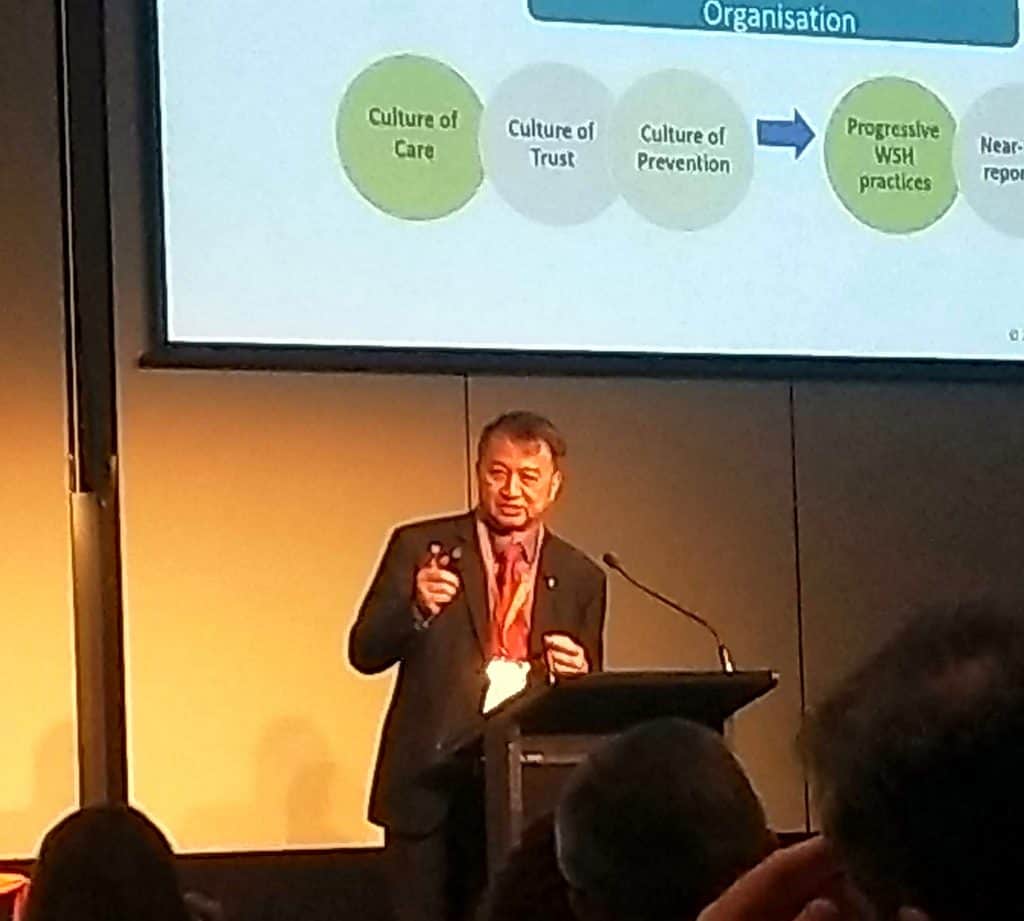
This conference had an enviable number of prominent Asian OHS professionals and engineers. One of them Ho Siong Hin (pictured above) explained the application of Vision Zero by the Singaporean government and business community.


Subscribe to SafetyAtWorkBlog to continue reading.
Subscribe Help
Already a member? Log in here

Oral biffo over safety in Queensland Parliament

Before Christmas, the Victorian Government will be presenting a Bill for Industrial Manslaughter laws to the Parliament. The core elements of accountability and penalty are expected to be little different to the Bill that failed to pass Parliament earlier this Century by a bee’s whatsit. The debate is likely to be on the same benefits and costs, so one can reread Victoria’s Hansard from 2002 or look at the debate in Queensland Parliament last week where that Government’s “Safety Reset” has generated arguments about which party is more committed to occupational health and safety (OHS).

Subscribe to SafetyAtWorkBlog to continue reading.
Subscribe Help
Already a member? Log in here

Big potatoes, small potatoes, trust and transparency

The Australian Council of Superannuation Investors (ACSI) has released a research paper that discusses the reporting of workplace fatalities by major companies in their Environmental, Social and Governance (ESG) reports. There are many informational benefits in this report but perhaps the most important is that the report reinforces occupational health and safety (OHS) in ESG reports. The risk is that OHS is seen only in relation to the ESG criteria in Annual Reports.

Australia has experienced a gentle push for inclusion of OHS performance measurements in company and government department Annual Reports. SafetyAtWorkBlog has reported on this and some peer-reviewed research and recommendations over many years. The ACSI report progresses this but also illustrates the sluggish rate of change.

Subscribe to SafetyAtWorkBlog to continue reading.
Subscribe Help
Already a member? Log in here

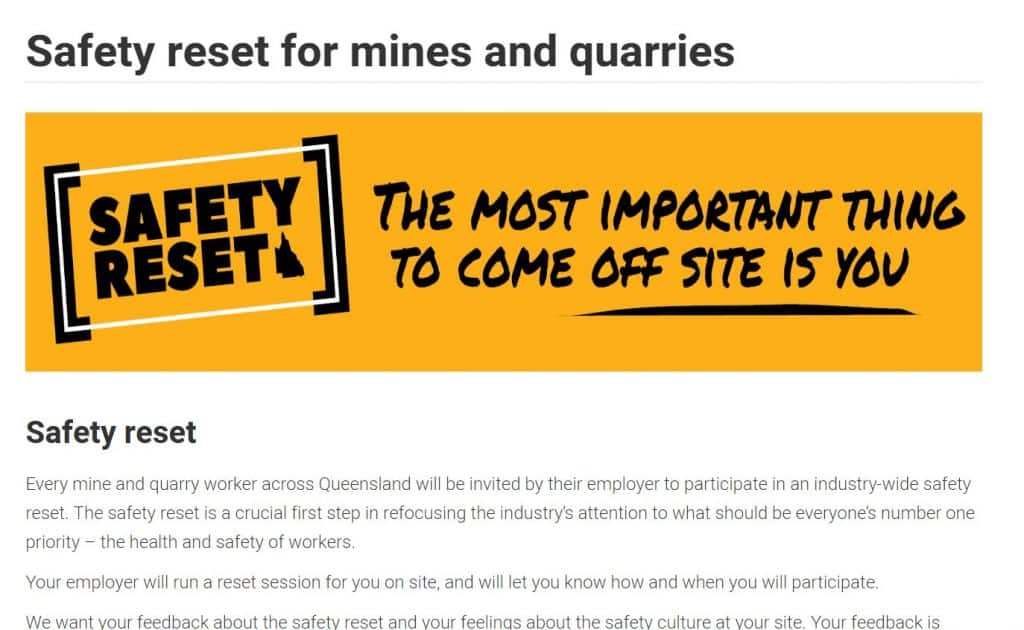
Queensland’s ‘Safety Reset’

Queensland is undertaking a “safety reset” following several recent deaths in the mining and quarry industry. This government initiative has the backing of the resources sector and has collated a good amount of safety resources in support of what is a mandatory exercise.

What is a little different in this initiative is that it reinforces that the primary responsibility for occupational health and safety (OHS) rests with the employers and company owners. In the past, government initiatives have tended to take on the responsibility for the OHS changes or imply that it is the government’s job to fix the situation and the relative safety cultures, as if it was government (in)activity that caused the problem.

Subscribe to SafetyAtWorkBlog to continue reading.
Subscribe Help
Already a member? Log in here

Medical and OHS sectors must start speaking the same language on mental health

For many years, the Australian medical has been supportive of a “Health Benefits of Good Work” (HBGW) initiative. This initiative, started in 2010, is directly relevant to how Australia is determining its mental health policy and strategies especially as they relate to workplaces. The initiative was developed by:

“…. the Australasian Faculty of Occupational and Environmental Medicine (AFOEM) of The Royal Australasian College of Physicians (RACP). This initiative is based on compelling Australasian and international evidence that good work is beneficial to people’s health and wellbeing and that long term work absence, work disability and unemployment generally have a negative impact on health and wellbeing.”

This initiative can be seen behind many of the public statements about the mental health status of the unemployed as this sits within the public health and the social welfare sectors, but it is rarely mentioned by those providing occupational health and safety (OHS) advice.

Subscribe to SafetyAtWorkBlog to continue reading.
Subscribe Help
Already a member? Log in here

Language, labels, thoughts and restraints

Carsten Busch is a committed voice for improvement in occupational health and safety (OHS) and our understanding of it. Recently he published a research paper entitled “Brave New World: Can Positive Developments in Safety Science and Practice also have Negative Sides?” (open access). The paper is of note for several reasons, not including the use Aldous Huxley’s 1932 novel “Brave New World” a book about a dystopia that many Australian high school students in the 1970s were required to read.

Dystopian novels suit the study of OHS as the structure often reflects a character with new experiences of an unfamiliar culture or an awakening or realisation of their place in the world. Brave New World fits the former and George Orwell’s 1984, the latter. OHS professionals often step into a workplace culture that is foreign to what they have understood to be the norm. They evaluate the new culture, find it wanting and suggest repairs, if they can. Over time some OHS professionals, often through an epiphany, realise that they have not achieved what they expected and either leave or turn on the OHS discipline. Some OHS professionals are able to blend both these experiences and perspectives.

Subscribe to SafetyAtWorkBlog to continue reading.
Subscribe Help
Already a member? Log in here

Hopkins challenges safety culture advocates to look at structure

One of the major influencers on occupational health and safety (OHS) management in Australian has been Andrew Hopkins. His influence comes from a combination of being outside the formal OHS profession and establishing a platform that is inclusive of information from a range of sources. In short he is a sociologist.

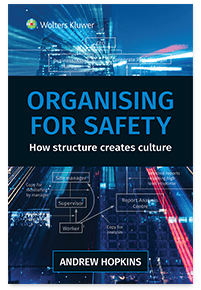
Hopkins’ latest book has just been released. “Organising for Safety – How structure creates culture” is a radical departure to his previous books about organisational culture. Here Hopkins questions whether cultural change is the gradual spreading of new ideas and instead proposes that

“… the culture of an organisation is determined to a large extent by its organisational structure.”

Page 1

He also mentions power, a concept rarely discussed in OHS and almost entirely left to exist in sociology (Oh, the need for more Humanities study!). Power pops up in Human Resources but not to the same extent.

Hopkins also refers to, and creates, organisational charts that were in place at the time of a disaster and then to the reorganised structures after the disasters. Hopkins discusses how those new structures are in direct response to the new understanding of risk from the CEOs and Boards.

Subscribe to SafetyAtWorkBlog to continue reading.
Subscribe Help
Already a member? Log in here
Concatenate Web Development
© Designed and developed by Concatenate Aust Pty Ltd