
One is never too young to learn about safety but we may be too old to change

Recently a colleague of mine expressed regret that occupational health and safety in Australia is no longer occupational. Occupational health and safety (OHS) established its parameters in its title but now most of Australia is bound to Work Health and Safety laws. Work is more than a workplace and so the discipline, the OHS profession, became more complex. Some would say that it has always been complex and that many OHS professionals failed to see the bigger picture, the broad social context of workplace health and safety.
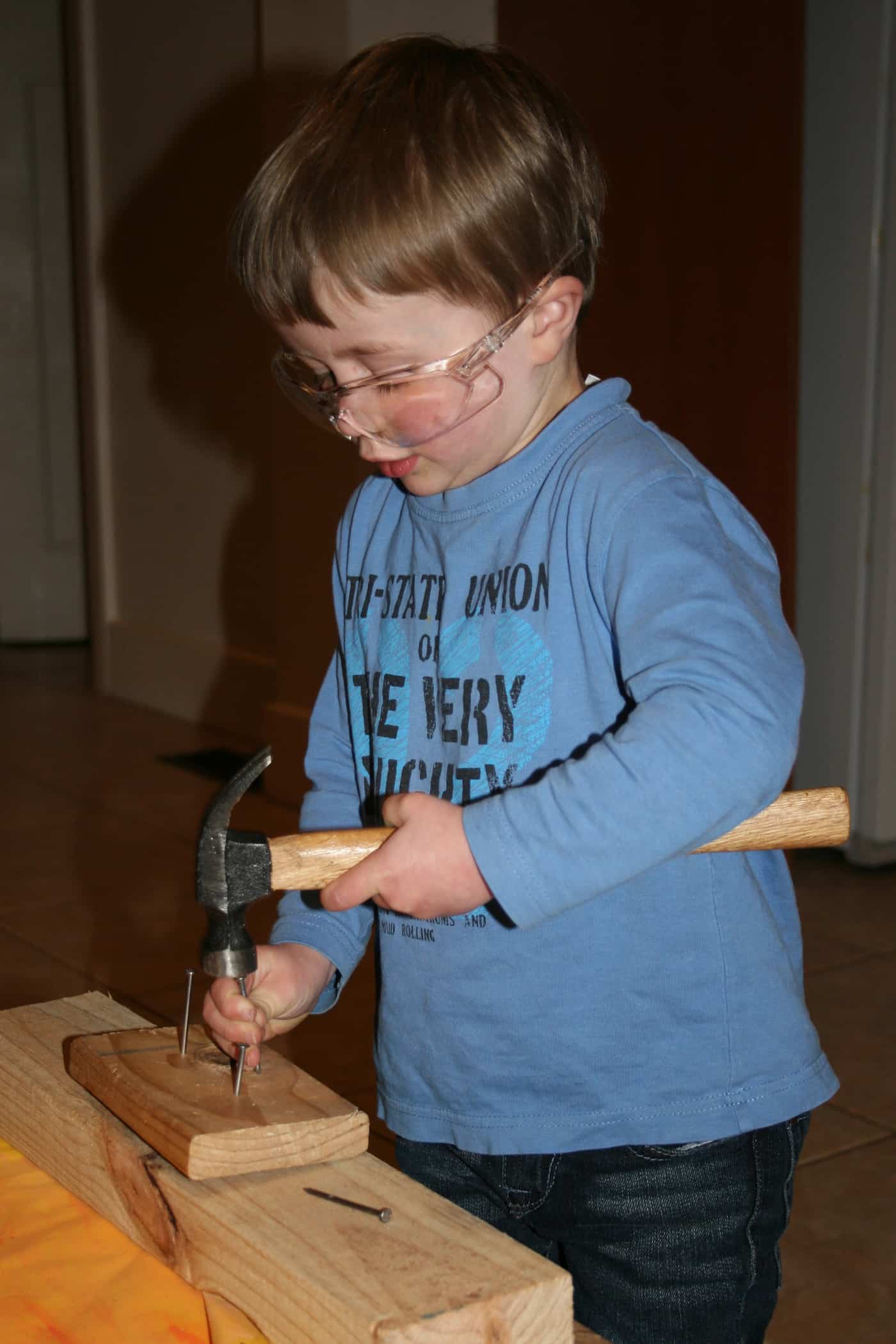
Children 6582I was reminded of my colleague’s regrets when someone on a construction site recently asked for my opinion on some pictures of her son, at a childcare centre, hitting some nails into a block of wood. The boy (pictured right, at home) was wearing safety glasses, albeit a little large; the “work area” was separated from the rest of the children and the boy was supervised at all times by a child care worker. I was told that some of the parents had expressed concern that such an activity should not be happening in a childcare centre due to the potential risk to other children.

Continue reading “One is never too young to learn about safety but we may be too old to change”

CSIRO bullying case shows the complexity of the issue for all of us

For some time the Commonwealth Science and Industrial Research Organisation (CSIRO) has been plagued with accusations of bullying and harassment.   A researcher began court action in 2011.  An anonymous website “Victims of CSIRO” was established in 2012 and provides a timeline of disgruntlement for back as far as 2002.  In May 2012, Liberal politician Sophie Mirabella, raised the issue of bullying in criticism of the then Prime Minister, Julia Gillard.  In July 2012, Comcare issued an Improvement Notice to CSIRO following an investigation

”thoroughly reviewing the workplace systems relating to the prevention and management of bullying behaviour at CSIRO”.

In September 2012, CSIRO whistleblowers spoke of bullying. The CSIRO Staff Association reported anecdotal evidence of increased bullying and harassment in late 2012.

In August 2013 HWL Ebsworth released the independent report  (the Pearce report) which, according to the CSIRO, found

“no major or widespread issues with unreasonable behaviour or bullying in CSIRO”.

How does that work? Continue reading “CSIRO bullying case shows the complexity of the issue for all of us”

Judicial inquiry into insulation dominated by election campaign politics

Australia’s conservative opposition leader, Tony Abbott, has announced that he intends to conduct a judicial inquiry into the government’s handling of the home insulation program (HIP) that resulted in the deaths of four workers in Queensland and New South Wales in 2009 and 2010.

Such a call would, normally, be very welcome but the timing of Abbott’s announcement brings a level of political baggage that weakens his commitment. Continue reading “Judicial inquiry into insulation dominated by election campaign politics”

Schoolyard to workplace bullying needs more examination

Australian Academic Press has forwarded a bullying article, written by Stephen May, that links together many of the themes of its authors with the topicality of recent statements on schoolyard bullying by the Queensland Attorney General, Jarrod Bleijie. The statements on schoolyard bullying seem reasonable and bullying at school is an established hazard but extrapolating these to the workplace is a questionable leap. Thankfully Australian Academic Press’ list has workplace bully texts.

“Young bullies who don’t learn why such behaviour is wrong will likely remain as bullies into adulthood.”

This statement reflects a common assumption but fails to consider the dramatically different legislative, organisational, cultural, social and personal differences between school and work. Schools have a different type of duty of care that requires nurturing, encouragement and psychological development. The teachers, the equivalent of managers or workplace supervisors, have more of a mentoring role than exists in most workplaces. The relationships are less Jedi and Padawan and more colleagues or, in some industries, mates.

Continue reading “Schoolyard to workplace bullying needs more examination”

Focus on Safety and compliance will come

Everyone wants clarity.  We want the comfort of knowing we are doing the right thing or that we are meeting the targets we and others set.  Workplace safety is no different but it has been complicated to an extent that clarity is unachievable and so uncertainty has come to dominate.

Occupational health and safety (OHS) consultants are often asked by business, small business in particular, “just tell us how to comply”.  Once upon a time this could be done but now the best a consultant can do is say something like “I reckon you’ll be okay, ……. if you follow through with the commitments needed, and keep your state of knowledge up to date, and take out as many liability insurances as you can, and become a member of an industry association ….and……..and…..”

The cult of “reasonably practicable” has been a major cause of this uncertainty but even prior to this was the move in Australia in the 1990s from a prescriptive regulatory structure to performance-based.

OHS compliance is now at the stage of the “best guess” or an “educated guess”, if one is lucky.  Continue reading “Focus on Safety and compliance will come”

UnionsWA looking for the WHS pot of gold

Recently WorkSafeWA released its annual workplace safety performance data. One of the most dramatic findings of the report was that

“Work fatalities average one death every 21 days…”

UnionsWA has used this finding to criticise the West Australian government for not signing up to the model Work Health and Safety laws. There is a logic jump that needs serious questioning.

Continue reading “UnionsWA looking for the WHS pot of gold”

Labour productivity is “soaring” in a period of IR/OHS variability

Mental health, happiness, well being, safety, red tape …. each of these have been linked to productivity recently in Australian discourses but, as has been mentioned previously, productivity has a flexible definition depending on one’s politics and political agenda. There is multi-factor productivity and labour productivity.  Each measure provides different results.  So where does OHS sit?

An article in The Weekend Australian on 27 July 2013 illustrates the flexible definitions and includes a rare acknowledgement on labour productivity.

“On the measure of labour productivity, which captures the output of each worker, productivity growth is in fact soaring, hitting 3.4 per cent in 2011-12. [emphasis added]

But on the broader measure, which includes the use business makes of capital equipment, growth is still a negligible 0.1 per cent and has declined on average 0.7 per cent a year ever since Labor was elected.”

The labour productivity figure is important to remember when one hears about excessive workloads, excessive hours of work and other potential causes for psychosocial hazards.   Continue reading “Labour productivity is “soaring” in a period of IR/OHS variability”

Concatenate Web Development
© Designed and developed by Concatenate Aust Pty Ltd