Grief guidance got right

A reader has pointed out an excellent guidance on managing situations after the sudden loss of a work colleague or family member, following on from a recent SafetyAtWorkBlog article.

In 2004 Skylight and New Zealand’s Accident Compensation Commission published “Death Without Warning – After an Accidental Death”.  This book (only available for purchase) is an excellent guidance that provides advice on managing grief-stricken staff at the same time as providing some dignity.

Significantly the guidance is contemporary with current support practices.  There is none of this rubbish about “closure”, or “getting over it”.  It also acknowledges that men and women grieve differently and that each individual grieves in their own personal way, a way that those who provide support must accommodate and understand.

The guidance has a 2nd edition which can be purchased online and, on receipt of our copy, will be reviewed here.

The guidance has a particular poignancy following the recent fatal earthquakes in Christchurch, New Zealand where many were killed as their workplaces collapsed.

Research Paper

For those readers who are, perhaps, researching in this area of occupation well-being or workplace mental health, one research article that is worth digging up is a 2010 paper by several Australian researchers called “Loss and grief in the workplace – What can we learn from the literature?Continue reading “Grief guidance got right”

Daniel’s story

Below is an article submitted to SafetyAtWorkBlog as a comment several days ago.  After much deliberation I have decided to publish this as an article for the consideration of readers and in the hope that someone may be willing to provide some practical assistance to Daniel.

Daniel has provided a phone number and email address to SafetyAtWorkBlog.  Please contact the Editor if you are able to help.

“This is my story. I have tried different other government departments last year to get some help all I have got is the runaround so I thought I would try here. I really don’t know how to word this or where to begin so I’ll start from 2003. I was working for a company here in Adelaide for about a year when I had an accident at work, a week later I was put on work cover my boss decided to get rid of me because I was no used to him anymore. I spent the next three years on work cover, setting at home and slowly going crazy I spent most of that three years fighting work cover to get them to do something to get me back to work but nothing ever happened. after losing my family and everything I had while I was on work cover,

“Finally I was offered redemption prayer out. It wasn’t much for the price I had to pay to be left with a permanent disability and plus I was suffering from depression from the time I spent on work cover I lost my identity as a person and felt completely demoralized. And feeling Continue reading “Daniel’s story”

Australian Football’s corporate approach to OHS

Recently the CEO of the Australian Football League (AFL), Andrew Demetriou addressed a breakfast gathering in Melbourne on the issue of “OHS in the AFL”.  He spoke almost entirely about policy initiatives without specifically addressing occupational health and safety but after a while we came to understand he was speaking of OHS from his senior executive perspective rather than the level where traditional control measures are implemented.

This was a legitimate approach to OHS but one that is rarely heard, perhaps because the AFL is a unique sporting body.  There was no mention of concepts dear to the hearts of CEOs such as Zero Harm or Safety Culture.  In fact there was hardly even a mention of Leadership.

Continue reading “Australian Football’s corporate approach to OHS”

OHS harmonisation to result in a substantial increase in costs to business

Australian lawyer Andrew Douglas has provided a frank assessment of the OHS harmonisation process instigated by the Australian government to reduce red tape and administrative costs of safety.  In Smart Company on 1 March 2011, Douglas wrote:

“…the Model Act, the regulations and documents that flow from it will dramatically increase state-based businesses legislative compliance, will massively increase the paperwork proving compliance and will inevitably lead to a substantial increase in costs to business in managing safety and OHS.”

Most State governments continue to support the harmonisation process, in almost all its elements, as a positive for business. So what’s the story here?

Andrew Douglas’ opinion needs serious consideration as it is one of the few contrary positions expressed to date. Continue reading “OHS harmonisation to result in a substantial increase in costs to business”

Rolling the sleeves up – a good OHS technique.

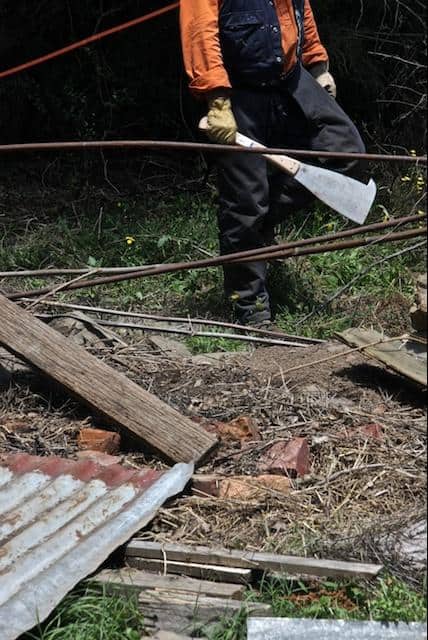
My father has a smallish block up in the bush, north-east Victoria in the Ovens Valley.  He can’t live there safely anymore, but since he built the place himself and with all the family history it has, it’s a place that has to be retained, and protected from bushfire as much as we reasonably can manage.

My partner and I, plus Dah (and a coupla friends) spent a few weeks there around Christmas and New Year doing lots of scrub clearing, garden things and general tidying up in readiness for the predicted return to hot dry summers after that naughty La Nina begins to fade.   These sort of work trips have been going on over quite a few summers.

The big range of jobs on these tidying-up trips range from trimming large branches, working up on roofs, scrub clearing, lots of load shifting, burn-offs, using lots of different powered equipment (chainsaw, scrub-cutters) and dragging out cut scrub with the ute etc etc.

Doing this work has me often giving lots of thought to doing the job efficiently and safely, and observing my own safety stuff-ups.  It gives me a chance to reflect on the safety system stuff we spend lots of time lecturing punters on and how practical it all is when there is limited time to get the job done, it’s 30 degrees Celsius, and the humidity is at a zillion; in other words, in work conditions lots of people have to deal with all the time. Continue reading “Rolling the sleeves up – a good OHS technique.”

You can lead a stressed horse to water……

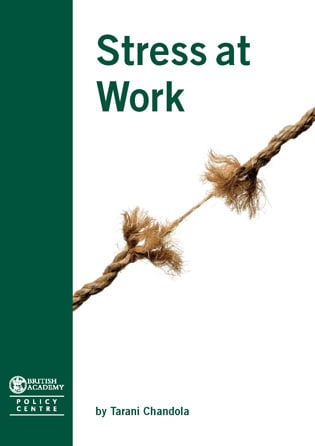
England’s Trades Union Congress (TUC) released results of a survey of union representatives on 24 February 2011 that shows that workplace stress is

“now by far the most common health and safety problem at work.”

Even taking into consideration the inherent bias of such union surveys of reps, the figures are significant.  The 24 February 2011 media release states:

“Nearly two thirds (62%) of reps say that stress is in the top five problems faced by the workers they represent and more than a quarter of reps (27%) pick out stress as the hazard at work that most concerns them.  Another recent report from the British Academy states that the global economic downturn is to blame for the soaring stress levels due to the sharp rise in job strain and job-insecurity; both determinants of work-related stress. In the last 2 years, work stress levels rose by more than 4%, compared to the previous rises of 0.1% from 1992 to 2009.” [link added]

So what can be done to reverse this trend?

If the global economic downturn has generated increased stress levels, OHS practitioners and activists need to look at the big picture and begin pushing for better economic health – an action that, outside of the union movement, hardly ever gets a mention.

If OHS principles are based around the need to eliminate hazards then OHS professionals should be strong advocates of sustainable development where the mental health of workers needs as much support for sustainability as the environment receives, if not more. Continue reading “You can lead a stressed horse to water……”

Graphic hazard video from WorkSafe BC

Graphic ads or videos from OHS regulators are not new but each has their own approach and WorkSafe BC has released one, in particular, that is of interest to the construction industry.

On first viewing, the conduct of the supervisor is annoying.  He provides inadequate information to the worker.  He approves of the wrong tool for the job.   Others may see nothing but a silly young worker. Continue reading “Graphic hazard video from WorkSafe BC”

Concatenate Web Development
© Designed and developed by Concatenate Aust Pty Ltd