The future of the worker

There have been many inquiries and investigation in Australia and elsewhere about the “future of work” but rarely about the “future of the worker”.  Research often looks at how work may be transformed by technology and new labour/employment structures with an assumption that the worker is a passive and static element in this change.  Those in occupational health and safety (OHS) and workers’ rehabilitation know that this is not the case.

This article looks at one aspect of the future of the worker.
Subscribe to SafetyAtWorkBlog to continue reading.
Subscribe Help
Already a member? Log in here

Advertorial over-simplifies workplace health and safety

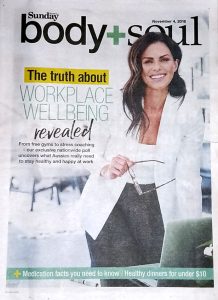
On Sunday November 4 2018, The Herald-Sun newspaper’s regular Body & Soul supplement devoted several pages to an exclusive article about workplace wellbeing ($). It is clearly an advertorial as the supplement has several full page advertisement from Medibank Private and the article includes a text box labelling it as the
“b+s 2018 Worklife Survey in partnership with Medibank”.

The article and survey is less than helpful from an occupational health and safety (OHS) perspective as there is no mention of organisational control measures or even the recent campaign in National Safe Work Month by WorkSafe Victoria on wellness!

Subscribe to SafetyAtWorkBlog to continue reading.
Subscribe Help
Already a member? Log in here

Misunderstanding sleep – Part 2

Most non-transport industries do not look for the lack of sleep or fatigue as a factor in their investigations.  Unless a formal investigation is undertaken, fatigue is rarely mentioned and, if it is, it is categorised as a “contributory factor”, which often means it is given such a low priority that nothing will be done about it.  This is partly a legacy of silo thinking that sleep is a non-work personal activity, which it is, but is still one that can affect work and all the relationships and decisions made at work.  But it is also partly due to the enormous disruption that could result if the lack of sleep and fatigue were taken seriously and effective control measures were introduced.

The most effective control for fatigue may be human-friendly shifts and “reasonable” working hours but that might not fit the shift rosters which are required to satisfy clients.  We know that night shift has higher health and physical risks than day shift so logically, get rid of night shift ….

Subscribe to SafetyAtWorkBlog to continue reading.
Subscribe Help
Already a member? Log in here

Misunderstanding sleep – Part 1

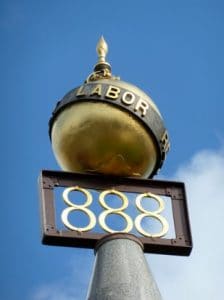
On the corner of Lygon and Victoria Streets in Melbourne is a monument to the 8 Hour Day.  This represents a social structure of work that equates to
  • Eight hours of work,
  • Eight hours of recreation,
  • Eight hours of sleep,

The concept started in Australia in the mid-1800s and was intended to reduce exploitation and abuse of workers, many of whom were children.

The intent was to establish, what we would now call, a work/life balance structure with the recognition that work is required to earn a living, sleep is required to rejuvenate the body, preparing it for work, and recreation was social time, time with one’s family, exercise, all sorts of personal and social activities.

Today that structure is an “ideal” rather than a reality. 

Subscribe to SafetyAtWorkBlog to continue reading.
Subscribe Help
Already a member? Log in here

A narrow view on sex work safety

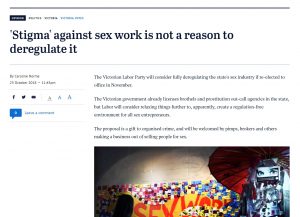
Dr Caroline Norma had an opinion piece published in The Age newspaper on October 24 2018 that fails to acknowledge the occupational health and safety (OHS) duties of Victorian businesses operating sexual services.  SafetyAtWorkBlog has looked closely at OHS in this industry sector before and has previously communicated with Dr Norma on sex work safety.  Dr Norma’s current article illustrates a common perspective on workplace safety and health issues where one set of legislation dominates the public policy conversation rather than the multidisciplinary approach.

It is necessary to clarify Dr Norma’s opening statement:

“The Victorian Labor Party will consider fully deregulating the state’s sex industry if re-elected to office in November.”

According to the 2018 Platform of the Victorian Australian Labor Party (ALP), in the context of Human Rights and Equal Opportunity, the ALP will:

“recommend that the Victorian Law Reform Commission consider decriminalisation of all sex work in Victoria as per other systems recognised internationally by human rights organisations.” (page 87)

Subscribe to SafetyAtWorkBlog to continue reading.
Subscribe Help
Already a member? Log in here

Bad bosses

Benjamin ArtzAmanda H. Goodall  and Andrew J. Oswald determined that

“There are no published papers — to our knowledge — that assess in an internationally consistent way the rarity or commonness of ‘bad bosses’.”

So they undertook there own research, published under the title “

Subscribe to SafetyAtWorkBlog to continue reading.
Subscribe Help
Already a member? Log in here
Concatenate Web Development
© Designed and developed by Concatenate Aust Pty Ltd