
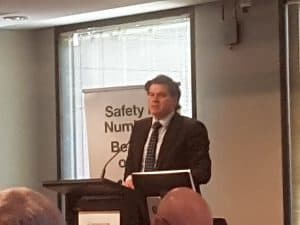
 A safety conference in Victoria Australia today heard from Innes Willox of the AIGroup about new challenges in business and occupational health and safety (OHS). As many have mentioned recently big data is a challenge but with important benefits. A major flaw in any of these discussions is an overestimation of data sources and usefulness. Continue reading “Big OHS data needs to digitise the past”
Category: workplace
University sexual assault – an OHS perspective
 The community and media responses to the Australian Human Rights Commission report into sexual assault and harassment in Australian universities continue but until the Australian Government responds, it is unclear how the risks will be reduced, particularly as many members of the current Federal Government have been openly hostile to the AHRC and its previous Commissioner, Gillian Triggs. After having rubbished the Commissioner and the institution, how will the government respond?
Following on from the very popular SafetyAtWorkBlog article about the report yesterday, it is worth looking at the AHRC recommendations in the occupational health and safety (OHS) context.
It should be noted that OHS places the principal responsibility on the employer, in this instance, the universities and the Vice-Chancellors. Some have already started to call on the government to play a role, with implications that it should be leading the change: Continue reading “University sexual assault – an OHS perspective”
OHS is PHS (public health and safety) but government needs to catch up
 The Australian Human Rights Commission has released a report into the prevalence of sexual harassment and sexual assault in Australia’s university campuses. It has revealed some shocking statistics and brings Australian universities into the global phenomenon of reassessing university obligations for the modern world.
Australia’s occupational health and safety laws and obligations could be used as a structure for preventing assaults and harassment if the government and universities would be brave enough to use them.
What First Aid can say about a workplace culture
 The Australian Financial Review for 31 July 2017 included an article (paywalled) reporting on unfair dismissal proceedings involving a first aid officer, Audrey Gatt, at Crown Resort‘s casino and entertainment complex in Melbourne, Australia. The article includes allegations by Gatt that First Aid was withheld from injured workers and patrons.
Cultural change programs can mask the need for change
 Occupational health and safety (OHS) is increasingly being touted as an integral part of a company’s organisational culture. Sometime this is described as a workplace, or safety, culture. If OHS is to be considered thus, it is important to understand other cultural perspectives. One of the most prominent in Australia, at the moment, is the culture of the banking sector.
Me! Me! Me! – OHS needs to grow up for the new world structure
 There is much general discussion about the Fourth Industrial Revolution, The Future of Work and other speculative work-related concepts. Klaus Schwab of the World Economic Forum wrote:
“We stand on the brink of a technological revolution that will fundamentally alter the way we live, work, and relate to one another. In its scale, scope, and complexity, the transformation will be unlike anything humankind has experienced before. We do not yet know just how it will unfold, but one thing is clear: the response to it must be integrated and comprehensive, involving all stakeholders of the global polity, from the public and private sectors to academia and civil society.”
For the purposes of this blog “work” is the focus and health and safety the discussion points. Occupational health and safety (OHS) professionals have a unique opportunity to participate in the early stages of this societal disruption. But there is also a risk that OHS could miss out. Continue reading “Me! Me! Me! – OHS needs to grow up for the new world structure”
More work needed on public evacuation protocols
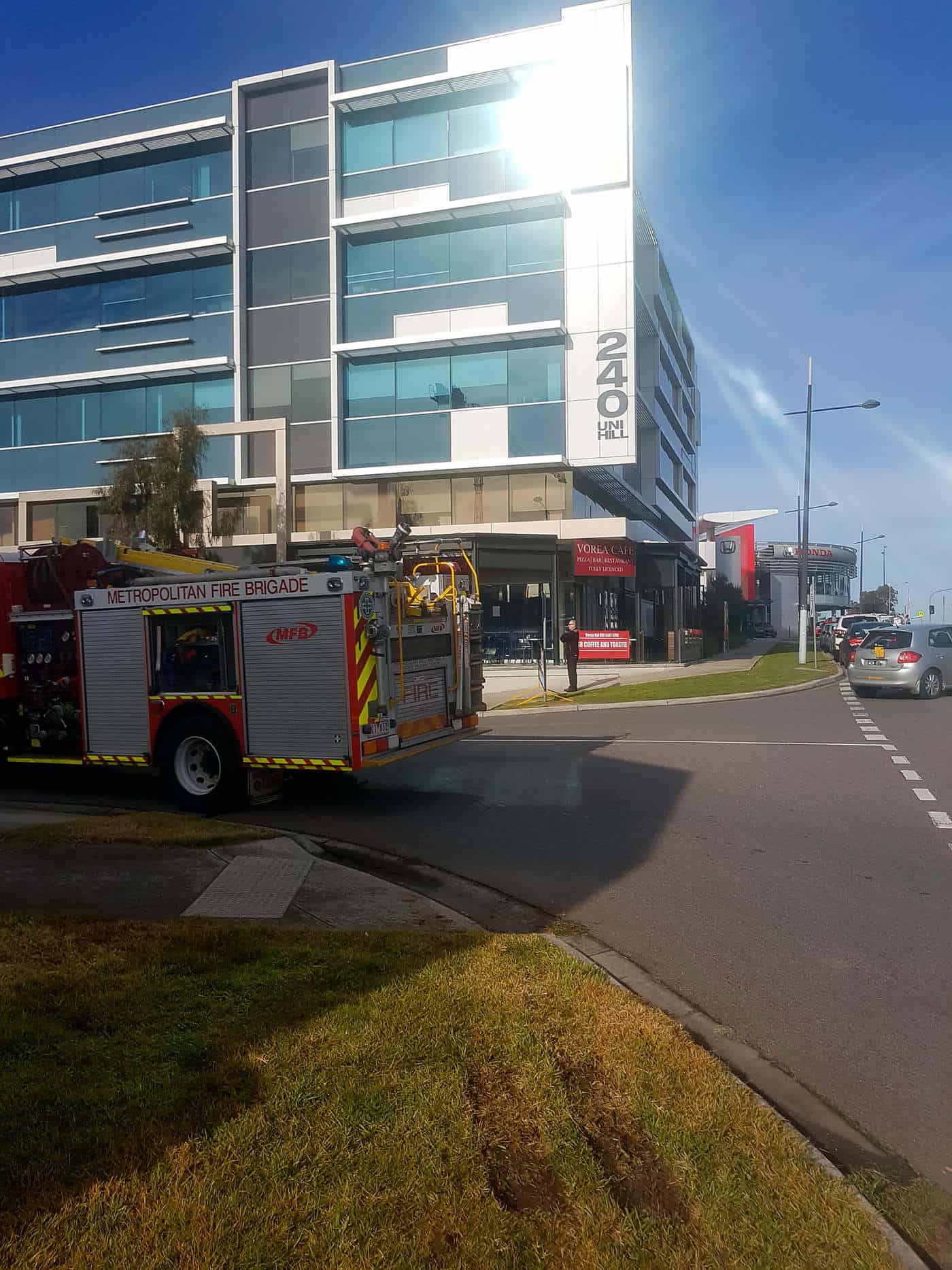 On 12 July 2017 a kitchen fire broke out in a densely packed restaurant and cafe sector of Melbourne, Australia. This article illustrates some of the localised response and firefighting attempts. Earlier that day I was in a cafe in Melbourne’s northern suburbs when the building’s evacuation alarm sounded (pictured right). There was no fire in the cafe and patrons were confused when directed to evacuate by a voice on the speaker/alarm system. This confusion was not helped when the young waiters told patrons to stay, kept serving patrons and continued to take orders. This experience illustrates significant misunderstandings about emergency protocols in public areas. Continue reading “More work needed on public evacuation protocols”