Corporate health adviser’s recommendations on swine flu

Recently SafetyAtWorkBlog wondered why the ACT OHS Commissioner referenced a commercial website instead of a government authority.  The commercial website was www.fluthreat.com operated by HSA Group which since early April 2009 is part of Medibank Private.

Fluthreat.com.au provides information on its Flu At Work page that is very flimsy and seems to be  intended to generate further enquiries to its commercial advisory service.  We’re not comfortable with that or the lack of badging from the parent company but…….

SafetyAtWorkBlog put some questions to HSA Group/Medibank and received the following responses from their media advisor over a week later.  We could be picky but we have decided to let the responses speak for themselves.

The questions were based on the bulletpoints listed on the Flu At Work page in order to flesh out the advice to a more practical level.

What does HSA Group recommend for basic personal respiratory hygiene methods?

HSA’s fluthreat website covers basic respiratory hygiene considerations.  Personal habits that we all should adopt include covering mouths when coughing and sneezing, using tissues and disposing of them properly, and regularly washing of hands.

In this time of swine flu, is the old way of throwing tissues in a waste basket no longer the right option?

Using a waste basket is fine.  The important thing is the waste is disposed of appropriately, and the waste basket does not require excessive handling in the disposal process.

Handwipes and gel have issues of their own – should they be applied after handwashing or instead of, should they be used after each sneeze or cough? What does HSA recommend?

Considerations of personal  hygiene should be a regular occurrence – not just simply after each sneeze or  cough.  Handwipes and gels are for occasions when you can’t wash your hands – it is not necessary to use both.  Handwipes and gels should be alcohol based, which has been shown to be effective in killing influenza type viruses.

Regarding adequate cleaning of surfaces and equipment, should this be undertaken by the users of the equipment or should cleaning contractors be contacted in order to upgrade their processes?

Unfortunately there is no one simple answer to this question.  Every business operates differently, and therefore will require a different response to a pandemic.  We encourage all businesses to have a pandemic plan, which will guide the business wide response.

Certainly cleaning of surfaces and equipment should be considered in the context of an organisation’s pandemic plan, and may include having staff take additional care for hygiene and cleaning, or having cleaning contractors upgrade their processes.  The appropriateness of such considerations are linked to the pandemic phase & an organisation’s response strategy in the context of their pandemic plan.

Regarding telephones, which are the closest item most office workers have to their mouths, years ago there were phone cleaners who  physically came to the office to clean and disinfect  handsets. Would HSA recommend this service be reinstated?

These services are still available for businesses who want them.  Alternatively staff can be trained to do it themselves with alcohol based wipes.  Again the specific needs of businesses will vary, and cleaning of telephone handsets should be set out in the pandemic plan.

In a closed environment, such as an office, where possible, should ventilation be increased by opening a window?  Some office buildings turn off they ventilation overnight even when nightshift workers are in the building.  Does HSA believe that nightshift workers could be at increased risk of contracting influenza?

Ventilation is important in workplaces, and not just due to swine flu. Where windows can be opened without affecting the air-conditioning flow this will help with ventilation. Air conditioning should remain on if people are present in the building.  However there is no evidence that nightshift workers are at an increased risk of contracting influenza – it is the behaviour of workers and their levels of personal hygiene that are the strongest influence on this.

Regarding encouraging sick persons to stay at home, why only “encourage”, when  employers have the legislative obligation to not place their employees at risk? What if the employee has shown no symptoms of influenza but may be infectious due to contact with a family member who is sick?

Employers should have policies in place that articulate how staff should  behave in such circumstances, and ideally a plan that covers pandemics specifically.  There is only a very small risk of people being infectious prior to symptoms appearing.

Sending workers home after the illness has appeared is an acknowledgement that illness is already present in the workplace.  In this instance, what would HSA advise the employer to do?

Employers should continue to activate their pandemic plan, which will trigger workplace specific staff communications and contingency plans.

Does HSA recommend the wearing of facemasks as a suitable control measure for anyone who may come to work sneezing (for whatever reason)?

Facemasks can be very helpful in controlling the spread of respiratory diseases.  However it should be noted that a sneeze does not necessarily equate to H1N1 or seasonal influenza.  A diagnosis of suspected H1N1 or seasonal influenza requires consideration of a number of other factors.

Regardless of the further information from HSA Group/Medibank, SafetyAtWorkBlog still recommends that the best advice is available from the relevant health authorities in your State or country.

Kevin Jones

Environmental tobacco smoke, workplace stress – podcast 2006

In 2006, one of the earliest editions of the SafetyAtWork podcast featured several speakers on issues that remain topical.  The podcast is available for download

Anne Mainsbridge, currently a Solicitor with the Public Interest Advocacy Centre talks about her report on environmental tobacco smoke.

This is followed by Associate Professor Tony LaMontagne of the University of Melbourne talking about a systematic approach to managing workplace stress.  This was a report that was published by the Victorian Health Department and, as such, slipped by many OHS professionals.  The report is now available for download

The audio production is rough for such an early podcast, and I apologise, but I think you will find the content of interest.

Kevin Jones

Workplace safety insurance – podcast

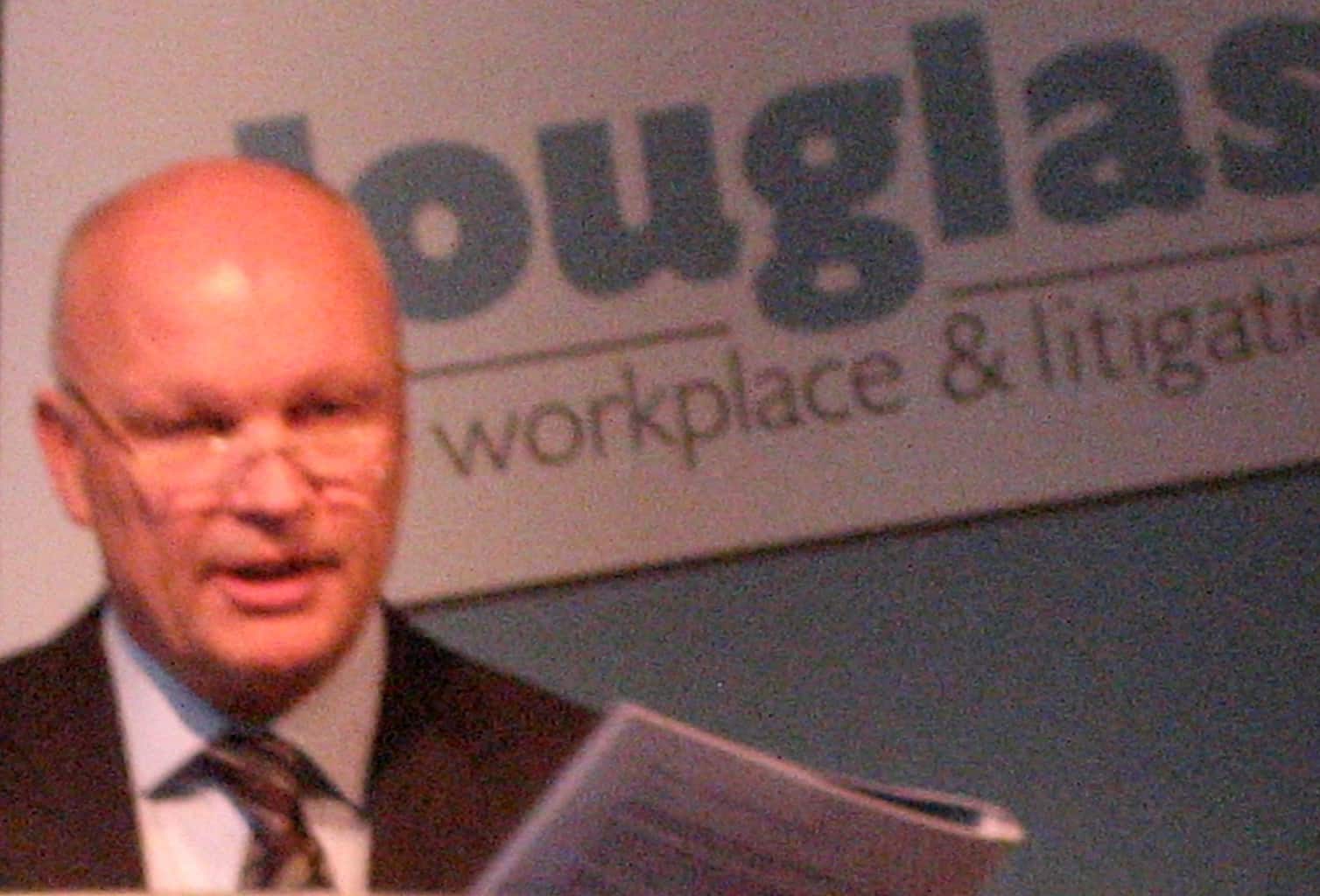
Douglas_A 2Recently I interviewed workplace lawyer, Andrew Douglas, pictured right, while researching an article concerning the application of statutory liability insurance policies to workplace safety management.

SafetyAtWorkBlog is pleased to provide our latest podcast which includes my interview with Andrew.  The interview provides simpler information on the statutory liability issue but also, and perhaps more importantly, we discuss how business perceives the role of insurance  in managing safety and risk.  We also contemplate the impact of such insurance on OHS regulators’ enforcement policies.


Kevin Jones

Does union presence improve OHS?

The trade union movement is an important element in the management of safety in workplaces but over the last twenty years, with the exception of a couple of industry sectors, the membership numbers have waned.  Until recently in Australia, the union movement was able to maintain a level of influence in the government decision-making process that was contrary to its declining membership.

Last week the Deputy Prime Minister, Julia Gillard, told the ACTU to stop lobbying the government and instead generate innovation, enthusiasm and members by reintroducing itself to the community.  Union membership spiked in response to its anti-Howard government advertising over three years ago but any membership based on fear is unsustainable.

Paul Kelly in today’s Australian is more forthright about the trade union position in society and politics but it is clear that the union movement needs to refocus.

Health and safety representatives (HSRs) have been a major element of the enforcement of safety standards in workplaces.  Some OHS legislation in the last decade has had to emphasise non-union consultation on safety issues to balance the declining presence of HSRs.  New research from Europe has found the following

three researchers reviewed
the studies done on the matter in Europe. They
conclude that having trade union representation
leads to better observance of the rules,
lower accident rates and fewer work-related
health problems.

“having trade union representation leads to better observance of the rules, lower accident rates and fewer work-related health problems.”

Transposing these findings into a non-European context is unwise but the research could provide a model for independent research and a comparative study.

Regrettably the report is not available for free but can be purchased through the European Trade Union Institute.

Kevin Jones

Charges laid on swing stage collapse

SafetyAtWorkBlog reported on a scaffolding incident in Queensland in mid-2008.  Charges have now been laid but not manslaughter charges as were called for at the time by the unions.

The workers were fatally injured on 21 June 2008 when the swing stage scaffold they were using to carry out concrete patchwork on the Pegasus high-rise, then under construction at Broadbeach, failed and fell 26 levels to the ground.

According to Workplace Health and Safety Queensland

Allscaff Systems Pty Ltd, which erected the swing stage, is charged with failing to ensure the plant was erected in a way that ensured it was safe when used properly.

Ralph Michael Smith, director of Allscaff Systems Pty Ltd, is charged with failing to ensure the company complied with its obligations under the Act.

Karimbla Construction Services Pty Limited, which built the high-rise, is charged with breaching obligations as a person in control of a workplace and as project manager.

Pryme Constructions Pty Ltd, which undertook the concrete patching, is charged with breaching its obligations to ensure workplace health and safety.

SsfetyAtWorkBlog will be following this case over the next few months.

Not another Australian swine flu website!?

Recently in 2009, the Health Services Australia company launched a new swine flu website.  

The HSA site is run by a private health services company and came to the attention of SafetyAtWorkBlog through a news item by the OHS Commissioner of the Australian Capital Territory.   The ACT OHS Commissioner may not be endorsing the site but the HSA website is described positively.  The Commissioner’s site says

“The site provides information on the risk of flu – pandemic, swine, avian and seasonal varieties – expanding upon information previously published on their avian influenza site.

It also includes the latest health alerts, FAQs, useful links and information on travel health services relating to flu which people may find of benefit.”

For further information on www.fluthreat.com.au SafetyAtWorkBlog followed the trail from fluthreat to HSA which then lead to the site of one of Australia’s largest private health insurers, Medibank Private.  The two companies merged only recentlyon 1 April 2009.

Health Services Australia is listed on the fluthreat site  as the copyright holder but Medibank Private is not mentioned.

The HSA site which includes a prominent link to www.fluthreat.com.au does mention Medibank Private, in a mediarelease link on the home page but more succinctly, but almost in passing, under Governance and Structure:

“Health Services Australia Limited (HSA) and its subsidiaries are owned by Medibank Private Limited (Medibank).”

It seems very odd that the ACT OHS Commissioner should be directing Internet visitors to a privately run influenza information website instead of to the influenza information from authoritative websites such as the Australian Department of Health and Ageing, the ACT Dept of Health, the Federal Government’s dedicated swine flu site – healthemergency, or even the the World Health Organisation.

[SafetyAtWorkBlog has repeatedly tried to contact the ACT OHS Commissioner’s office but gets an answering service each time.  The media spokesperson for HSA Group and Medibank Private has not yet returned calls]

Kevin Jones

Swine Flu and business continuity – video

On the evening of 2 June 2009, the ABC TV show “Lateline Business” ran a short item on the business continuity issues associated with Australia’s swine flu outbreak.  Not much that was said was new but it proposed an interesting scenario for those people who manage aged care facilities where a potentially virulent illness could harm residents who it may be difficult to isolate or quarantine.

Michael Tooma of Australian law firm, Deacons, spoke briefly to remind viewers that health and safety were important legislative obligations that relate to illnesses, such as swine flu.  Interestingly he provided a rule-of-thumb scenario on business continuity.  He asked whether a business could continue to operate with 20% less staff, a 20% reduction in logistics services and 20% less customers, if the swine flu realises its potential.

Most of the speakers spoke from the current position that Australia is suffering from a “mild” case of this virus.  The story would be considerably different if Australia suffered its first swine-flu fatality, as have other nations.  One death and the terminology will change.

A video of the segment is available to view online.

Kevin Jones

Concatenate Web Development
© Designed and developed by Concatenate Aust Pty Ltd