

Many of the prominent Australian mining companies are in the process of changing their cultures to minimise the risk of sexual assaults and harassment after several recent damning inquiries into worker health and safety. Everyone seems to agree that cultural change can take a long time. I am not convinced. Change will take time if one operates within the existing organisational and operational parameters and structures. But sometimes, the harm to workers is so great that a long time exacerbates unfairness and injustice.
Category: workplace

Lively/Baldoni discussion misses the cause of the harm
Over the last few weeks, the media has been reporting on legal action taken by Blake Lively over accusations of sexual harassment on the film set of her movie “It Ends With Us”. The focus has been on the allegations of post-incident public relations manipulation, but this is obscuring the primary cause of the legal action – sexual harassment.

How to improve workplace health – MOVE
Self-help books often include a nugget of useful information related to occupational health and safety. Paul Taylor‘s “Death by Confort – How Modern Life is Killing Us and What We Can Do About It” offers a recent example.
Red flags for OHS misunderstandings
Occupational health and safety (OHS) continues to have a credibility problem and a poor social profile. Some of this is due to OHS peddling nonsense, but probably no more than any other discipline. Some of it is due to employers and other corporate leaders using OHS as camouflage for inaction or as a distraction from a different workplace issue. Some of it is due to ignorance.
It is up to all of us to strengthen the discipline’s credibility. To help with this, here are three words commonly used by leaders that we need to question and challenge whenever they are used.
Continue reading “Red flags for OHS misunderstandings”
Why buy a dog and bark yourself?
Effectiveness is critical in assessing one’s occupational health and safety (OHS) management system. One must be sure that the system works and to repair or improve that system when a deficiency is identified. We must create and maintain a safe system of work, and we must trust it and respect it.
So why do we feel the need to remind our colleagues of their OHS obligations, which the system has already educated them about? Indeed, they are grown-ups who know what they need to do and appreciate the importance of their own safety and the safety of their teams. Part of growing up is learning from one’s mistakes by experiencing the consequences of one’s decisions and actions. A large part of OHS management is keeping people from harm and recognising and accepting that people are integral to the management system.
Latest OHS News from Maddocks
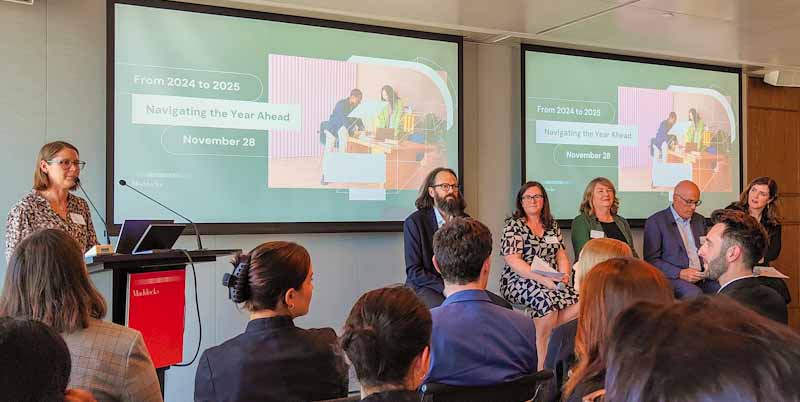
Last week, Maddocks law firm conducted an end-of-year summary of its workplace relations issues and a forecast for 2025. Occupational health and safety (OHS) are almost inseparable from industrial relations (IR), so the overlaps between the four or five topics discussed were enlightening and provided a good contrast to the information from other law sources.

Our understanding of suicides is improving…..finally
[The following article discusses suicide]
In November 2024, Victorian Coroner John Cain said:
“”While our early research suggests that Victoria’s suicide rate has not increased overall, it is troubling that we continue to see no sustained reduction in lives lost.”
Cain has instigated a research program with the Melbourne School of Population and Global Health at the University of Melbourne to provide a better understanding of suicide trends and rates. An understanding supported and queried by an article (paywalled) in The Weekend Australia written by journalist Stephen Corby.