Can the sex industry be the same as any other industry?

The Australian State of Victoria has committed to the decriminalisation of sex work. It made this decision some time ago, conducted an inquiry into how this could be achieved and is now in a further consultative process on what laws and practices need to change. The aim is honourable – to reduce the stigma of a legitimate industry. However, there is one statement repeated in media releases and discussion papers that encapsulates the challenge:

“Decriminalisation recognises that sex work is legitimate work and should be regulated through standard business laws, like all other industries in the state.”

That challenge is can, and should, Victoria’s sex industry be treated like “all other industries”?

Subscribe to SafetyAtWorkBlog to continue reading.
Subscribe Help
Already a member? Log in here

Attendee list of IR Minister’s business roundtable

Last week, Australian business and union representatives failed to gain the additional support on COVID-19 issues they wanted from the Federal Government during their meeting with the Industrial Relations Minister, Michaelia Cash. The Minister’s media release of the event seems to indicate business as usual.

One piece of information that has not been released before is a list of the organisations that attended. That list, published below and in no particular order, shows the attendees but, perhaps more interesting is those who were not invited.

Subscribe to SafetyAtWorkBlog to continue reading.
Subscribe Help
Already a member? Log in here

Is a definition of a “safe system of work” still needed?

Recently Carlo Caponecchia and Anne Wyatt published a short article about the “safe system of work” (open access for a limited time) – an important concept of occupational health and safety (OHS) and element of OHS laws, but one that is poorly defined; possibly because a sociological definition is more useful, and the sociology of work has always played second fiddle to the legal. This concise article should spark a lively discussion on safety management systems, safety culture and the safe system of business.

Subscribe to SafetyAtWorkBlog to continue reading.
Subscribe Help
Already a member? Log in here

NZ research into transport industry OHS is relevant everywhere

In 2019, Victorian Premier Daniel Andrews flagged that incidents involving commercial vehicles would be reflected in workplace health and safety statistics. There has been little visible change on this pledge. Still, recently WorkSafe Victoria reviewed its work-related fatality statistics to include truck fatalities and other causes of work-related deaths for the last couple of years. Guess what, the number of deaths almost doubled for that period from 26 to 49!! What would the rate of serious injuries be if it was also reassessed?

New Zealand undertook a similar exercise a few years ago, which has led to a significant research project into that country’s transport industry and supply chains, a research project with substantial relevance to Australia and elsewhere.

Subscribe to SafetyAtWorkBlog to continue reading.
Subscribe Help
Already a member? Log in here

Save lives or save money – the OHS tension

There are two core elements to the work of the occupational health and safety (OHS) professional – the management of Safety and the management of Safety Liability. In the simplest of terms, the former saves lives and the latter saves money. OHS (and politics) has always involved juggling these two extremes.

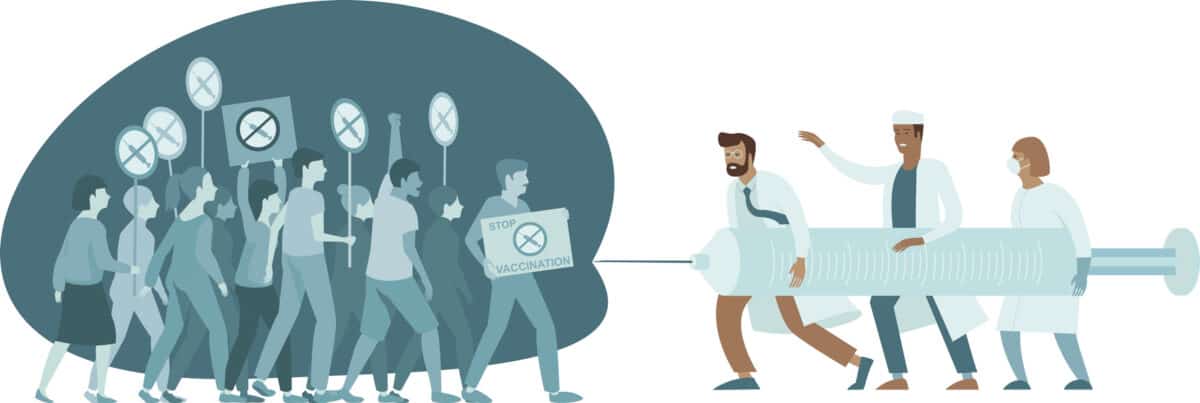
There are many examples of this tension but the most obvious, at the moment, is COVID-19 and the vaccination of workers.

Subscribe to SafetyAtWorkBlog to continue reading.
Subscribe Help
Already a member? Log in here

Business is getting some clarity on COVID-19 vaccines and a reminder to act

On August 12 2021, the Chair of Safe Work Australia, Diane Smith-Gander entered the fray over making COVID-19 vaccinations mandatory in an article in The Age. Later that day, in the absence of any clear guidance on the issue from the Federal Government, The Age reported that the Fair Work Ombudsman will be providing guidance on 4 tiers of workplaces relevant to assessing COVID-19 exposure risks.

The combinations of advice from these sources, greatly clarify what businesses can do to improve the safety of their workers and customers. The reticence to take reasonable occupational health and safety (OHS) steps by business groups will remain but the clarity they have been requesting will soon be available.

Subscribe to SafetyAtWorkBlog to continue reading.
Subscribe Help
Already a member? Log in here

To boldly go where no Australian company has gone before

The response to SPC’s decision to mandate COVID-19 vaccinations for its workers, contractors and visitors illustrates a common misunderstanding of occupational health and safety (OHS) management, poor OHS literacy and some industrial and media rent-seeking.

On ABC Radio’s PM program in early August 2021, the main objection of Andrew Dettmer of the Australian Manufacturing Workers Union was insufficient consultation prior to SPC’s decision. (Really?! What about the validity of the company’s OHS decision?) Dettmer said:

Continue reading “To boldly go where no Australian company has gone before”
Concatenate Web Development
© Designed and developed by Concatenate Aust Pty Ltd