Is it time for a Department of Safety?

The COVID19 pandemic is a public health challenge but what happens when workplaces are integral to the control and spread of the virus? This overlap between public health and occupational health is complicated and unlikely to be resolved in the short term, however, it can fixed in the longer term. The crisis in the Australian State of Victoria (where this author lives) offers an example of this complexity, but also an opportunity for positive change, perhaps even, a Department of Safety.

Subscribe to SafetyAtWorkBlog to continue reading.
Subscribe Help
Already a member? Log in here

“Soldier On” should be “F### Off”

Many workers continue to work when sick. This is called presenteeism and in a time of infection pandemic, is a major problem. Many countries have addressed the COVID19 risks of presenteeism by requiring people to work from home if they can. In Australia, the message is not totally working with people ignoring the rules for various reasons.

However, presenteeism also has a deeper cultural and institutional origin that has been exploited by some and downplayed or ignored by others.

Continue reading ““Soldier On” should be “F### Off””

Are OHS laws part of the safety clutter?

A major barrier to change is that Australia, as a whole, has never subjected its occupational health and safety (OHS) laws to a detailed analysis to determine whether the legislation and the supportive documentation works. To be clearer, Australia has never subjected its laws to a “safety clutter” analysis. No one seems to have tried to determine if the laws have any positive benefit on operational safety?

Subscribe to SafetyAtWorkBlog to continue reading.
Subscribe Help
Already a member? Log in here

We’ve got Industrial Manslaughter laws, now what?

So, Victoria now has Industrial Manslaughter laws. Now what? Within days of the activation of these laws a worker died at the Thales worksite in Bendigo. This location is covered by the Federal Work Health and Safety laws, but this has not stopped social media from mentioning Industrial Manslaughter. It seems now that every work-related death will be assessed through the IM lens. It may be that the threat of jail should always have been the starting point for occupational health and safety (OHS) penalties and investigations but initial responses to the IM laws have been mixed, and some seem to be more interested in what, in the past, has been a sideline to the IM discussion – deaths, in work vehicles, suicides and industrial illness.

Subscribe to SafetyAtWorkBlog to continue reading.
Subscribe Help
Already a member? Log in here

Two steps forward, one backward

The latest media release from the Australian Institute of Health and Safety (AIHS) shows a remarkable maturity and a newfound ability to be inclusive and topical.

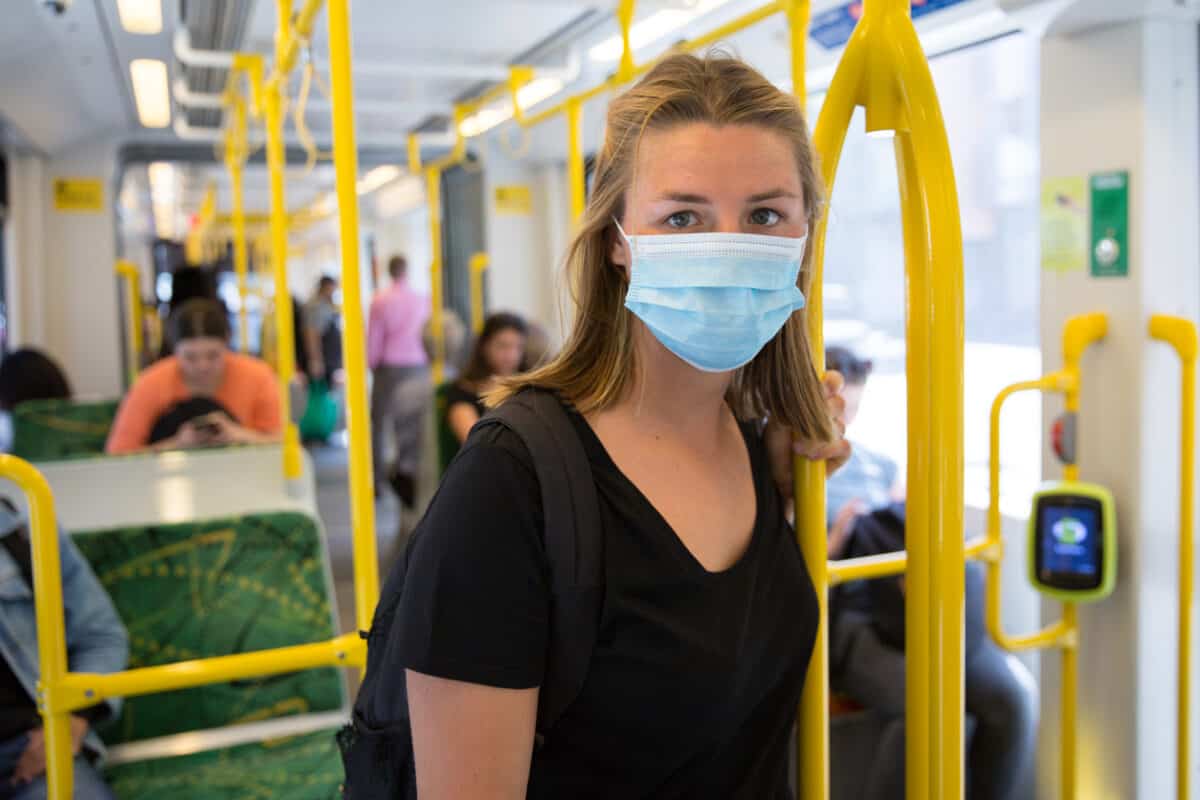
The AIHS, in conjunction with several other occupational health and safety (OHS) related organisations, developed and released an important guidance on respiratory protection masks for the work environment. Not only is this super topical but the effort has the support of the Australian Council of Trade Unions (ACTU), an organisation that, historically, has been reluctant to support OHS initiatives from outside trade union resources.

The primary purpose of the media release is to push the Federal Government for “the urgent establishment of a register for approved respirators (aka face masks)”, but this may be too simplistic and too narrow a focus especially when the issue of face masks is a critical part of the Governments’ plans to “reopen” the economy.

Subscribe to SafetyAtWorkBlog to continue reading.
Subscribe Help
Already a member? Log in here

Quad bike market changes for the safer

Honda, Yamaha, Suzuki and Polaris have previously announced that they will no longer be supplying quad bikes to the Australian market in response to the imposition of new safety standards. This has left a hole in the market for agricultural all-terrain vehicles (ATVs) that CFMOTO is happy to fill by including an Australian-made crush protection device (CPD) with the sale of some of its quad bikes.

Several Australian farmers continue to be unhappy about the removal of some models of quad bikes from the market. The Weekly Times reported on one disgruntled quad bike dealer, Craig Hartley. What the newspaper article failed to mention was that Hartley’s dealership is with Honda, Yamaha and KTM or that the dealership has been on the market since 2014 but it did include this quote from Hartley:

“Many rural motorcycle businesses, which support the ag industry throughout Australia, may have to close the doors as quad bikes are in many cases at least 40 per cent, if not more, of their turnover.”

Subscribe to SafetyAtWorkBlog to continue reading.
Subscribe Help
Already a member? Log in here

From a spark to a flame

The recent employment data for Australia shows record levels of unemployment due, largely, to COVID19. People are out of work and are seeking jobs in areas and occupations with which they are unfamiliar, and we know that new workers are at a high risk of injury. But “safe jobs” has rarely been a government priority.

Prime Minister Scott Morrison and Treasurer Josh Frydenberg held a long press conference after the release of the employment statistics on June 18 2020. Nine times the pair stressed the government’s priority was to get Australians “back into work”. Safe and healthy jobs were never mentioned. One could argue that occupational health and safety (OHS) was not part of the economic discussion on that day (it never is) but there is an equal argument to say that the inclusion of either adjective “safe” and “healthy” could create a cultural change in Australian workplaces, a cost-reduction strategy for Australian businesses and an increased quality of life and improved social cohesion for all Australians.

Subscribe to SafetyAtWorkBlog to continue reading.
Subscribe Help
Already a member? Log in here
Concatenate Web Development
© Designed and developed by Concatenate Aust Pty Ltd