Dust clouds on kitchen benchtops

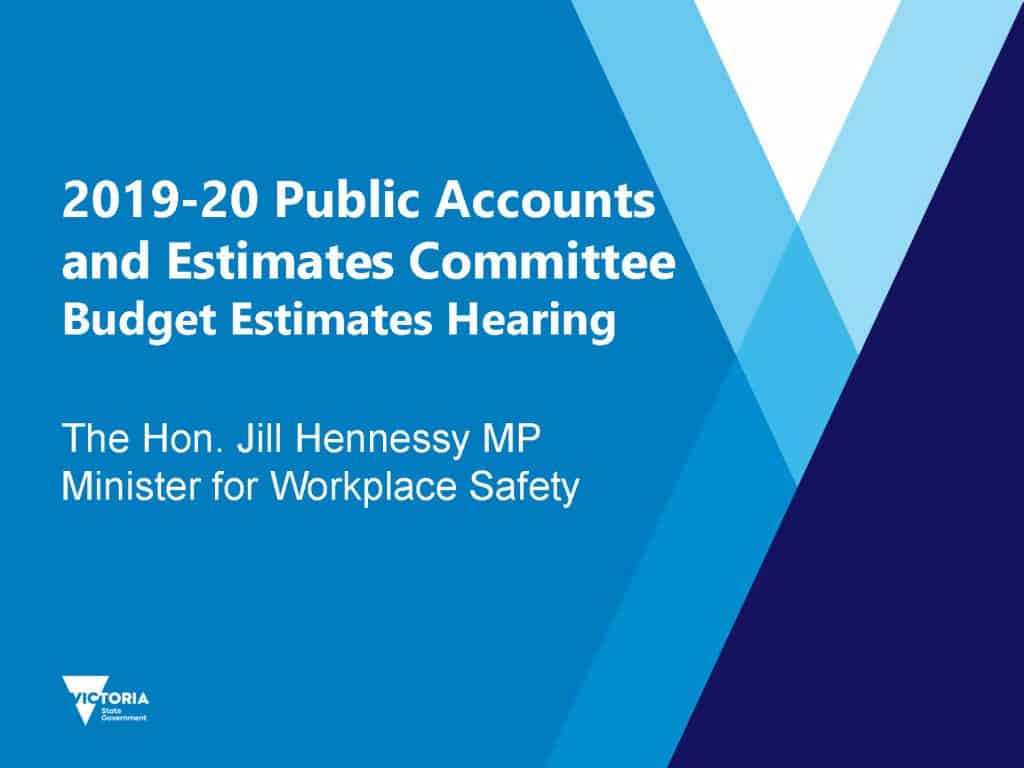
The Victorian Premier, the Minister for Workplace Safety, Dr Ryan Hoy and others at the silicosis announcement

The Victorian Government has announced that various safety initiatives are being taken on the silicosis risks associated with products described as synthetic stone. This initiative is an important first step in reducing the exposure of workers to silicosis but there are some curiosities in the announcement and WorkSafe Victoria’s accompanying Information Sheet.

The core elements of the government’s action are:

  • “A state-wide ban on uncontrolled dry cutting of materials that contain crystalline silica dust
  • Free health screening for Victoria’s 1400 stonemasons
  • A tough new compliance code for businesses working with silica
  • An awareness campaign to highlight the risks of working with engineered stone”.
Subscribe to SafetyAtWorkBlog to continue reading.
Subscribe Help
Already a member? Log in here

OHS is largely overlooked even on its special day

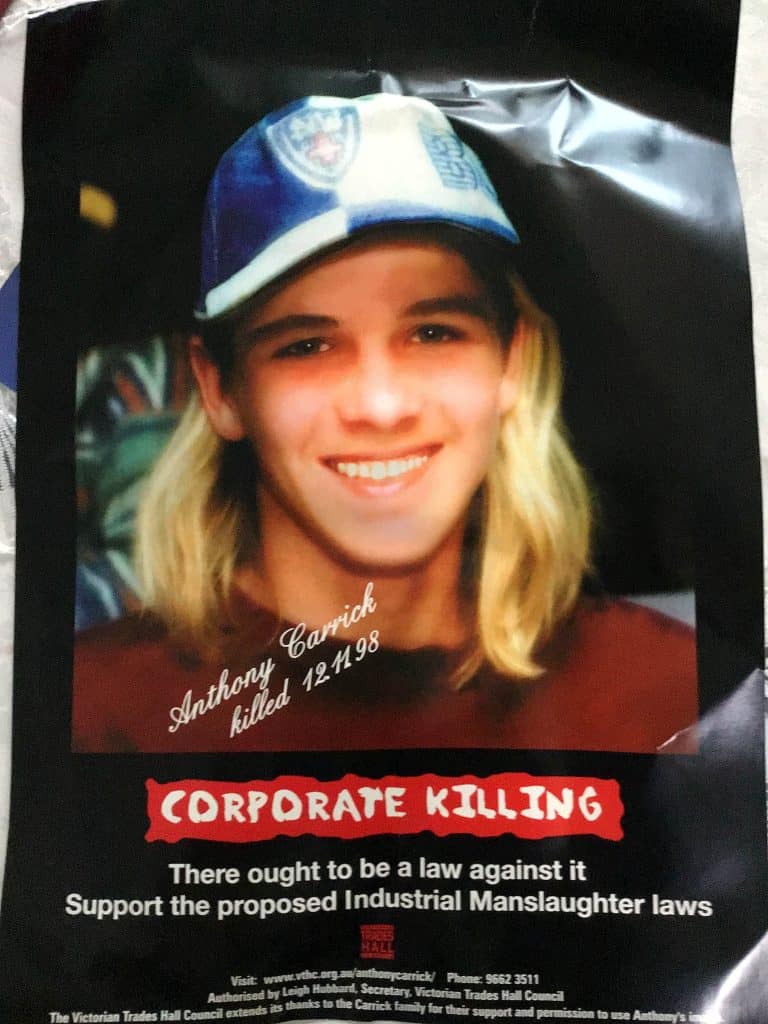
The mainstream media did cover the Australian Labor Party’s statement about workplace safety and industrial manslaughter laws. These issues also featured, unsurprisingly, in some of the commemorations on International Workers Memorial Day. But the issue was largely left floating, irretrievable in the political swimming pool.

David Martin-Guzman, writing for the Australian Financial Review (AFR), painted the ALP announcement as advocating on behalf Australia’s most militant trade union, the Construction Forestry Mining Maritime and Energy Union (CFMEU). This approach sadly places any OHS activity purely in the context of industrial relations. That is likely placing OHS as only part of Human Resources. OHS is its own profession, has its own principles and is supported by its own legislation and government regulator.

Subscribe to SafetyAtWorkBlog to continue reading.
Subscribe Help
Already a member? Log in here

Industrial Manslaughter – still thin on details and justification

Shortly after a SafetyAtWorkBlog article on occupational health and safety in the Australian federal election campaign, the Australian Labor Party (ALP) and the Australian Council of Trade Unions (ACTU) release media statements. It is a coincidence but one I should have anticipated as yesterday was International Workers’ Memorial Day.

The Shadow Minister for Employment and Workplace Relations, Brendan O’Connor, and Shadow Assistance Minister, Lisa Chesters, said that Australia’s work health and safety laws:

“are no longer harmonised or adequate,…..

This is the closest we will get to an admission that the harmonisation of occupational health and safety (OHS) laws in Australia has been a failure. Both the ALP and the Liberal/National coalition have responsibility for this failure. the harmonisation process was announced by the Liberal’s John Howard, but the Labor Party had the running of the process for most of its length. Many States introduced the laws but both political parties in Victoria have refused to participate, based on flawed economic assessments. The continued disinterest from Victoria’s Labor Party in harmonisation remains puzzling.

Subscribe to SafetyAtWorkBlog to continue reading.
Subscribe Help
Already a member? Log in here

The politics of safety

Bill Shorten third from the right at the 2012 Safe Work Australia awards in Parliament House Canberra

There is little doubt that Opposition Leader, Bill Shorten, believes that occupational health and safety (OHS) is important. His interest was on show, perhaps most significantly, during his time as a union leader at the Beaconsfield mine disaster but he has spoken at various OHS awards, the opening of the National Workers Memorial, local memorials, and was a participant in the Maxwell Review of Victoria’s OHS review in 2006.

OHS has not appeared yet in the current Federal Election campaign. It rarely does. But there is an opportunity to argue that the Australian Labor Party (ALP), of which Shorten is the leader, will not only create more jobs for Australian but that they will be safe jobs. To an OHS professional, it seems to be a simple position, a position that is extremely difficult to argue against. However, the politics of safety in Australia cannot be separated from the role and activities of the trade union movement. Yet, OHS is not just a union challenge, it is relevant to all workers and their families, but only the trade unions seem to have an OHS voice. Letting this situation continue is not sustainable.

Subscribe to SafetyAtWorkBlog to continue reading.
Subscribe Help
Already a member? Log in here

The biggest OHS challenge is greed

As the world approaches World Day for Safety and Health at Work and International Workers Memorial Day this coming Sunday it is worth reminding ourselves of some of the immorality that unregulated Capitalism allows. A company in one of the last remaining exporters of asbestos, Russia, has used President Donald Trump’s words and image to support its production and export of asbestos*, a product known for over a century to cause fatal illnesses.

Why is asbestos still mind if the evidence of its fatality is incontrovertible? Greed, or as it has been called in the past – “good business sense”. Many authors have written about the history of asbestos globally and locally. Many have written about the injustice in denying victims compensation from exposure to a known harmful chemical. But few have written about the core support for asbestos production, export and sale – Greed.

Subscribe to SafetyAtWorkBlog to continue reading.
Subscribe Help
Already a member? Log in here

Hopkins challenges safety culture advocates to look at structure

One of the major influencers on occupational health and safety (OHS) management in Australian has been Andrew Hopkins. His influence comes from a combination of being outside the formal OHS profession and establishing a platform that is inclusive of information from a range of sources. In short he is a sociologist.

Hopkins’ latest book has just been released. “Organising for Safety – How structure creates culture” is a radical departure to his previous books about organisational culture. Here Hopkins questions whether cultural change is the gradual spreading of new ideas and instead proposes that

“… the culture of an organisation is determined to a large extent by its organisational structure.”

Page 1

He also mentions power, a concept rarely discussed in OHS and almost entirely left to exist in sociology (Oh, the need for more Humanities study!). Power pops up in Human Resources but not to the same extent.

Hopkins also refers to, and creates, organisational charts that were in place at the time of a disaster and then to the reorganised structures after the disasters. Hopkins discusses how those new structures are in direct response to the new understanding of risk from the CEOs and Boards.

Subscribe to SafetyAtWorkBlog to continue reading.
Subscribe Help
Already a member? Log in here

The dicks are swinging over OHS

A couple more election campaign publications and statements have appeared in relation to occupational health and safety (OHS), one by the Institute of Public Affairs (IPA) and another in response to some advertising by the Construction Forestry Mining Maritime and Energy Union (CFMEU) released by the Master Builders Australia (MBA).

Institute of Public Affairs

There is nothing in the IPA report “20 policies to fix Australia” that directly relates to OHS, but there is a continuance of the desire for less “red tape”, a desire that has often mentioned OHS regulations and licencing as examples. The IPA says:

Subscribe to SafetyAtWorkBlog to continue reading.
Subscribe Help
Already a member? Log in here