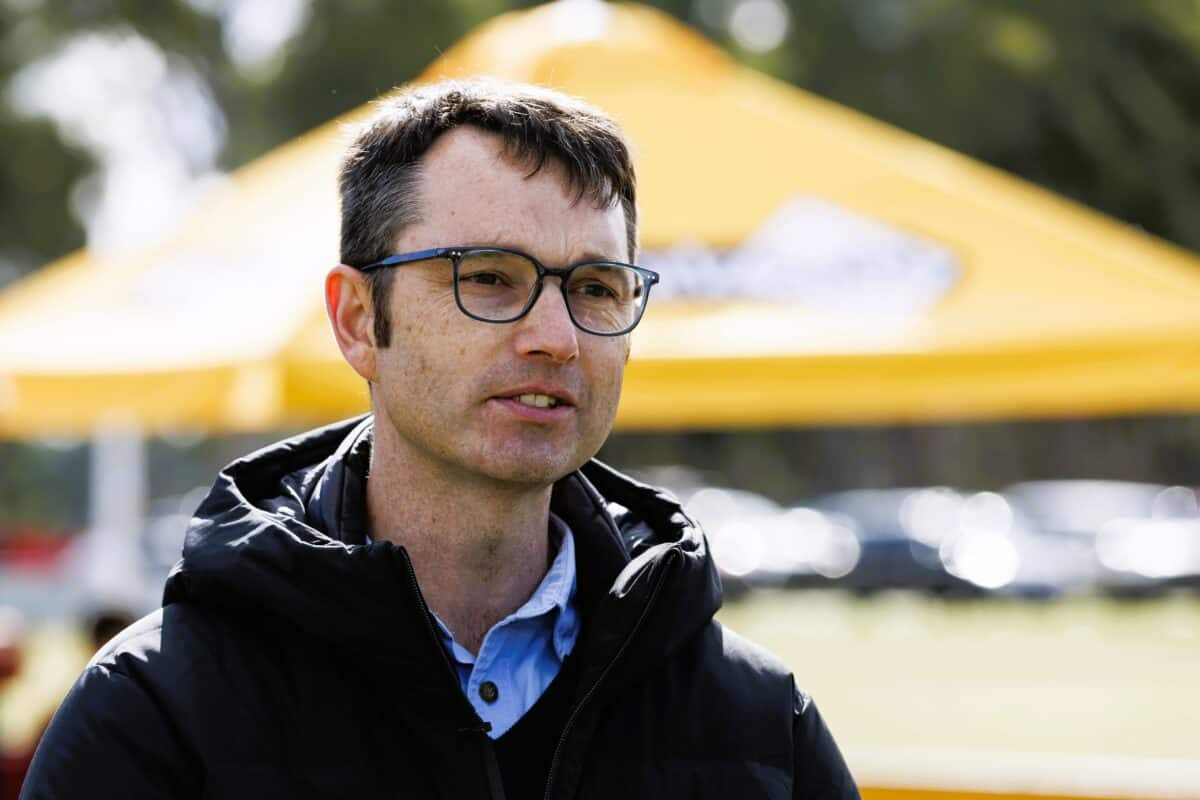
At WorkSafe Victoria’s Awards night, Minister Ben Carroll said he was pleased to be involved with WorkSafe’s new 5-Year Plan to be launched on February 28,2025. WorkSafe executive Sam Jenkin summarized the plan’s principal aims in his speech. He said:
Psychosocial and psychological wisdom
LinkedIn is becoming similar to Facebook in some ways, but it still provides excellent interpretations of occupational health and safety (OHS) laws and important social perspectives. Below are two such posts, reproduced with permission from the authors Richard Coleman and David Burroughs. (I have asked Richard to write some articles exclusively for SafetyAtWorkBlog)
Psychosocial hazards discussions are everywhere, as they should be
New information about the need to prevent psychosocial hazards at work keeps coming. Victoria will join the workplace mental health train a little later than planned. It went from engine to caboose in four years. SafeWorkNSW has released guidance on Designing Work to Manage Psychosocial Risks and an enforceable undertaking by a New South Wales mine from a psychosocial incident.
OHS breakfast seminar without WorkSafe Victoria
The latest annual occupational health and safety (OHS) breakfast seminar by the Australian Institute of Health and Safety tried a different format with mixed success. These seminars have run almost continuously at the offices of Herbert Smith Freehills for a couple of decades, and perhaps a refresh was required, but there was one noticeable absence – Victoria’s OHS regulator, WorkSafe.
Another Executive leaves WorkSafe Victoria and new psychological regulations announced
For personal reasons, Joe Calafiore, Chief Executive Officer of WorkSafe Victoria, announced his departure today after less than eighteen months. Narelle Beer departed in mid-2024.
Calafiore said in a staff email that:
“This job is 100% or nothing, and at this stage I am unable to commit the full focus that the role requires.”
WorkSafe Victoria Chair Bob Cameron told staff:
Still insufficient answers to the Delacombe trench deaths
Last week, the Victorian Coroner, Leveasque Peterson, released her findings into the deaths of Charlie Howkins and Jack Brownlee from a trench collapse on a residential construction site in Delacombe in March 2018. The employer, Pipecon, pleaded guilty to occupational health and safety (OHS) law breaches and was successfully prosecuted by WorkSafe Victoria. But the guilty plea meant there was only a cursory investigation of the OHS elements of the incident.
This month’s coronial findings have come without the opportunities offered by a formal inquest. So, where are the answers? What management decisions caused the trench to collapse and lead to the deaths of Jack and Charlie? The available answers seem insufficient. What lessons can be drawn from these legal processes to stop similar incidents occurring elsewhere?
Authentic selves, culture and racism
Culture has perhaps become the dominant theme in modern occupational health and safety (OHS). Possibly more dominant than Leadership. Culture remains an amorphous concept that is an inclusive adjective but also unhelpful.
Several recent events started making connections in my OHS brain that I am still working through:
- Online racist statements by two Australian nurses
- A Harvard Business Review Special Issue called “The Secrets of Great Culture” and
- An article by Professor Lena Wang and others on the separation of work and life.