
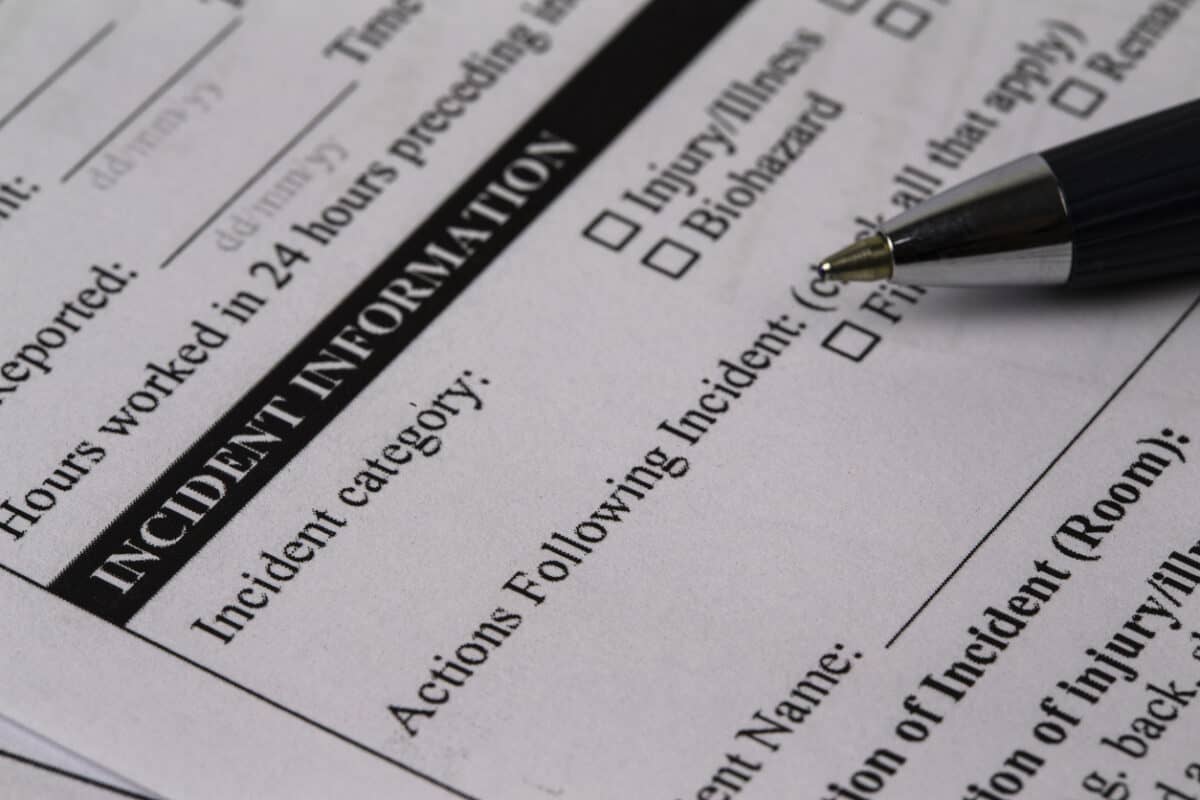
Recently the Victorian Government proposed six-monthly reports on psychologically hazardous incidents from employers to the OHS regulator, WorkSafe. The aim is to improve the pool of data available to the government in order to tailor harm prevention and reduction initiatives and a red tape campaign from employers is expected. These incident summaries are not the same as reporting a Notifiable Incident to WorkSafe but the notifiable incidents categories are overdue for a review and, maybe, an expansion.
Category: accountability

Is work health and safety “woke”?
Occupational health and safety (OHS) has always been progressive in that its purpose is to prevent harm to workers and people. It has lost its way sometimes and its effectiveness diluted at other times, but its core purpose has remained. At the moment, there is an ideological, political and cultural resistance to progressive structures and ideas that is often criticised as being “woke”. Woke has an evolving meaning, but it seems to mean well-intended but ineffective.
Recently Australian academic Carl Rhodes examined “woke capitalism” in a new book. Refreshingly Rhodes provides an analysis of woke capitalism rather than a rabid critique. OHS is not the focus of this book (when is it ever?), but his research and perspectives are relevant to how OHS is practiced and the level of influence we believe it deserves.
A mouse that is trying to roar
Robert Gottliebsen continues to support the campaign led by Self-Employed Australia’s Ken Phillips, to have senior members of the Victorian government prosecuted for breaches of the Occupational Health and Safety (OHS) Act. However, his arguments are becoming weaker.
On February 13 2022, in his column in The Australian (paywalled), Gottliebsen made big claims for Phillips’ legal action, which is being crowdfunded and advised by anonymous (but “some of Australia’s top OHS”) lawyers. He concluded his latest article saying:

Speaking truth to power
Last week two young women, Grace Tame and Brittany Higgins, made speeches at the National Press Club about the sexual abuse of minors and an alleged sexual assault in Parl ment House, respectively, and the social changes required to prevent both risks. Both spoke about the need to prevent these abuses and assaults. OHS needs to understand and, in some ways, confront what is meant by preventing harm. The words of Tame and Higgins help with that need.

Trade Unions, Cost, Exploitation and Responsibilisation
Trade unions have been the longest and strongest advocates on occupational health and safety (OHS) in Australia. Still, their political influence is falling slower than its declining membership due to structural legacies, of which the tripartite OHS consultation is one. The trade union strategy for OHS was to monetise it so that changes in OHS could be the catalyst for or on which it can piggyback industrial relations (IR) reform. A recent review of the work of Professor Michael Quinlan and a video from United States economist and author Robert Reich illustrates elements of this process.

Achievements and opportunities
In November 2022, Victoria has its State Election. The current Government of the Australian Labor Party has a solid parliamentary presence and is tipped to win another term of government. Although the 2022 Platform is yet to be released, it is worth looking at the 2018 policy document for what was promised and has been achieved in occupational health and safety (OHS) since then and speculating on what is left to do or announce in 2022.
The opposition Liberal Party of Victoria does not release policy documents but does include a list of its “beliefs”.
Below is a list of what Labor “will” do from the OHS chapter of its 2018 platform document:

Blaming others after a cock-up
Occupational health and safety (OHS) has a long relationship with Blame. Blame has a long association with Responsibility. In the Australian Financial Review on January 19, 2022, Andrew Hill of the Financial Times wrote about both in relation to Novak Djokovic’s actions that led to his deportation.
Djokovic said that one of his administrative team completed his travel declaration incorrectly.
“…. my agent sincerely apologises for the administrative mistake in ticking the incorrect box.”
Hill states that regardless of who completes paperwork on your behalf, you are responsible for the document as it is your document that you are submitting. You are responsible for the document and ensuring that the document is correct.