A strong attack on work-related psychological health and safety

The guidance on workplace psychological health and safety forecast by Safe Work Australia’s Peta Miller was released on June 14 2018.  There is potential for this guidance to change how mental health is managed and, most importantly, prevented in Australian workplaces.

It is important to note that “Work-related psychological health and safety – a systematic approach to meeting your duties” has been developed with the involvement and approval of all of Australia’s occupational health and safety (OHS) or work health and safety (WHS) regulatory bodies.  Workplace mental health promoters and resilience peddlers are unlikely to find much support in this document as the prevention of harm is the benchmark.

The guidance is also intended to operate in support

Subscribe to SafetyAtWorkBlog to continue reading.
Subscribe Help
Already a member? Log in here

Preview of Australia’s new work-related psychological injuries guidance

Peta Miller has worked at Safe Work Australia (SWA) for around 17 years.  She leaves there at the end of June.  One of her last public appearances for SWA was the National Health and Safety Conference in Melbourne in May 2018 at which she provided an outline of the new work-related psychological injuries guidance that has been signed-off by SWA but not yet released to the public.

This guide is said to be a large one but not one that requires a re-education on safety and psychological terms.  There is discussion about applying the risk management Hierarchy of Controls to psychosocial hazard identification, the prevention of psychological harm through the design of good work and the identification of psychological hazards without the need to diagnose a medical condition.

Subscribe to SafetyAtWorkBlog to continue reading.
Subscribe Help
Already a member? Log in here

We need a safe system of business

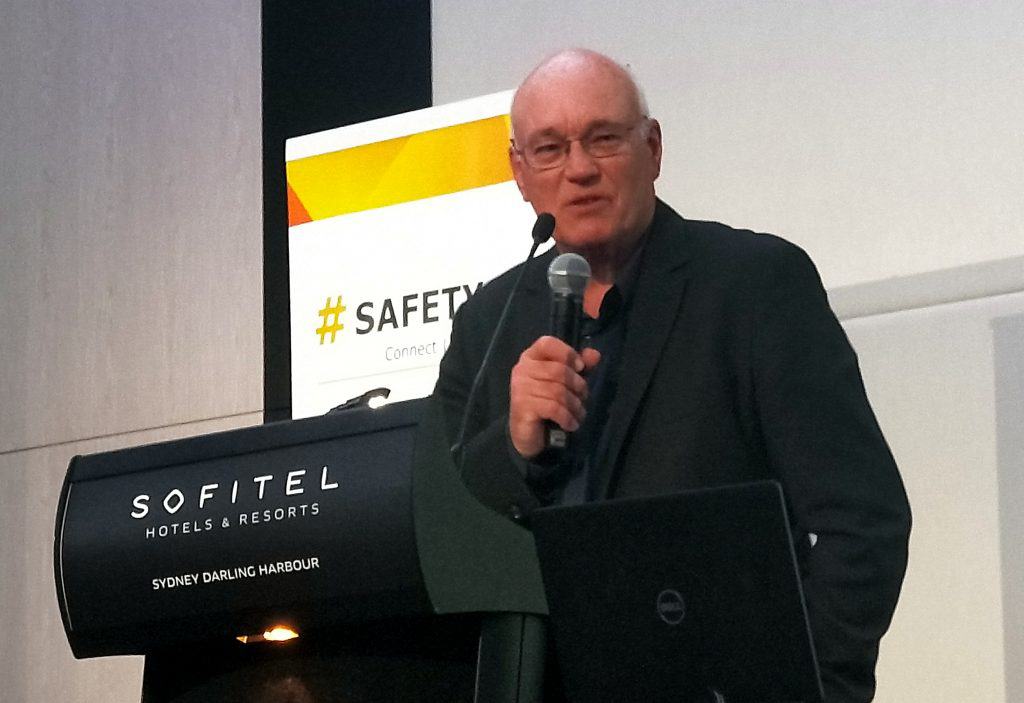
Throwing chocolates to delegates, audience participation, push-ups, book giveaways, hand-eye coordination exercises – not the usual elements of the opening keynote speaker of a safety conference.  Day 2 of the Safety Institute of Australia’s recent conference had a more traditional opening with presentations from a State workplace safety regulator and Australia’s occupational health and safety (OHS) agency.  If entertainment is your thing, jump for the chocolates, but if information is why you attend conferences, Day 2 was the better one.

The first speaker was

Subscribe to SafetyAtWorkBlog to continue reading.
Subscribe Help
Already a member? Log in here

The OHS context of the Robert Doyle case

Source: Lucas Dawson Photography

The number of prominent men who have come a cropper as a result of their sexual harassment includes the Lord Mayor of Melbourne, Robert Doyle.  A workplace safety trade show in Melbourne recently conducted a public panel seminar on the issue of sexual harassment with particular emphasis on the Doyle case.  One of the Melbourne councillors at the time, Stephen Mayne, spoke via video.  The panel also included a representative of local government, a safety advocate and a lawyer.

One of the most curious elements of this event was that it was conducted in a trade show

Subscribe to SafetyAtWorkBlog to continue reading.
Subscribe Help
Already a member? Log in here

Michalak’s evidence should change the wellbeing and OHS industries

Dr Rebecca Michalak has only recently come to my attention, mainly through challenging some of my statements on social media.  I was able to meet her and watch her presentation at the Safety Institute of Australia’s National Health and Safety Conference in May 2018.  It is likely her voice will become heard more broadly in coming years as she challenges elements of the Establishment.

Many elements of Michalak’s conference presentation can also be heard in the Fit For Work Podcast of Sally McMahon but there were a couple of statements that were notable.

Coping Strategies

“I had a theory that it’s not either/or – it’s an “it depends” thing and what I found across all well-being outcomes, six coping strategies and two samples – that’s 48 mediations – it makes no difference and in fact, most coping strategies make well-being worse.” (emphasis added)

Subscribe to SafetyAtWorkBlog to continue reading.
Subscribe Help
Already a member? Log in here

Toughen up, Princess

Today the Medical Journal of Australia released a media statement entitled:

“FIFO workers’ psychological distress “alarming””

What is more alarming is that the levels of psychological distress have remained high even though there have been inquiries into the mental health of Fly-In Fly-Out workers in Western Australia and Queensland since 2014!!

Western Australian research undertaken by

Subscribe to SafetyAtWorkBlog to continue reading.
Subscribe Help
Already a member? Log in here

Unsafe systems of management

Excessive workplace stress in the medical profession is well documented but stress is often seen as a minor workplace hazard that is fairly easily dealt with by holidays, for instance, or is dismissed as an “occupational hazard” or part of the entry to the profession or just part of the culture, with the implication that nothing can change.  Only recently have work-related suicides garnered serious research attention and these incidents are now being openly discussed, as this April 2018 article in the MJA Insight shows.

The author of the opinion piece, Dr

Subscribe to SafetyAtWorkBlog to continue reading.
Subscribe Help
Already a member? Log in here
Concatenate Web Development
© Designed and developed by Concatenate Aust Pty Ltd