OHS and Rebecca Michalak

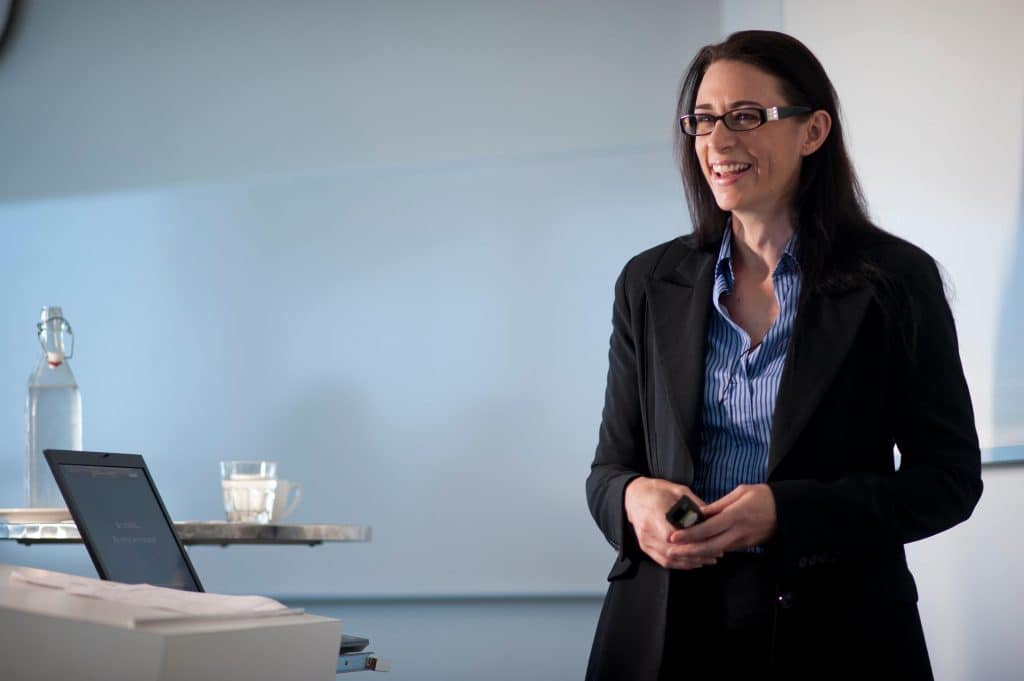
Dr Rebecca Michalak is the founder of PsychSafe, a company advising companies on issues related to the interconnectedness of occupational health and safety (OHS), Human Resources (HR) as well as the psychological hazards and structures at work and of work. Her combination of skills and experience is a new one for Australia and Dr Michalak is quickly becoming a strong influence on workplace health, safety, and corporate governance.

Dr Michalak has accepted the opportunity to provide a more personal insight into what she does and why she does it in the latest in a series of articles about humanising OHS.

Apology:  Due to unauthorised reproduction of this article in breach of Copyright, access has been restricted to Subscribers Only.  Should you require access to this article particularly, please email the Editor
Subscribe to SafetyAtWorkBlog to continue reading.
Subscribe Help
Already a member? Log in here

The challenge of preventing harm beyond just “primary prevention”

Fay Calderone’s article in HRDaily on workplace sexual harassment and her responses to some questions from SafetyAtWorkBlog illustrate several points of difference between the usual Legal/HR approach to the management and prevention of workplace risks and the application of the occupational health and safety (OHS) approach. These points of difference are discussed below.

Leadership discussion, policies and training

The prevention of harm is a core principle of occupational health and safety. OHS professionals strive to eliminate hazards at the earliest opportunity and apply the precautionary principle as often as possible. Prevention is aimed at detecting early indications or precursors of hazards, such as those occurring in a Near Miss.

Subscribe to SafetyAtWorkBlog to continue reading.
Subscribe Help
Already a member? Log in here

OHS, sexual harassment, HR and the pursuit of prevention

HRDaily unlocked an article concerning workplace sexual harassment on March 6 2020. The article was written by lawyer Fay Calderone and SafetyAtWorkBlog sought clarification from her on a number of points.

Some of the issues raised in the original article and Calderone’s responses will be discussed in a secondary article.

Subscribe to SafetyAtWorkBlog to continue reading.
Subscribe Help
Already a member? Log in here

Mental Health conference assessment

As you could guess from some recent blog posts, the Criterion Conference called “Improving Integrated Approaches to Workplace Mental Health” conducted with the support of the Australian Institute of Health and Safety, was well worth attending as many of the speakers were excellent. What was missing was a strong voice of advocacy on behalf of the Human Resources (HR) profession to counter or balance the strong occupational health and safety (OHS) focus.

Below is a summary of some of the important points made by the conference speakers (or at least those who did not impose restrictions).

Subscribe to SafetyAtWorkBlog to continue reading.
Subscribe Help
Already a member? Log in here

HR needs to broaden its pool of risks

Human Resources (HR) professionals often have an enviable degree of influence over the decision making of company executives. In modern parlance, they are “influencers”; as such it is useful to keep an eye on the advice offered by the association that represents HR professionals, the Australian Human Resources Institute (AHRI).

Recently, freelance journalist, David Barbeler wrote “A comprehensive look at what lies ahead for workplaces in 2020” in AHRI’s HR Magazine. Given that the article is headlined as comprehensive, there are several peculiar occupational health and safety (OHS)-related omissions, especially workplace sexual harassment, Industrial Manslaughter, suicide and mental health.

Subscribe to SafetyAtWorkBlog to continue reading.
Subscribe Help
Already a member? Log in here

“Moral Harassment” = Workplace Bullying. France Telecom lessons

The France Telecom suicide saga has reached a conclusion with a French Court sending several of company’s former executives to jail as a result of “collective moral harassment”. This will have very little impact on the management of occupational health and safety (OHS) in Australia because of the timing and inadequate translation and context.

“Moral Harassment” is a term that is absent from the Australian OHS lexicon. One equivalent term is “mobbing” but this is also an uncommon term in Australia. Australia’s equivalent is “workplace bullying” as mentioned in research by Katherine Lippel of the University of Ottawa in 2011 (pages 1-2).

Subscribe to SafetyAtWorkBlog to continue reading.
Subscribe Help
Already a member? Log in here

New Zealand leads on wellbeing

A couple of months ago, SafetyAtWorkBlog mentioned New Zealand’s Wellbeing Budget. Last week a representative of the NZ Treasury, Ruth Shinoda, spoke about it from direct experience in Melbourne at the 7th Global Healthy Workplace Summit. The Wellbeing Budget and a complimentary Living Standard Framework provide important contrasts to how Australia is valuing the healthy and safety of its citizens and workers.

Subscribe to SafetyAtWorkBlog to continue reading.
Subscribe Help
Already a member? Log in here
Concatenate Web Development
© Designed and developed by Concatenate Aust Pty Ltd