
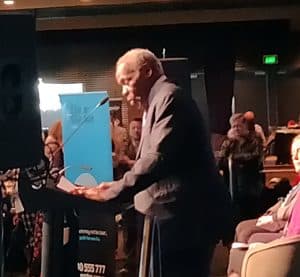
The 2018 Congress of the Australian Council of Trade Unions (ACT) is happening in the middle of a campaign to “Change the Rules”. These “Rules” are largely concerning with industrial relations, of which Occupational Health and Safety (OHS) is a subset, or complementary, element. Legislation constantly needs challenging and review; much legislation, like Australian Standards, misses their expiry dates and persists too long, becoming increasingly seen as irrelevant.
OHS has the “luxury” of having been reviewed nationally within the last decade. For some Australian States this change was progressive but for most it was a catch up to contemporary standards and expectations. OHS laws have not progressed since and a lot of hope is placed on the current Independent Review of Work Health and Safety (WHS) laws to enliven the discussions, yet that report is not due until 2019.
Trade unions have a great deal of faith in legislation to achieve change.
 Let’s acknowledge the problems with this year’s
  One of the Select Committees of the Australian Senate is conducting an inquiry into the “
 The primary occupational health and safety (OHS) duty rests with employers or, as they are known in most Australian jurisdictions, Persons Conducting a Business or Undertaking (PCBU). Laws are based on an assumption that employers are aware of this duty and that this duty, to provide a safe and healthy work environment without risks to health, reflects the employer’s social position and social responsibility or the company’s “
 There seems to be a growing community frustration with regulators who hesitate to prosecute breaches of laws, including occupational health and safety (OHS) laws, and about options that sound reasonable, like
  Australia’s