
 Occupational health and safety (OHS) is increasingly being touted as an integral part of a company’s organisational culture. Sometime this is described as a workplace, or safety, culture. If OHS is to be considered thus, it is important to understand other cultural perspectives. One of the most prominent in Australia, at the moment, is the culture of the banking sector.
Category: law
Psychology, Leadership and Jonathan Lincolne
 Episode 47 of Andrew Barrett’s Safety On Tap podcast consisted of an interview with Jonathan Lincolne of Pockets of Brilliance. Several comments are of note.
Psychology
Around the 47 minute mark, Lincolne is asked about the level of psychological knowledge that the occupational health and safety (OHS) professionals should possess. Lincolne refreshingly describes himself as a skeptic about a lot of the recent psychological discussion, particularly the promotion of neuroscience.
NSW Minister should take the tough decision on quad bike safety
 It was reported during the recent Farm Safety Week in Australia, that the Federal Government is willing to work with the States to improve quad bike safety. The New South Wales (NSW) Government has responded by saying the Federals should provide a national five-star safety rating system on the farm vehicles. Such a system is widely supported until the discussion turns to the criteria to be included.
Some of the print reporting of the current discussions sound has the NSW Minister for Innovation and Better Regulation, Matt Kean, sounding like a politician – reasonable and measured. However, the delivery of the same message on the NSW Country Hour program for July 18 2017 (at the 43 minute 40 second mark) is much tougher. The Minister should be even tougher on this issue and take it up to the quad bike manufacturers. Continue reading “NSW Minister should take the tough decision on quad bike safety”
OHS and murder
In 2014, Glen Turner, an environmental officer with the New South Wales government was murdered will inspecting agricultural properties for illegal land clearing. Turner was shot repeatedly by local farmer Ian Turnbull, and died at the scene in front of his work colleague, Robert Strange. 79-year-old Turnbull was found guilty and jailed but died 12 months into his prison term. Due to pressure from Turner’s family, the NSW Government has announced a coronial inquest into the death and the circumstances leading up to it.
Several media reports acknowledge that Turner was killed while at work but the occupational health and safety (OHS) context of the shootings and the actions leading up to the incident has not been investigated except where it led to Turnbull’s trial. Indications are that the coronial inquest will look at this perspective.
More work needed on public evacuation protocols
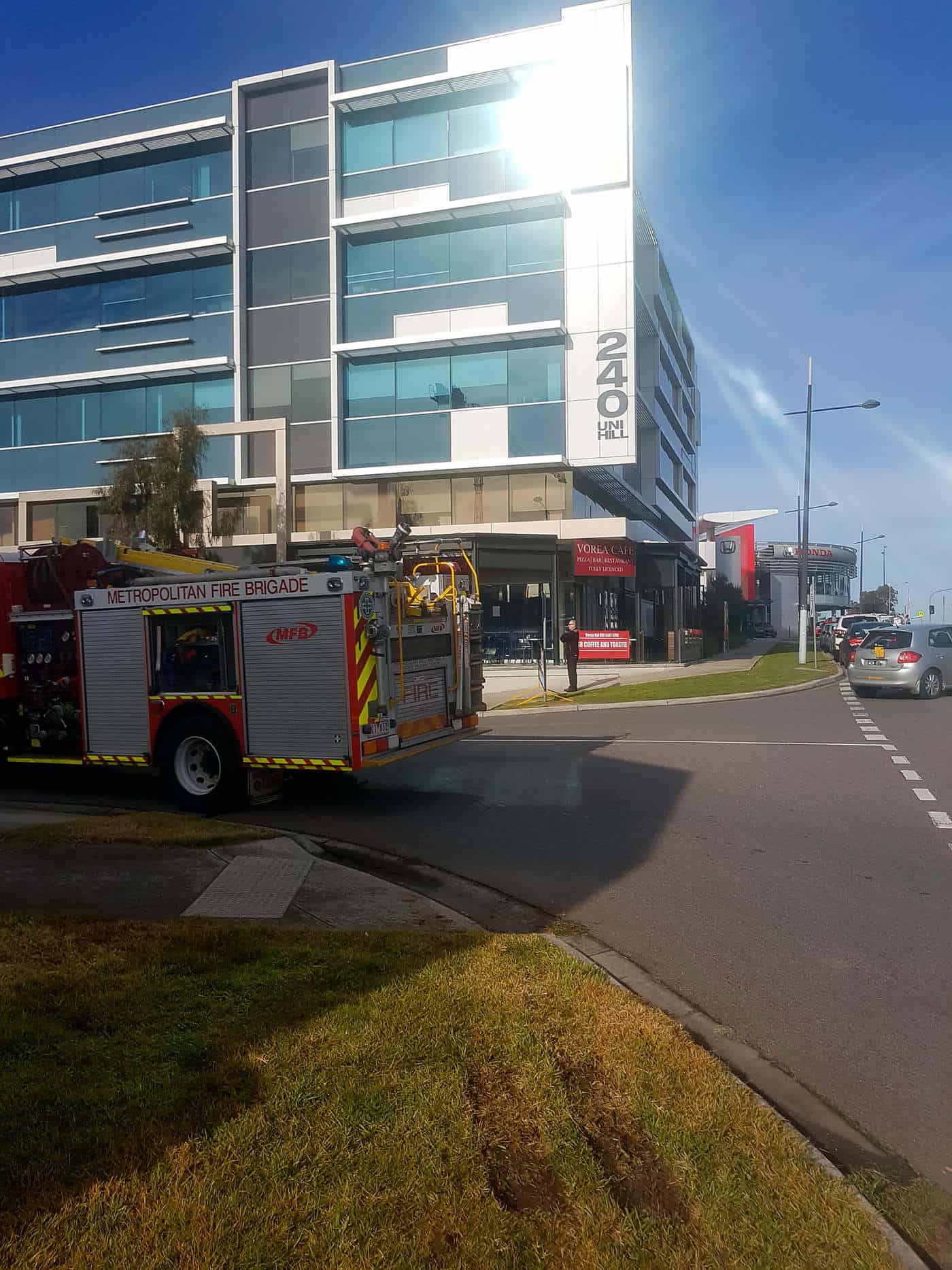 On 12 July 2017 a kitchen fire broke out in a densely packed restaurant and cafe sector of Melbourne, Australia. This article illustrates some of the localised response and firefighting attempts. Earlier that day I was in a cafe in Melbourne’s northern suburbs when the building’s evacuation alarm sounded (pictured right). There was no fire in the cafe and patrons were confused when directed to evacuate by a voice on the speaker/alarm system. This confusion was not helped when the young waiters told patrons to stay, kept serving patrons and continued to take orders. This experience illustrates significant misunderstandings about emergency protocols in public areas. Continue reading “More work needed on public evacuation protocols”
Canberra Hospital demolition deserves a unified safety story
It is the twentieth anniversary of the explosive demolition of the Canberra Hospital. The demolition was meant to be an implosion but instead debris scatter well outside the designated safety zone resulting in the death of one person and injuries to nine. Such events are significant at the time but fade from memory until anniversaries are noted, however, there are important occupational health and safety (OHS) lessons from such incidents which do not have the drama of a Piper Alpha or a Challenger but are nevertheless as instructive.
RTW seminar hints at WorkSafe Victoria’s future
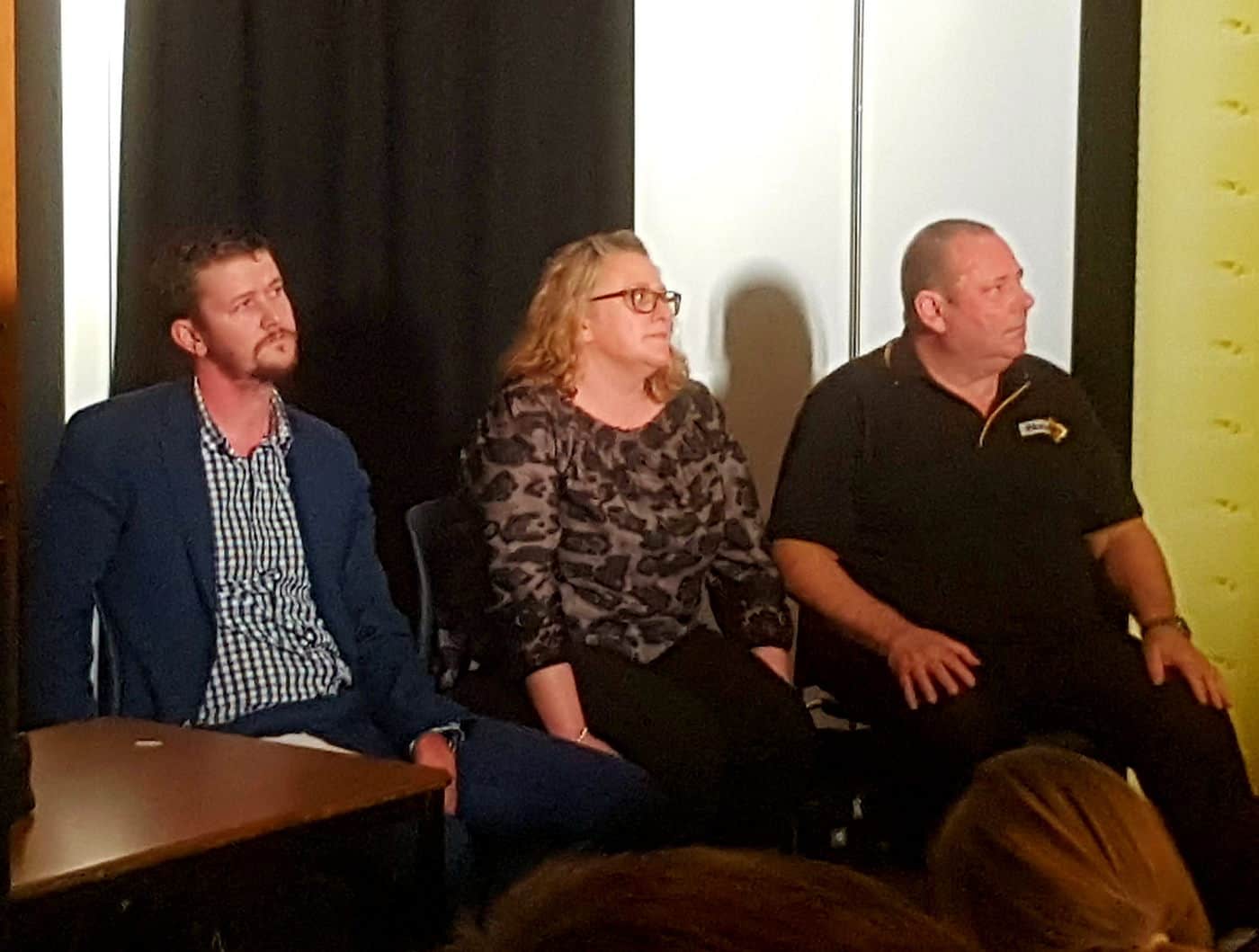 Victoria Australia has had a network of safety groups for well over 40 years with two or three enduring into this century. On 5 July 2017, the Ballarat Regional Occupational Safety and Health Group (BROSH) held an interactive seminar on Return-To-Work (RTW). The discussion was not revolutionary but allowed the audience – a mix of businesses, OHS professionals and students – to speak about their lived experiences with managing injured workers.
I brought the WorkSafe 2030 Strategy discussion paper to the audience’s attention and a WorkSafe representative from the seminar’s panel, pictured above, said that there are several weird technical suggestions for workplace inspections and advice emerging from the discussion within the OHS regulator. However the strategy is focussed always on the client and that it is “prevention-led”. OHS is all about the prevention of illness and injury but it appears that WorkSafe is extending this term to RTW.
The representative explained that the regulator is looking at interventions that prevent an injury or illness claim transforming into, or contributing to, another and new injury. They hope that by focussing on the injured worker and providing the right level of advice and support, the will achieve the best RTW outcome for all involved.
One of the questions from the audience was if there is a better RTW and workers’ compensation system that Victoria could move to or learn from. The panel agreed that the Victorian system seems to be leading Australia in terms of its financial health but, more importantly, the level of care and support options provided to injured workers.
The BROSH seminar was well attended and the audience was active, which largely resulted from the innovative and engaging seminar structure.