
 The Safety Institute of Australia (SIA) is making serious efforts to increase its relevance to Australia’s occupational health and safety (OHS) profession and the broader community. Around International Women’s Day, the SIA released a media statement calling for action on workplace bullying, harassment and abuse.
Category: law
Concerns over ISO45001 voiced but no details provided
 The publication date for the first truly international Standard on occupational health and safety (OHS) management systems, ISO45001, the rhetoric is heating up in Australia.
#MeToo, #TimesUp and #OHS
 Being International Women’s Day, the media is awash with articles about pay rates, gender equality and sexual harassment. One of those articles is written by Sarah Ralph of Norton Rose Fullbright. Ralph provides a good summary of the current gender issues and recent media attention (may require registration but it’s free). She makes several recommendations for how to reduce the risk of sexual harassment and unwanted media attention. Below those recommendations are looked at from the occupational health and safety (OHS) perspective to see how OHS can help reduce the psychological harm. Continue reading “#MeToo, #TimesUp and #OHS”
Safety insights from Return-To-Work Forum
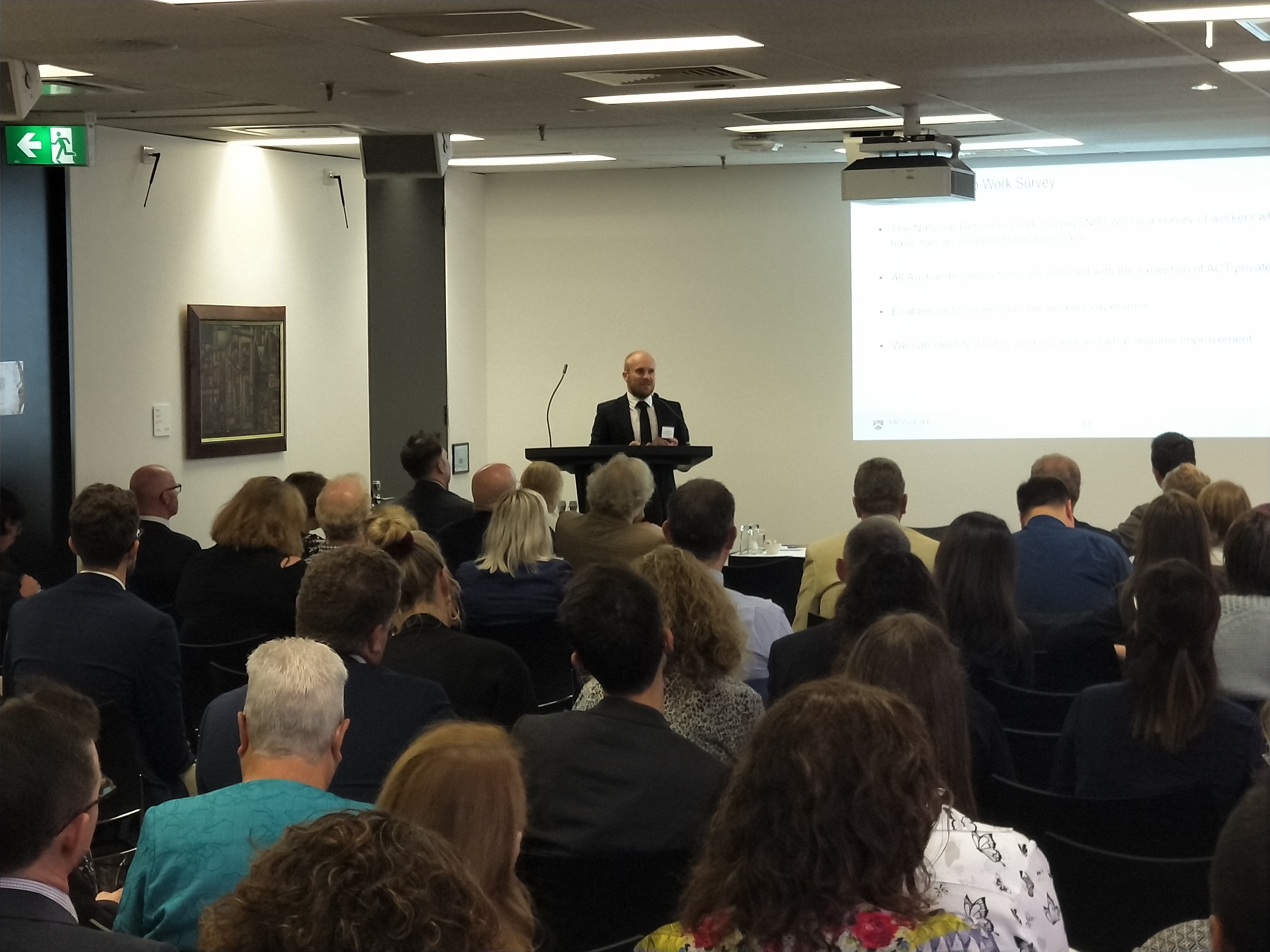 A lot of statistics were presented at a workers’ compensation research seminar in Melbourne on 1 March 2018. Monash University’s Insurance Work and Health Group provided a useful perspective on return-to-work matters with several points relevant to occupational health and safety (OHS).
Both Professor
5 top OHS issues for 2018
 The annual Safety Institute of Australia (SIA) breakfast was held in conjunction with Herbert Smith Freehills (HSF) law firm on 21 February 2018. This year the audience heard from two representatives of WorkSafe Victoria – Marnie Williams, the Executive Director and Paul Fowler, the Director of the Enforcement Group.
The WorkSafe presentations were interesting but included what was largely expected – an introduction to the recent Independent Review report and a reiteration of the WorkSafe Strategy 2030. (More on WorkSafe’s presentation in the next article)
Some of the more thought-provoking content came from HSF’s Steve Bell. He presented several issues and perspectives for consideration.
The review of Australia’s OHS laws starts
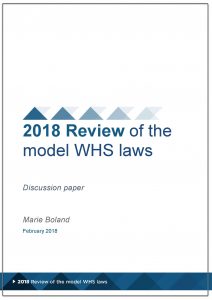 In 19 February 2018, Safe Work Australia (SWA) “launched” the independent review of Australia’s Work Health and Safety laws under former Executive Director of SafeWorkSA, Marie Boland. SWA has released a 49-page discussion paper, a summary and a list of questions. Below is an initial response to some of those questions.
What are your views on the effectiveness of the three-tiered approach – model WHS Act supported by model WHS Regulations and model WHS Codes – to achieve the object of the model WHS laws?
The structure works well, when business owners know of the relevant documents.
Industrial Manslaughter laws in Australia are about politics, not safety
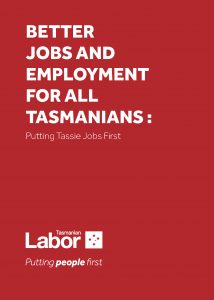 The latest push for Industrial Manslaughter laws in Australia has appeared as part of the Tasmanian state election.
The Tasmanian branch of the Australian Labor Party released its policy platform for jobs in February 2018 which makes specific and vague commitments on workplace safety which require scrutiny.
Precarious Work
The Tasmanian Labor Leader, Rebecca White, states that
“Labor is committed to addressing casualisation and the outsourcing of work…”