
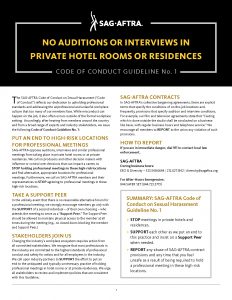
 Australia continues to develop various Codes and Guidances for the prevention and management of sexual harassment, particularly in the creative industries. America’s Screen Actor’s Guild (SAG) released some guidance about its Code of Conduct on April 12 2018. It is educative but Australia can do better.
A positive in SAG’s announcement is that it clearly places sexual harassment under the category of workplace safety which allows for a broad approach to the hazard and one that is supported by legislation and an employer’s duty of care.

 Screen Australia
 Australia has received its own local focus for the #MeToo concerns about sexual harassment in the workplace.
  Small regional conferences often work better than major city-based conferences as the atmosphere is more relaxed, delegates are more approachable and there is less pressure to attend some grand trade expo.