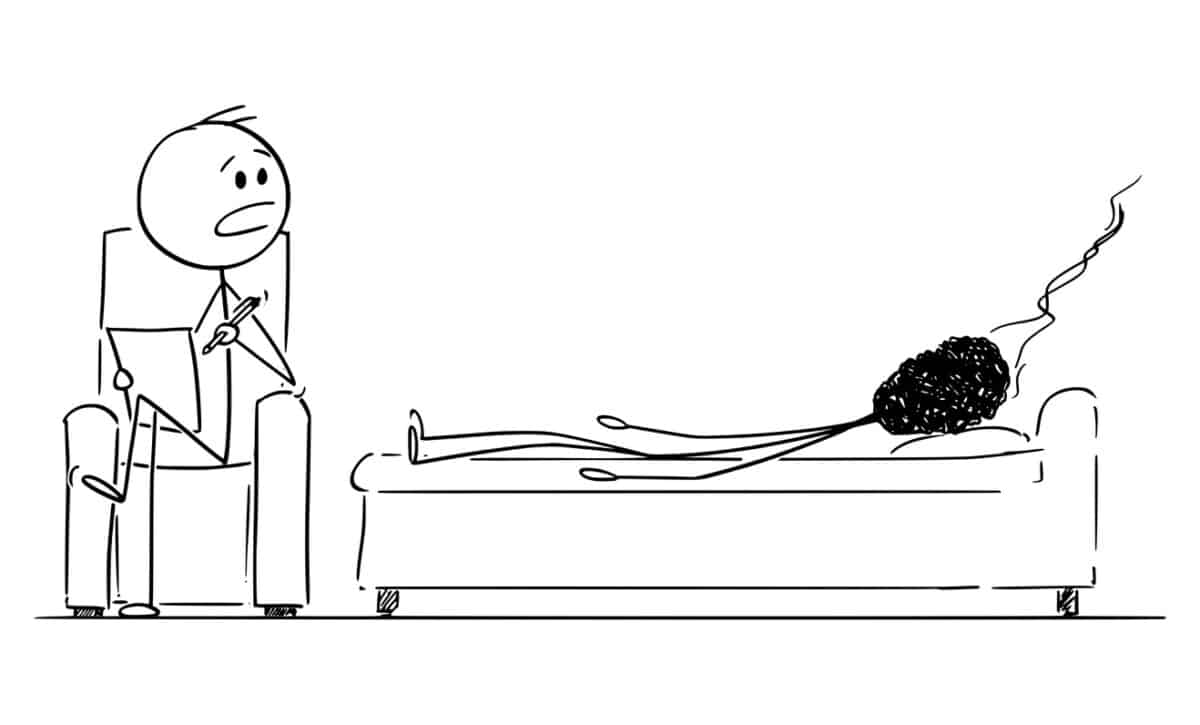
I recently refreshed my Lead Auditor in OHS training – the first time since Australia updated its Occupational Health and Safety Management Systems Standard to ISO45001. It was challenging on some issues but generic on others. Due to the recent heightened awareness of psychosocial hazards in the workplace, I was watching for how this hazard would be addressed. Still, I became stuck on the inclusion of “cognitive condition” in the definition of “injury and ill health”.
Category: mental-health
WorkSafe advertises for a sex work Project Officer
WorkSafe Victoria is advertising for a Program Officer for its new sex work industry obligations. It’s a tough ask as the candidates will need to combine a good level of occupational health and safety (OHS) knowledge with a close, effective association with the local sex work industry networks.
WorkSafe has outlined its expectations for sex work OHS with these suggested considerations:
A Wellbeing Budget needs a strong cultural change strategy
Jim Chalmers has completed his first week of Australia’s Parliament as Treasurer. On Thursday, he presented a statement of the country’s finances without mentioning his well-being intentions (which some are claiming to be a gimmick). This does not mean that well-being is dead, as the “Wellbeing Budget” is not due until October; Chalmers needs to establish his authority, but it illustrates a common perspective on occupational health and safety (OHS) in the minds of many small business people.
Psychological regulations and control
Recently International SOS conducted a webinar on workplace psychosocial hazards and controls. Parts of it were clearly marketing and promotional, but some of the speaker’s content was fascinating and useful.
The seminar’s structure was good because it included a global perspective and a local Australian. The speaker from a worldwide standpoint, Dr Rachel Lewis, used financial figures to illustrate the seriousness of workplace mental health risks. These involved annual costs to employers, costs of workplace stress and other figures in the billions. This approach encourages a misunderstanding of the audience for workplace mental health seminars and the occupational health and safety (OHS) approach to the hazard.
Why are farms becoming safer?
It is Farm Safety Week in Australia. These types of events are intended to raise awareness of specific issues. The biggest problem with these events is that solutions are rarely presented; it is assumed that raising awareness is sufficient. This is hard to justify in agriculture, where many of the smaller and high-risk farms have been run by families for many years and often generations. As a result, most people living in the country know of someone widowed after a workplace incident or of someone like the one-armed tennis player or lawn bowler who lost an arm in an unguarded Power Take-Off.
At some point, the strategy must move from raising awareness to providing solutions.
A new, safer work schedule or continuing employer “flexibility”?
SafetyAtWorkBlog has kept a watching brief on the Australian construction industry and its attempts to improve its workplace culture. On the initiative of no weekend work, there seems to be some dissatisfaction from Brookfield Multiplex, even though that company is a “contributing member ” of the Construction Industry Culture Taskforce (CICT), which advocates for no weekend work and a cap of 50 hours.
Victorian sexual harassment recommendations protect workers – sort of
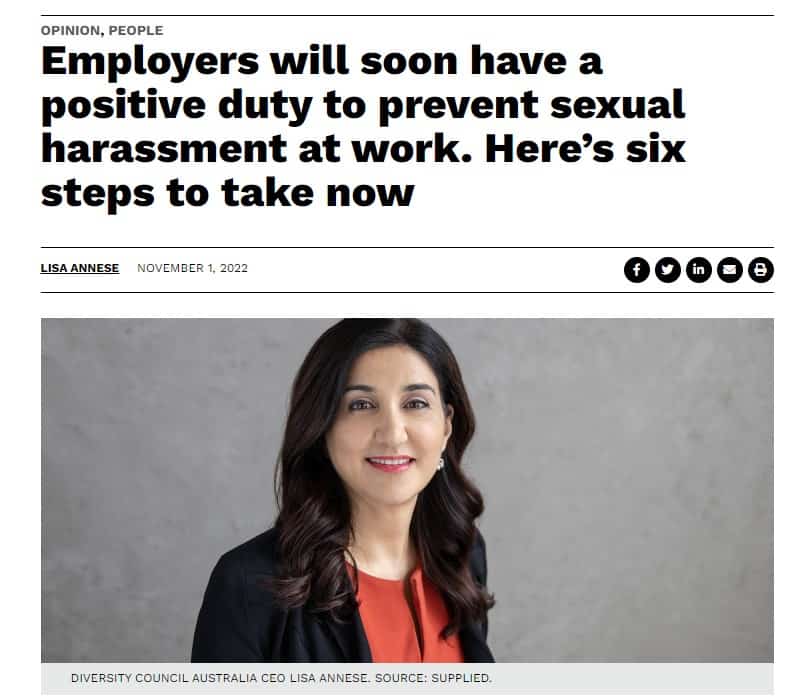
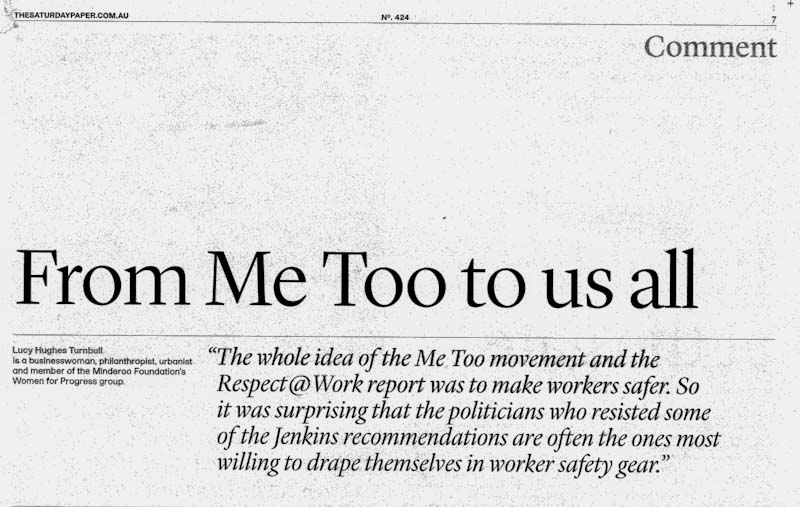
In light of many workplace sexual harassment scandals in Australia, the Victorian Government established a task force to look at the issues and make recommendations. That task force has released its findings, the government has responded, and the media has focused on mainly one issue – non-disclosure agreements (NDAs) – missing out on other important information. And questions like, why did Victoria have the task force at all?