
 The Victorian (Labor) Government promised a review of WorkSafe Victoria’s enforcement policies in its 2014 campaign pledges as per the quote below. The independent occupational health and safety (OHS) review was conducted in 2016 with a lot of public submissions. The review’s final report was presented to the Victorian Minister for Finance, Robin Scott in December 2016. Everything has been quiet since. Continue reading “Will we ever get to see Victoria’s latest OHS review?”
Category: politics
Grenfell Tower and other incidents illustrate major deficiencies in OHS perceptions
 A recent investigative report into workplace safety at Los Alamos laboratory in the United States included this statement:
“The Center’s probe revealed worker safety risks, previously unpublicized accidents, and dangerously lax management practices at other nuclear weapons-related facilities. The investigation further found that penalties for these practices were relatively light, and that many of the firms that run these facilities were awarded tens of millions of dollars in profits in the same years that major safety lapses occurred. Some were awarded new contracts despite repeated, avoidable accidents, including some that exposed workers to radiation.”
The whole article deserves reading but this paragraph in particular illustrates that deficiencies in procurement apply to large organisations in high risk sectors just as much as it can in the small to medium-sized business sector. A major reason is that detailed and diligent procurement has been seen as red tape and it seems to have taken disasters like Grenfell Tower to illustrate the moral deficiencies and short-term economic fantasies of
Baked Beans and Bullying

Workplace bullying has a strict and clear definition in Australian occupational health and safety (OHS) laws:
“…repeated and unreasonable behaviour directed towards a worker or group of workers that creates a risk to health and safety.”
According to Mr Peter Katsambanis, a Liberal Party member of the West Australian Parliament, the slashing of tyres, paint damage on a car and an exploding tin of baked beans is a
“terrible issue of workplace bullying”.
How will “independent workplace facilitators” improve OHS?
 Every government releases a great deal of information, particularly around budget time and occupational health and safety (OHS) funding often gets missed in the overviews and media discussion. The Victorian Government’s budget papers (Budget Paper No. 3 – Service Delivery) for 2017 included A$3 million to the Department of Health and Human Services (DHHS) for
“Addressing occupational violence against health workers and workplace bullying” (page 78)
There is no doubt that such funding will help improve OHS but it also seems odd, given some of the recent incidents and riots, the corrections and prison services received no specific OHS funding. The introduction of “a trial of independent workplace facilitators” is also intriguing.
Continue reading “How will “independent workplace facilitators” improve OHS?”
Trade unions offer alternative, more accurate(?) workplace death statistics
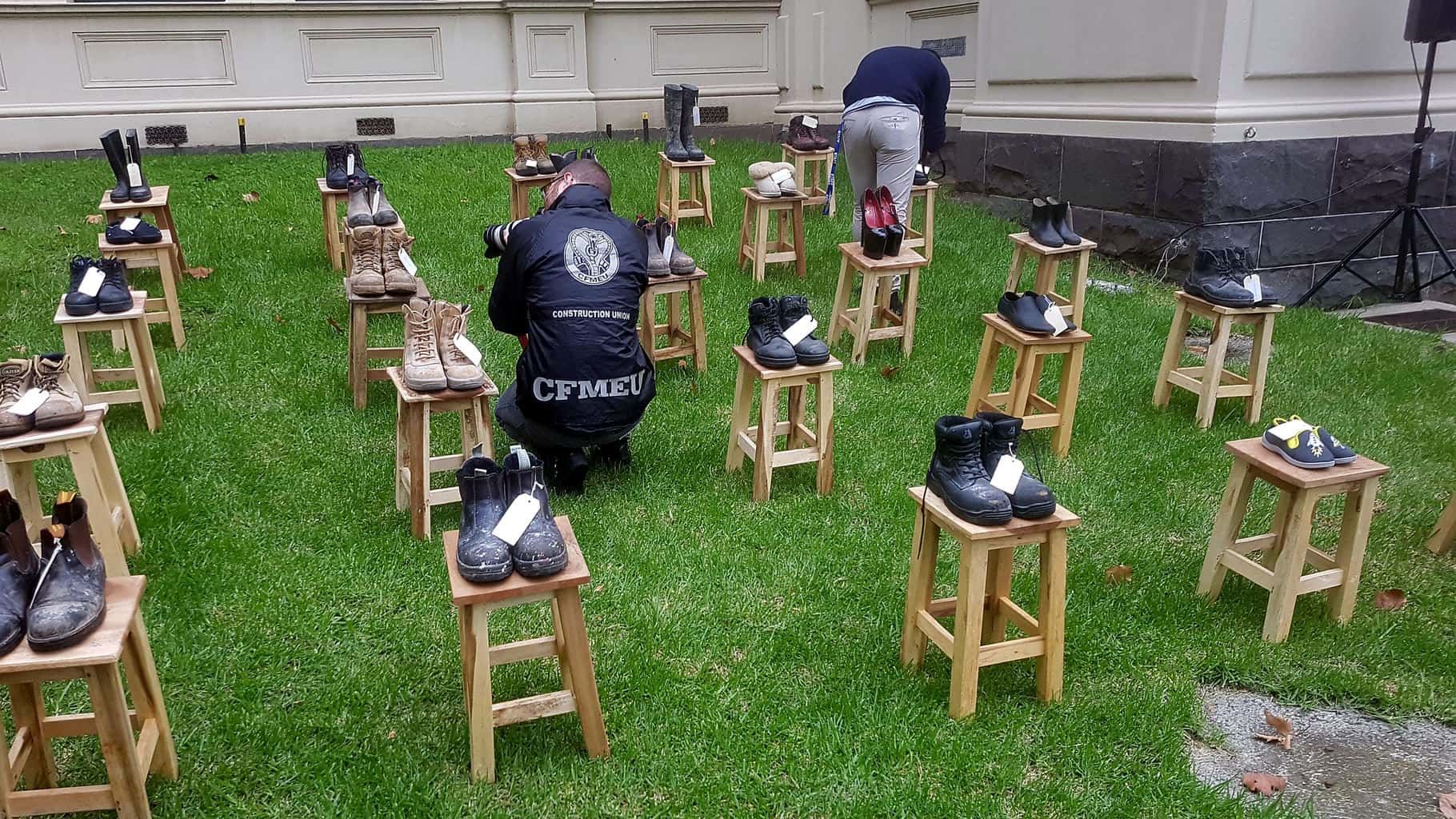 The Victorian Trades Hall Council (VTHC) indirectly acknowledged the ILO theme for World Day for Safety and Health at Work in its media release for International Workers Memorial Day 2017. The ILO was calling for more, and better, data on workplace injuries and illnesses. VTHC questioned the official workplace fatality numbers issued by the government. It stated:
“A VTHC analysis shows that in 2016-17 over 200 Victorians died as a direct result of Workplace injury or illness, although the government’s official tally for the year is just 26.”
This disparity needs to be discussed across jurisdictions because occupational health and safety (OHS) data has always been incomplete, a fact acknowledged by many government inquiries in Australia for many years.
Asbestos – out of sight but not out of mind in Asia
By Melody Kemp

Asbestos resembles polio. Just when you think it’s beaten, it returns like some ghoul. If you think this is overly dramatic, last year Laos was struck by a polio outbreak. This year we learned that Laos now ranks amongst the globe’s major importers of asbestos. And it’s driven by cynical market forces targeting poorer nations, inadvertently promoted by international aid. Continue reading “Asbestos – out of sight but not out of mind in Asia”
What do we want from a workers’ memorial?
 When anyone dies, it is important to remember them and their relatives as well as those we did not know personally but who also grieve. Public recognition of deceased workers is a recent phenomenon, even though we have commemorated and noted industrial disasters for over a century. Memorials have always provided a symbolic focus for our attention and grief with the hope that these memorials motivate people to reduce the chances of a workplace death occurring to others.
But worker memorials need to be carefully considered and designed to be inclusive as Death visits all workplaces regardless of the religion of the workers, their ethnicity, the location of the fatality or the workplace conditions. On the eve of International Workers’ Memorial Day for 2017, it may be time to rethink the memorial to deceased workers in Melbourne, Victoria.