Families get a good deal from the Industrial Deaths inquiry

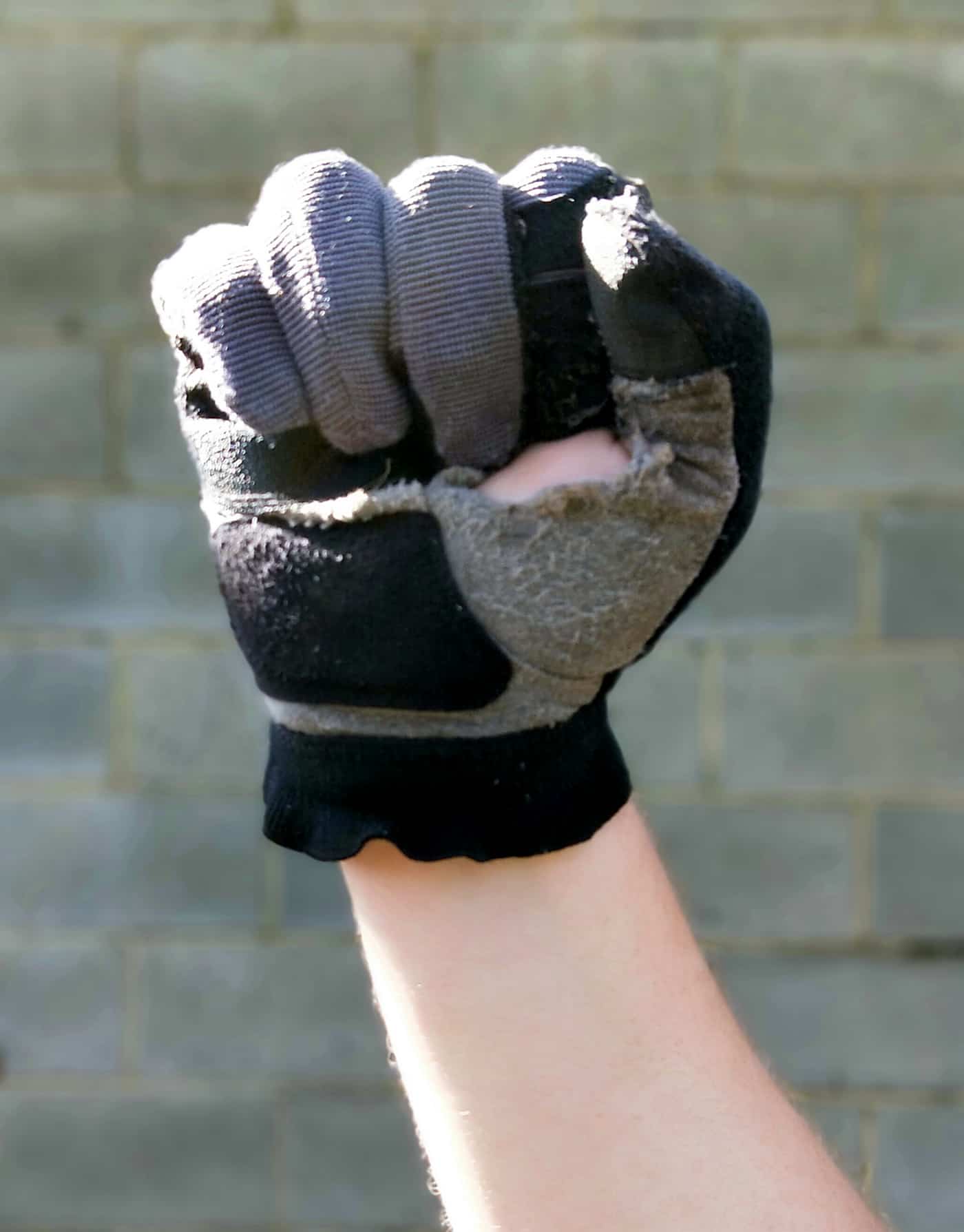
Photo credit: Workplace Safety Services

Will the recommendations of the Senate Committee’s inquiry into industrial deaths benefit relatives of deceased workers? Yes, mostly.

It seemed like relatives gained greater access to this Senate Committee than in other inquiries.  Some public hearings were held with only relatives presenting.  This is a major change.  The transcripts of the 2012
Subscribe to SafetyAtWorkBlog to continue reading.
Subscribe Help
Already a member? Log in here

Much is being asked of Safe Work Australia by Senate inquiry on industrial deaths

One of the noticeable things about the Australian Senate’s report into industrial deaths is the workload it expects Safe Work Australia (SWA) to do in the implementation of the 34 official recommendations.  Whether Safe Work Australia has the capacity and skills to undertake these tasks is not addressed.
The Senate report expects Safe Work Australia to develop various data-sets and public lists and to work with State and Territory occupational health and safety (OHS) regulators.  But the lessons from OHS harmonisation and Safe Work Australia’s Model Laws reinforced that workplace health and safety is controlled by the States and Territories and that, although an Inter-Governmental Agreement was signed, party and local politics knobbled the harmonisation program so that several years on, Australian OHS laws are only slightly more harmonised than they were before the program began.

In the early 1990s, a program for National Uniformity of OHS laws was cancelled for political reasons.  Prior to harmonisation there were strong calls for a national OHS regulator but this could not be undertaken without Constitutional reform.  That lack of a single National OHS regulator is all over this Senate inquiry report.

Subscribe to SafetyAtWorkBlog to continue reading.
Subscribe Help
Already a member? Log in here

Politics on display in final report of Australia’s Industrial Deaths inquiry

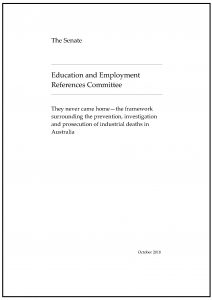
The Australian Senate inquiry into Industrial Deaths has released its findings in a report called “They never came home—the framework surrounding the prevention, investigation and prosecution of industrial deaths in Australia“.  For those who have followed the inquiry, there are few surprises but the report presents big political challenges, particularly as a Federal Election must occur no later than May 2019.

It has been increasingly common for such Senate reports to include, not necessarily, a Minority Report, but an alternative perspective on some issues.  Sometimes these reports show dissent in the Committee but more often than not these are statements that are aimed

Subscribe to SafetyAtWorkBlog to continue reading.
Subscribe Help
Already a member? Log in here

Political tennis on silicosis begins

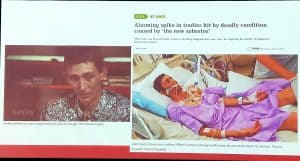
Pictured from Dr Ryan Hoy’s ANZSOM presentation

It was reported on October 11 2018 that Australia’s Health Minister, Greg Hunt, has called for:

“… state workplace regulators to immediately investigate risks to the health of stonemasons, and stop unsafe work practices.”

Some reports have said that a statement was issued:

“Mr Hunt issued a statement saying he and the Chief Medical Officer would raise the issue at a health COAG meeting in Adelaide on Friday. He said the meeting would be asked to consider whether a national dust diseases register should be developed.”

However the Minister’s Office has advised SafetyAtWorkBlog that no formal statement has been made.  This makes it a bit hard to determine what exactly he is asking for on the prevention of silicosis but the States have begun to respond.

The Victorian Minister for Health,

Subscribe to SafetyAtWorkBlog to continue reading.
Subscribe Help
Already a member? Log in here

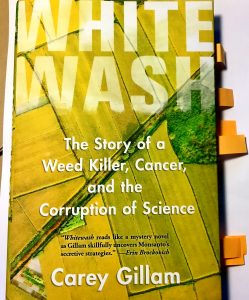
Glyphosate presents an OHS problem but maybe OHS is the path to a solution

Occupational health and safety (OHS) related decisions are made on the state of knowledge about hazards and it is up to OHS people to make sure the state of knowledge is at its best so that the best decisions can be made.  But what do you do if the state of knowledge on a hazard seems to be made purposely uncertain and that uncertainty is leading to the status quo, which also happens to provide a huge income for the owner of the product creating the hazard.
This seems to be a situation at the moment in Australia in relation to the use of the weedkiller, glyphosate, marketed heavily by the global chemical company, Monsanto.  The alleged corruption of data on which OHS people and workers base their safety decisions was perhaps one of the most disturbing elements of the recent ABC Four Corners program on the chemical (

Subscribe to SafetyAtWorkBlog to continue reading.
Subscribe Help
Already a member? Log in here

CFMEU steps up the OHS pressure

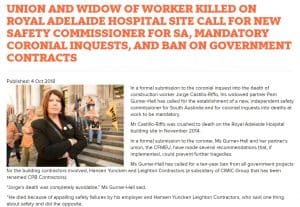
SafetyAtWorkBlog has dipped into the occupational health and safety (OHS) and political issues around the death of Jorge Castillo-Riffo in Adelaide in 2014.  On October 4 2018, the CFMEU issued a media release outlining the recommendations it made to the Coronial inquest into Castillo-Riffo’s death.  They deserve serious consideration:

  • Mandatory coronial inquests should be held into all deaths at work, with a mandatory requirement for the reporting of any action taken, or proposed to be taken, in consequence of any findings and recommendations made;
  • Families should receive funding to be represented;
  • An independent safety commissioner should be established in SA whose duty it is to review, comment and provide recommendations concerning the safety record of companies who tender for government construction contracts work over $5 million;
Subscribe to SafetyAtWorkBlog to continue reading.
Subscribe Help
Already a member? Log in here

Mixed bag conference format succeeds

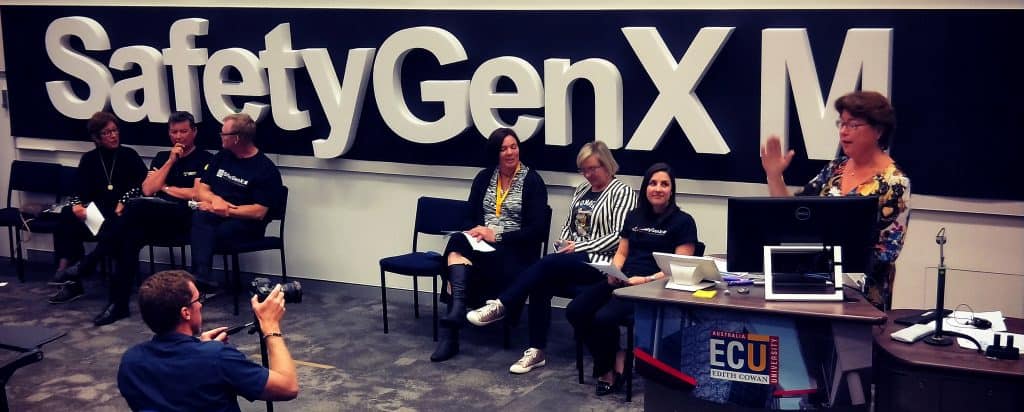
The Safety Institute of Australia (soon to be trading as the Australian Institute of Health and Safety) conducted its Perth Safety Symposium on September 28 2018.  It was the event’s second year and, overall, was a success.  But how does one measure the success of a one-day conference?

Firstly, one has to have an interesting and, if possible, fascinating pool of speakers. The keynote speakers included:

Simon Millman MLA represented the West Australia Premier Continue reading “Mixed bag conference format succeeds”

Concatenate Web Development
© Designed and developed by Concatenate Aust Pty Ltd