New workplace mental health clinical guidelines provide clarity

In 2016, a survey of General Practitioners (GPs) conducted by Monash University identified that GPs frequently struggled with patients involved with workers compensation and that mental illnesses were particularly problematic.

In January 2018 Monash University, with the support of major institutions and safety

Subscribe to SafetyAtWorkBlog to continue reading.
Subscribe Help
Already a member? Log in here

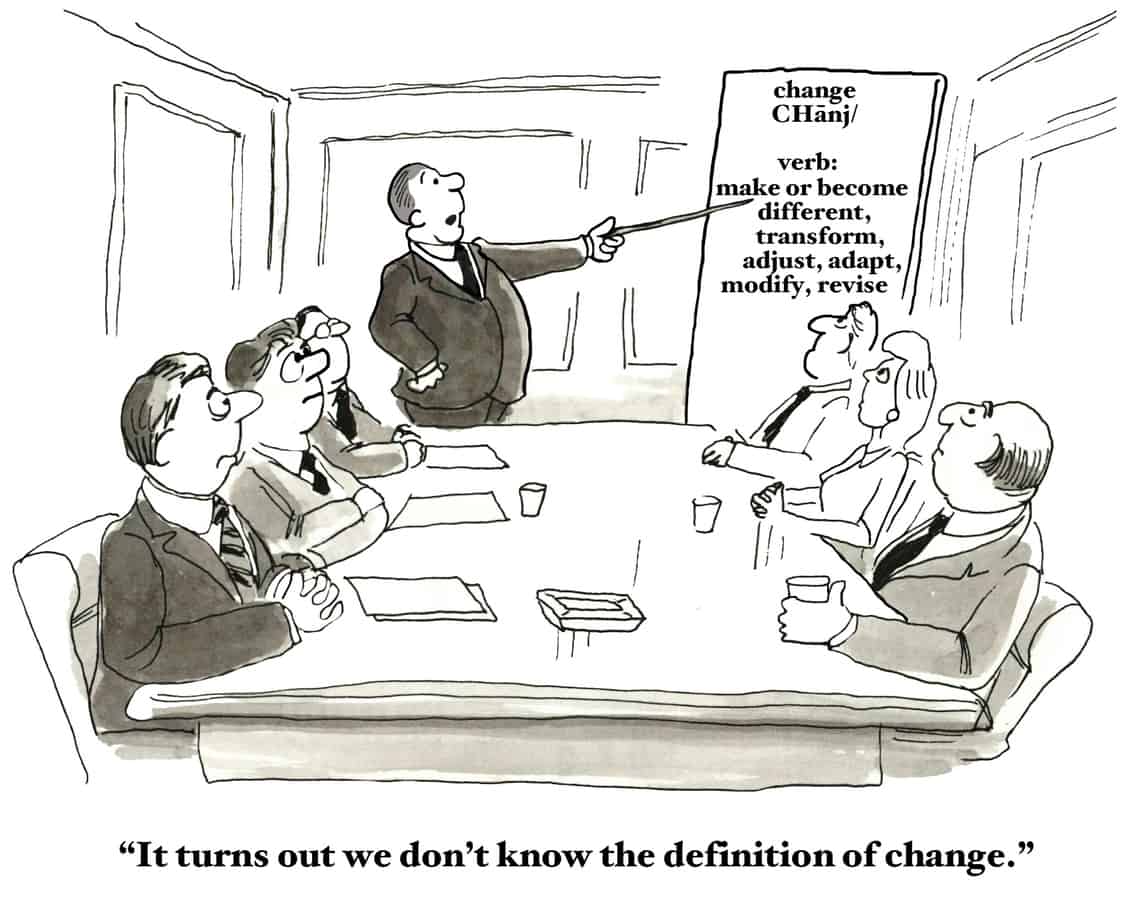
“so we know we’ve had laws, but why haven’t we had change?”

Australia’s Sex Discrimination Commissioner, Kate Jenkins, has been prominent in recent seminars about sexual harassment, particularly in the entertainment industry.  In February 2018, Jenkins spoke at a seminar in Melbourne hosted by Screen Producers  Australia and provided strong advice on how businesses can control sexual harassment.

Jenkins began her presentation with an uncomfortable reminder that business has been lax in addressing unlawful workplace behaviour.

Subscribe to SafetyAtWorkBlog to continue reading.
Subscribe Help
Already a member? Log in here

Embrace the irrational

In 2008 the brothers Brafman wrote “Sway: The Irresistible Pull of Irrational Behavior“.  They tell the story of Ori Brafman being told, on his first day in his MBA course in Tel Aviv in the 1980s, that

“People aren”t rational.”

In my 1990s tertiary course into OHS Risk Management, we were still being referred to the 1965 book, “The Rational Manager“.  Occupational health and safety (OHS) seems to still be based on an assumption of rationality in OHS management systems, decision-making and working yet it does not take too much exposure to the reality of work to understand that we must anticipate irrationality.

Subscribe to SafetyAtWorkBlog to continue reading.
Subscribe Help
Already a member? Log in here

The reality is all about perception

Occupational health and safety (OHS) policy makers are keen on making decisions based on evidence.  But evidence seems hard to get, for many reasons.

Some people, including those in workplace relations and OHS, often fill the evidence gap with “anecdotal evidence”.  Frequently people being interviewed are asked for evidence to substantiate their claims and respond that “anecdotally” there is a problem yet there is no sample size for this evidence, there is no clarity or definition of the incident or issue – it is simply “what I heard” or “what I’ve been told”.  Using anecdotal evidence is okay as long as its inherent uncertainty is acknowledged and it is not used as a basis for substantial change.

Subscribe to SafetyAtWorkBlog to continue reading.
Subscribe Help
Already a member? Log in here

Sexual harassment may be an OHS issue but what priority should it receive?

One online news site in Australia has suggested that sexual harassment is an occupational health and safety (OHS) issue.  At first blush, it should be.  Sexual harassment can create mental ill-health and can certainly be harmful. But from the early days of discussions about workplace bullying and occupational violence in Australia, sexual harassment has been consciously excluded from OHS.

Is It or Isn’t It?

Some of the best discussion on bullying, harassment and violence was written by Dr Clare Mayhew for the Australian Institute of Criminology in 2000.  These included a practical handbook on prevention. (It’s peculiar that some of the most perceptive works on OHS occur outside the OHS profession.  Well perhaps not so surprising.)  In the handbook, Mayhew points out that harassment has always been an element of workplace bullying but excludes sexual harassment from her discussion:

“The Australian Institution of Criminology believes that prevention, rather than post-incident reaction, is the key to improved outcomes. However, the handbook needs to be adapted specifically to each organisation for best results. The discussions exclude activity that could be described as sexual harassment, which is extensively dealt with elsewhere.” (page 1)

This position is reflective of the OHS literature yet, on reflection, this position may have been wrong for it contributed to a fractured approach to managing workplace psychosocial hazards. 

Subscribe to SafetyAtWorkBlog to continue reading.
Subscribe Help
Already a member? Log in here

Action demanded on sexual harassment in the entertainment industry

On 12 December 2017, part of Australia’s screen and television industry held a forum in Sydney about sexual harassment in the sector and what could be done to reduce this workplace hazard. This initiative occurred a day before an open letter was published about sexual harassment in the music industry.  There is a momentum for change on sexual harassment in the workplace, but it is at risk of resulting in a fragmented approach which will generate turf wars, confusion and, ultimately, ineffectiveness.

The

Subscribe to SafetyAtWorkBlog to continue reading.
Subscribe Help
Already a member? Log in here

Rail-related suicides discussed at ergonomics conference

Rail-related suicides are tragedies that ripple throughout society affecting families of the suicides as well as the train drivers, their families and their colleagues. Various strategies are being trialled but often the results of interventions are hard to quantify.  At the annual conference of the

Subscribe to SafetyAtWorkBlog to continue reading.
Subscribe Help
Already a member? Log in here
Concatenate Web Development
© Designed and developed by Concatenate Aust Pty Ltd