

On August 29, 2019, Scott Jordan returned to his Ballarat home from work. He noticed his wife’s car was not parked in its usual location. Scott walked through to the shed looking for Karla Jordan and found her dead by suicide with a notebook on the floor nearby. The Victorian Coroner’s Prevention Unit “considered Ms Jordan’s workplace environment was the primary stressor in the lead up to her acute mental health decline and suicide”. The Coroner’s findings provide an important case study for examining psychosocial hazards in the workplace.
Category: research
Whether it’s a book or a brick, it is invaluable
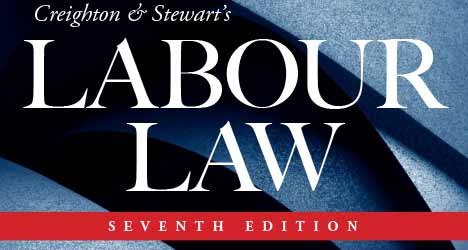
The latest edition of Creighton & Stewart’s Labour Law book (7th edition) has been released. I say “book”, but it is almost a brick, weighing in on my scales at 1.8 kilograms (see photo below). The book is excellent and probably authoritative, with the primary negative being its size and format. This article focuses on the 79-page occupational health and safety (OHS) chapter written by Richard Johnstone.

The recent recommendations into OHS penalties are likely to go nowhere
The Victorian Sentencing Advisory Council‘s report on OHS sentencing received minimal media coverage. Perhaps more will come when the government responds to the recommendations. However, the coverage focused on the recommendation for a substantial increase in financial penalties for those who breach occupational health and safety (OHS) laws. The report contained much more than financial penalties, but the political climate will likely stifle any significant reforms.
Cost estimation, safety and economists
American legal scholar Cass R. Sunstein does not write about occupational health and safety (OHS) directly, but he writes about the society in which OHS operates. In November 2022, he reviewed an economics book in an article called “Accounting for the Human Cost.” OHS may have a strong moral core, but one can argue that it is more of an economic discipline due to the necessity for analyzing costs and benefits to gauge compliance with laws and regulations.

OHS opportunity for progress sidestepped
The Australian Human Resource Institute (AHRI) has produced a useful analysis on hybrid and flexible work practices. However, as with most of the media coverage and commentary on workplace flexibility and working from home, the discussion of the psychological health benefits and risks is rudimentary and seems to ignore renewed employer duties under the occupational health and safety (OHS) laws.

Established OHS knowledge needs a boost
Workplace psychological health has been dominated by wellness advocates for several decades. Occupational health and safety (OHS) is seen by many as an interloper with “new” regulations that impose rules, expectations, notifications, and records on a corporate wellness sector that has been hugely influential on employers’ perspectives of mental health at work. This interjection by OHS “upstarts” does not stand up to examination. Social determinants of health have included work factors for many years. Richard G Wilkinson wrote about the psychosocial causes of illness in 1997, providing a helpful perspective applicable today.
The Hidden Barrier to Safer Workplaces: Financial Literacy in OHS
Australia’s occupational health and safety (OHS) has improved over the decades. Yet, preventable injuries and fatalities persist—over 180 quad bike deaths since 2011, for example, with rollovers leading the charge. We have regulations, campaigns, and a national body in Safe Work Australia, but something’s still missing. Why aren’t workplace redesign efforts—like fitting rollbars on quads or rethinking production systems—more widespread? The answer might lie in a hidden barrier: the WHS profession’s shaky grasp of financial literacy, compounded by the stranglehold of financial underwriting models and capital market expectations. Maybe it’s time we admit that the safety game isn’t just about risk assessments—it’s about money, and we’re not playing it well enough.