Call for Industrial Manslaughter laws after more unnecessary deaths

It was inevitable that all States in Australia would end up with Industrial Manslaughter (IM) penalties related to occupational health and safety (OHS). Tasmania is the latest to start the consultation on these laws, and again, it has required a work-related tragedy to generate the outrage that seems required for such a push.

The Australian Broadcasting Corporation is reporting on the grief and outrage of Georgie Burt, one of the parents of

“….one of six children who died when a jumping castle became airborne at an end-of-year celebration at Hillcrest Primary School in Devonport in 2021.”

hyperlink added
Subscribe to SafetyAtWorkBlog to continue reading.
Subscribe Help
Already a member? Log in here

What was he thinking? A case study in risk assessment and intervention

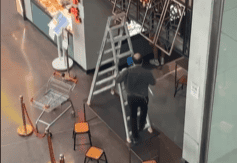
Below is a video of a worker setting up their work area and dusting a retail sign. When one sees such videos or images, we naturally think, “What is he doing?” and “What was he thinking?” This article speculates on those questions and what could have been done.

Subscribe to SafetyAtWorkBlog to continue reading.
Subscribe Help
Already a member? Log in here

Should photos of unsafe activities be published unedited?

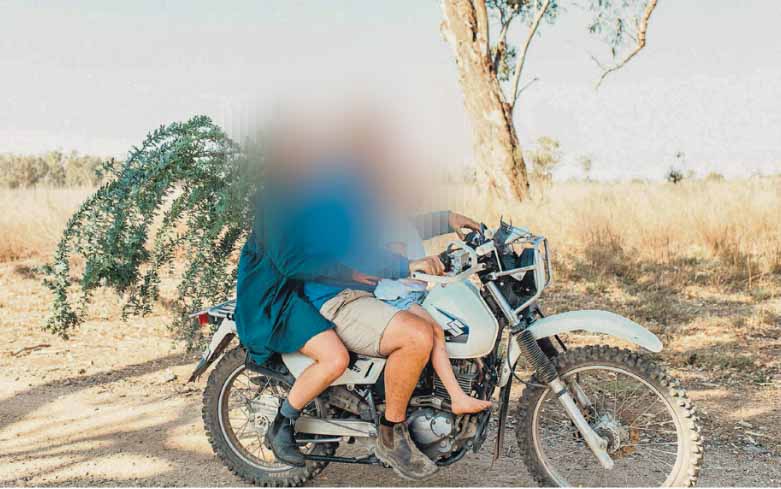
In early December 2023, the Australian Financial Review (AFR) published this (unblurred) photo of a woman, a man, and a child riding a single motorbike in the Australian countryside. Riding in such a way is unsafe, some may say reckless, and contrary to the operational guidelines of motorcycle manufacturers. Should the AFR have used this photo? Should there be a ban on such photos?

Subscribe to SafetyAtWorkBlog to continue reading.
Subscribe Help
Already a member? Log in here

Interview with ILO’s Manal Azzi

Last week, I was able to interview several speakers, sponsors and delegates at the 23rd World Congress on Safety and Health at Work, sometimes on behalf of the Congress and at other times privately. Some of these interviews were edited from forty-five minutes of content to ten. The interview with the Team Lead on Occupational Safety and Health at the International Labour Organization, Manal Azzi, available online, was once such. This SafetyAtWorkBlog article is the full, slightly edited, transcript of that interview.

Subscribe to SafetyAtWorkBlog to continue reading.
Subscribe Help
Already a member? Log in here

Business lobbyist misses the point

Recently the Australian Industry Group Chief Executive, Innes Willox, addressed the National Press Club in Canberra. The AIGroup is one of the “go to” business groups, along with the Business Council of Australia and mining industry groups, that the business media knows will comment on anything when asked, and frequently when not asked. Willox’s August presentation was on Industrial Relations, but it also illustrates the workplace and political culture in which occupational health and safety (OHS) must operate.

Subscribe to SafetyAtWorkBlog to continue reading.
Subscribe Help
Already a member? Log in here

The OHS of Working from Home remains problematic

When Australia harmonised its occupational health and safety (OHS) laws, the management focus broadened to include work, and not just workplaces.  Some “knowledge” or white-collar work can be done anywhere, and employers have often struggled to understand how to extend their OHS management systems and duties to apply to this revised or expanded system of work. Current OHS guidance on working from home is too “big picture” when employers are addressing localised decisions.

Subscribe to SafetyAtWorkBlog to continue reading.
Subscribe Help
Already a member? Log in here

Can we move on from HSRs, please?

Occupational health and safety (OHS) needs new thinking. One of the most important elements of successful OHS comes from Consultation – a sensible process and one required by law. A major process for OHS consultation in those laws is through the Health and Safety Representatives (HSRs). This legislative (recommended) option was practical but is now almost an anachronism, yet the OHS regulators continue to support the process because it is in the OHS laws. And few will speak against the process because it is being maintained by the trade union movement as one of the last legacies of political influence over workplace health and safety.

This month Queensland government released its report into the review of its Work Health and Safety laws with these two of the three categories of recommendations:

  • “elevation of the role of health and safety representative (HSR) at the workplace
  • clarification of the rights of HSRs and worker representatives to permit them to effectively perform the role and functions conferred upon them and to remove unnecessary disputation,….”

The absurdity of HSRs’ persistence can be illustrated by the rumour that WorkSafe Victoria will encourage sex workers to follow the HSR consultative process through the OHS guidance expected to be released later this year.

Subscribe to SafetyAtWorkBlog to continue reading.
Subscribe Help
Already a member? Log in here
Concatenate Web Development
© Designed and developed by Concatenate Aust Pty Ltd