
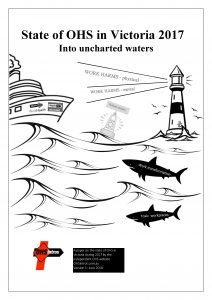
 Barry Naismith of OHSIntros has released his latest independent research report into the status of occupational health and safety (OHS) in Victoria. (Given the inquiry into SafeWorkSA currently occurring in South Australia, I wish that State had an equivalent researcher, for context.) Naismith focusses on WorkSafe Victoria’s aim to address the issue of workplace wellness and asks how such an approach can be enforced?
It is a positive that an OHS regulator is looking at workplace wellness which encapsulates work-related psychological hazards.
 Safe Work Australia’s
  A SafetyAtWorkBlog reader emailed me this question:
 It is important to note that “
 Data about occupational health and safety (OHS) and work-related psychosocial injuries has often been described as being hard to find. In some ways it is not necessarily hard to find but difficult to access. An untapped source of data is the records of illness and leave taken that is usually held by the Human Resources (HR) departments, often named “People and Culture”or some variant. This type of data could be invaluable in determining a workplace psychological profile, if the HR departments would trust OHS professionals more, or release this data in a format that would allow OHS professionals to assess risks while maintaining employees’ privacy.
 The Australia Institute