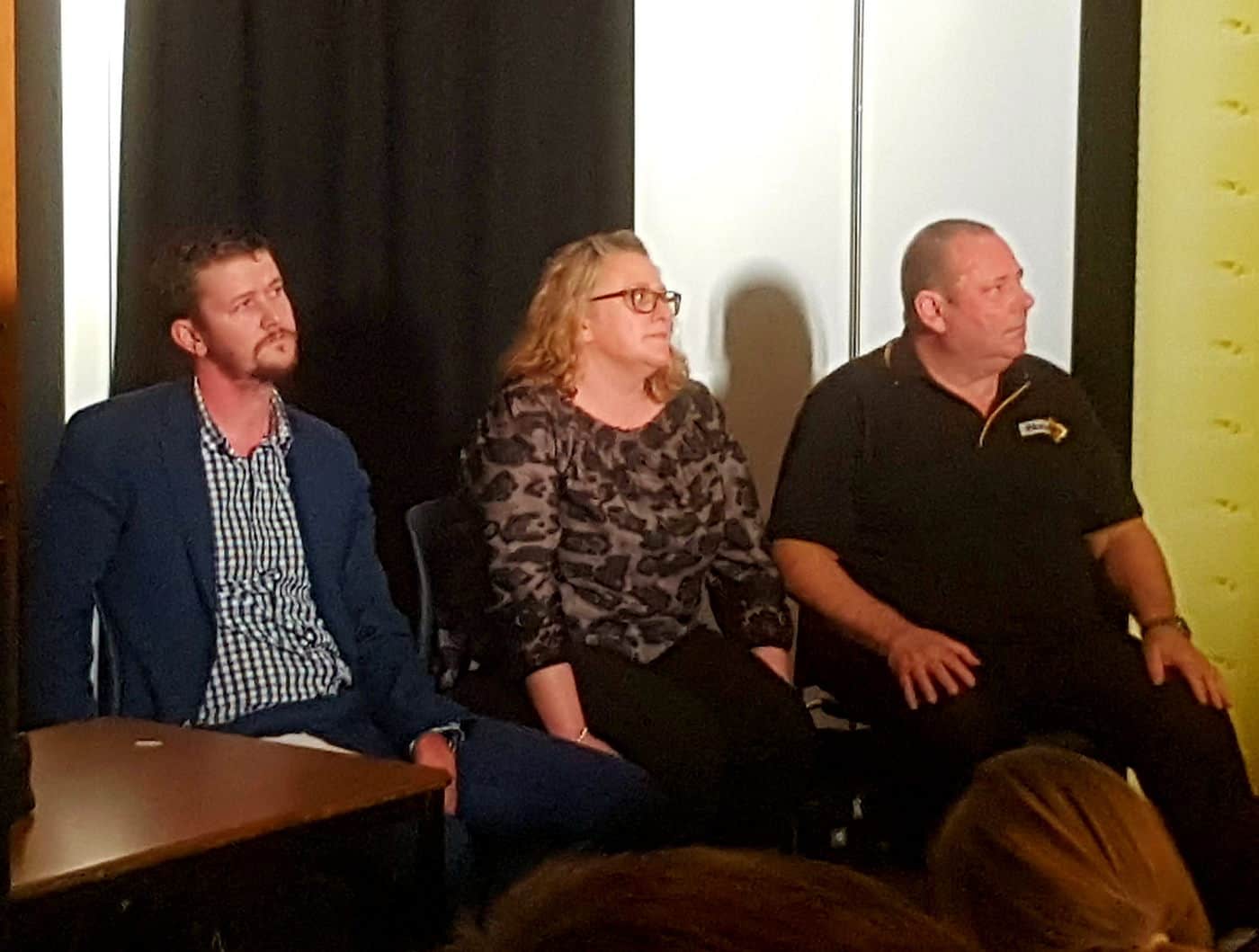
Gender, violence, Batty, Hulls and business preparedness

Recently the Victorian Women Lawyers conducted a seminar into the outcomes of Victoria’s Royal Commission into Family Violence.  SafetyAtWorkBlog attended even though the topic seems, initially, to have a tenuous link to occupational health and safety (OHS).  Family violence is relevant to OHS through its influence on workplace mental ill-health, productivity and the need for cultural…

Subscribe to SafetyAtWorkBlog to continue reading.
Subscribe Help
Already a member? Log in here

Japanese depression contrasts the Western understanding of workplace mental health

frustrated young asian businessman

Australian workplace mental health advocates often seem to shy away from discussions of suicide, perhaps because suicides are not a regular occurrence at work or because work-related suicide remains stigmatised.  To better understand this overlap between suicide and mental health, and the working environment, it may be useful to look at the Japanese experience where work-related suicides, specifically karoshi, seems to have occurred before the appearance or recognition of mental ill-health and depression.

Recently the BBC released a series of broadcasts and podcasts looking at mental health issues.  The first episode discussed “Depression in Japan”.  The whole series Borders of Sanity will be of interest to mental health students and professionals but the Japanese episode reinforces that the recognition and treatment of depression is not the same around the world.  The appearance of depression in Japan is a very recent occurrence and shows the links between mental health and culture, particularly as it relates to the role of work, our place in work and our relationships with our bosses.

Japan has a unique approach to work and the relationships within work.  Some of the practices have been exported to other countries as we have seen in companies like Toyota but the perception of workload, diligence, commitment and loyalty has some echoes in Western workplaces.

Karoshi has been reported on in the West many times before, often as a peculiar quirk of the Orient but the recent BBC podcast is less about suicide and more about depression and mental health.  The West has a long tradition of psychoanalysis where stress, anxiety and depression have been defined, refined and integrated into our cultures.  This is still in its early stages in Japan and the full podcast is a fascinating counterpoint to the Western perception of workplace mental health.

Kevin Jones

“Cabbage Salad and Safety” podcast launched

KJ SFH HeadshotIt has been my intention for many years to establish a conversational podcast with a workplace safety lawyer. The opportunity to pitch the idea occurred earlier this year and the first episode of Cabbage Salad and Safety is now available.

Siobhan Flores-Walsh of Corrs Chambers Westgarth (pictured right with the author) was the lucky lawyer and she has been enormously supportive also providing the recording equipment, personnel and opportunity. Continue reading ““Cabbage Salad and Safety” podcast launched”

Could safety by algorithms be next?

It seems to be increasingly important for occupational health and safety (OHS) to focus on the human and the humanity of the worker but this seems out of touch with the world of Human Resources (HR) and recruitment that is increasingly being dominated by impersonal algorithms.  Recently BBC’s Global Business program looked at Recruitment By Algorithm.

According to Global Business, recruitment assesses the “fit” of a job applicant through assessments undertaken by computer programs and algorithms.  This is occurring at the same time as OHS professionals are increasingly advocating the importance of a “safety culture” even though safety culture is difficult to define, and some deny it exists.  There seems to be an inherent conflict in the process of recruiting safe workers. Continue reading “Could safety by algorithms be next?”

Suicide Prevention Forum and Mental Health First Aid for workers

In March 2016, the Australian Bureau of Statistics released its latest figures into the causes of death. A lot of media attention was given to the figures showing an increase in the suicide rate.  It found that

“Among those aged 15 to 44, the leading causes of death were Intentional self-harm (suicide)…”

Dr Claire Kelly, Manager, Youth Programs, Mental Health First Aid Australia, talking at the Suicide Prevention Forum 2016

On the day those figures were released, the

Subscribe to SafetyAtWorkBlog to continue reading.
Subscribe Help
Already a member? Log in here

Where is work-related suicide in the Suicide Prevention Strategy?

Cover of Suicide_Prevention_2020_Strategy_Final_6.sflbFor all the discussion of workplace mental health, work-related suicide continues to receive little attention.  Part of this is because unexpected fatalities are shocking and distressing, even more so when the deaths are the result of the worker’s own efforts.

Recently the

Subscribe to SafetyAtWorkBlog to continue reading.
Subscribe Help
Already a member? Log in here

Important research into workplace cyber-bullying

Last week several Australian news sites reported on a new thesis about public servants and cyber-bullying which is discussed in detail below. The reports are based mostly on a media release about the research issued by Queensland University of Technology (QUT).  What caught my eye was the statement in the one media report that the researcher, Dr Felicity Lawrence,

“…said traditional workplace bullying already cost the nation about $36 billion a year, “so the cost of cyber bullying on productivity could be profound”.

Not true.  In the QUT statement, Lawrence stated

“Traditional workplace bullying costs the national economy up to $36 billion each year, so the cost of cyberbullying on productivity could be profound,…”

“up to” vs “about? This differentiation is important because the lack of clarity creates OHS myths and these myths can misinform policy priorities and public understanding of workplace hazards.

Subscribe to SafetyAtWorkBlog to continue reading.
Subscribe Help
Already a member? Log in here
Concatenate Web Development
© Designed and developed by Concatenate Aust Pty Ltd