
“Then I went, ‘Oh hang on, I’ve normalised so much of this as part of my industry…. This last three months has really made us all take a long hard look at what we have even let ourselves think is acceptable.” – Sacha Horler

Such a statement is familiar to those working in the field of occupational health and safety (OHS). This normalisation, or habituation, has underpinned much of the discussion of what builds a safety culture – “the way things are done round here”. As a result of revelations and accusations pertaining to Gary Glitter, Rolf Harris, Jimmy Saville, Robert Hughes, Harvey Weinstein, and Kevin Spacey, the entertainment industry around the world has been forced to assess the fundamental ethics on which sections of its industry are based. Continue reading “What do Weinstein, Spacey and others have to do with OHS?”
 The occupational safety profession (OHS) in Australia is often described as being populated by older white males, as being dull and ill-informed. This perception has generated offshoots such as
 Occupational health and safety advocates are pushing for safety management and strategies to refocus on people by talking about “people-centric” approaches and recalibrating legislation to re-emphasise prevention. This push parallels society’s frustration with political strategies that favour big business, the under-investment in education and health care systems and
 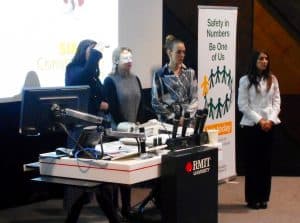 On 30 October 2017, the Safety Institute of Australia and RMIT University held their annual
  A lot of safety professionals “froth up” about aviation safety. Challenging occupational health and safety (OHS) concepts have originated in this sector so it is worth keeping an eye on aviation safety research. A new article has been published called “