
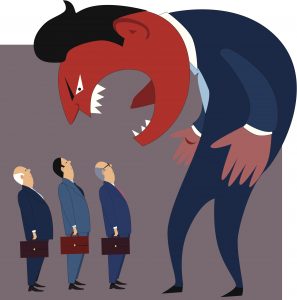
 The Safety Institute of Australia (SIA) is making serious efforts to increase its relevance to Australia’s occupational health and safety (OHS) profession and the broader community. Around International Women’s Day, the SIA released a media statement calling for action on workplace bullying, harassment and abuse.
Category: workplace
#MeToo, #TimesUp and #OHS
 Being International Women’s Day, the media is awash with articles about pay rates, gender equality and sexual harassment. One of those articles is written by Sarah Ralph of Norton Rose Fullbright. Ralph provides a good summary of the current gender issues and recent media attention (may require registration but it’s free). She makes several recommendations for how to reduce the risk of sexual harassment and unwanted media attention. Below those recommendations are looked at from the occupational health and safety (OHS) perspective to see how OHS can help reduce the psychological harm. Continue reading “#MeToo, #TimesUp and #OHS”
How bad is workplace mental health and what can be done about it
 The recent RTW Forum in Melbourne had one speaker who analysed the workers compensation data for mental health claims. Dr Shannon Gray was able to draw some clear statements on workplace mental health from Australia’s national claims data and provide clues on what the workplace safety profession needs to do to reduce psychological harm.
Gray and other speakers at the forum had access to a lot more data than has been available in the last few decades and they, rightly, continued to stress caution in analysis.
Industrial Manslaughter laws in Australia are about politics, not safety
 The latest push for Industrial Manslaughter laws in Australia has appeared as part of the Tasmanian state election.
The Tasmanian branch of the Australian Labor Party released its policy platform for jobs in February 2018 which makes specific and vague commitments on workplace safety which require scrutiny.
Precarious Work
The Tasmanian Labor Leader, Rebecca White, states that
“Labor is committed to addressing casualisation and the outsourcing of work…”
New workplace mental health clinical guidelines provide clarity
 In 2016, a survey of General Practitioners (GPs) conducted by Monash University identified that GPs frequently struggled with patients involved with workers compensation and that mental illnesses were particularly problematic.
In January 2018 Monash University, with the support of major institutions and safety
“so we know we’ve had laws, but why haven’t we had change?”
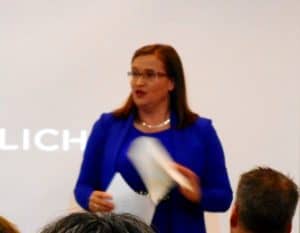 Australia’s Sex Discrimination Commissioner, Kate Jenkins, has been prominent in recent seminars about sexual harassment, particularly in the entertainment industry. In February 2018, Jenkins spoke at a seminar in Melbourne hosted by Screen Producers Australia and provided strong advice on how businesses can control sexual harassment.
Jenkins began her presentation with an uncomfortable reminder that business has been lax in addressing unlawful workplace behaviour.
Who reads the Robens Report and who will write the next one?
“Every year something like 1,000 people are killed at their work in this country. Every year about half a million suffer injuries in varying degrees of severity. 23 million working days are lost annually on account of industrial injury and disease.”
 The existence of this statement is of no surprise to occupational health and safety (OHS) professionals. Similar statements are made all the time. The sad surprise of this quote is that it appeared in 1972 on page 1 of the Safety and Health at Work – Report of the Committee 1970-72, otherwise know as the Robens Report.
Perhaps it is time to begin contemplating what OHS fundamentals we should apply in the next generation of workplace safety health and wellbeing laws ?