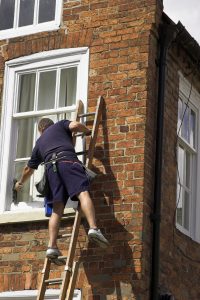
Heights, Standards and Safety

Engineering and design Standards have existed globally for a long time.  They have considerable authority, often provided through legislation, and underpin many of the safety devices and equipment used in workplaces.  But does compliance with Standards mean that something is safe?

The easy answer is no. A recent presentation to the Central Safety Group (CSG) by David Davis of the Working at Heights Association illustrated this gap between workplace safety compliance and compliance with Standards.
Subscribe to SafetyAtWorkBlog to continue reading.
Subscribe Help
Already a member? Log in here

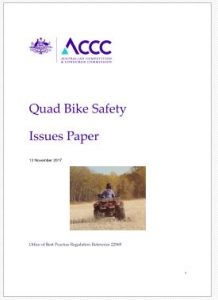
ACCC releases Issues Paper to start public quad bike safety consultation

The Australian Competition & Consumer Commission (ACCC) has released an issues paper on quad bike safety with a deadline for public submissions of mid-December 2017.  An ACCC spokesperson has advised that submissions will be made available to the public through the website unless privacy and confidentiality is requested. A draft recommendation is scheduled for early 2018 with a final recommendation in mid-2018.

Issues papers serve two purposes – the provision of information and questions of particular importance.  This article will look at some of those questions.

Subscribe to SafetyAtWorkBlog to continue reading.
Subscribe Help
Already a member? Log in here

What do Weinstein, Spacey and others have to do with OHS?

“Then I went, ‘Oh hang on, I’ve normalised so much of this as part of my industry…. This last three months has really made us all take a long hard look at what we have even let ourselves think is acceptable.” – Sacha Horler

Such a statement is familiar to those working in the field of occupational health and safety (OHS).  This normalisation, or habituation, has underpinned much of the discussion of what builds a safety culture – “the way things are done round here”.  As a result of revelations and accusations pertaining to Gary Glitter, Rolf Harris, Jimmy Saville, Robert Hughes, Harvey Weinstein, and Kevin Spacey, the entertainment industry around the world has been forced to assess the fundamental ethics on which sections of its industry are based.  Continue reading “What do Weinstein, Spacey and others have to do with OHS?”

The future of OHS under the Australian Labor Party

At Australia’s National Press Club on October 18 2017, the Australian Labor Party’s Shadow Minister for Employment and Workplace Relations Brendan O’Connor spoke, ostensibly on industrial relations but occupational health and safety (OHS) was mentioned.  O’Connor provided several examples of worker exploitation and casual work and then stated

“There is something really wrong when those big, household-name companies apparently feel absolutely no responsibility, or consider themselves immune from reputational risk, for exploitation of the workers on whose labour they make a vast profit. This is why at the last election, Labor promised a National Labour Hire licencing scheme. We said we would issue a licence to only those who have a clean record of complying with employment, tax and OH&S laws, and that licences would be revoked for serious misconduct.”

In the discussions about the regulation of the labour hire industry OHS has been given, comparatively, little attention so it is useful to note even the small amount of prominence granted it by O’Connor.

Subscribe to SafetyAtWorkBlog to continue reading.
Subscribe Help
Already a member? Log in here

Industrial manslaughter debate reveals commitment and misunderstandings

Industrial manslaughter laws passed through the Queensland Parliament on October 12 2017.  The debate about the laws on that day is an interesting read as it illustrates some of the thoughts about workplace safety in the minds of policy decision makers, business owners, industry associations, trade unions and safety advocates.

Lawyer for Herbert Smith Freehills, Steve Bell, has said in a LinkedIn post that:

“Will [industrial manslaughter laws] make workplaces safer? In my view probably not, but it will certainly affect the manner in which businesses respond to workplace incidents and external investigations.”

This perspective is understandable and valid when one considers the laws to be a part of the post-incident investigation and prosecution.  A similar view was expressed in Queensland’s Parliament by the  Liberal National Party’s David Janetzki, based on the submission by the Chamber of Commerce and Industry Queensland: Continue reading “Industrial manslaughter debate reveals commitment and misunderstandings”

Concatenate Web Development
© Designed and developed by Concatenate Aust Pty Ltd