

In the realm of occupational health and safety (OHS), Enforceable Undertakings (EUs) have emerged as a significant alternative to prosecution for companies that breach safety legislation. Recently, I had the opportunity to catch up with Naomi Kemp to explore the concept of EUs, their implications for workplace safety, exceeding compliance, and the restoration of relationships following incidents.
Category: workplace
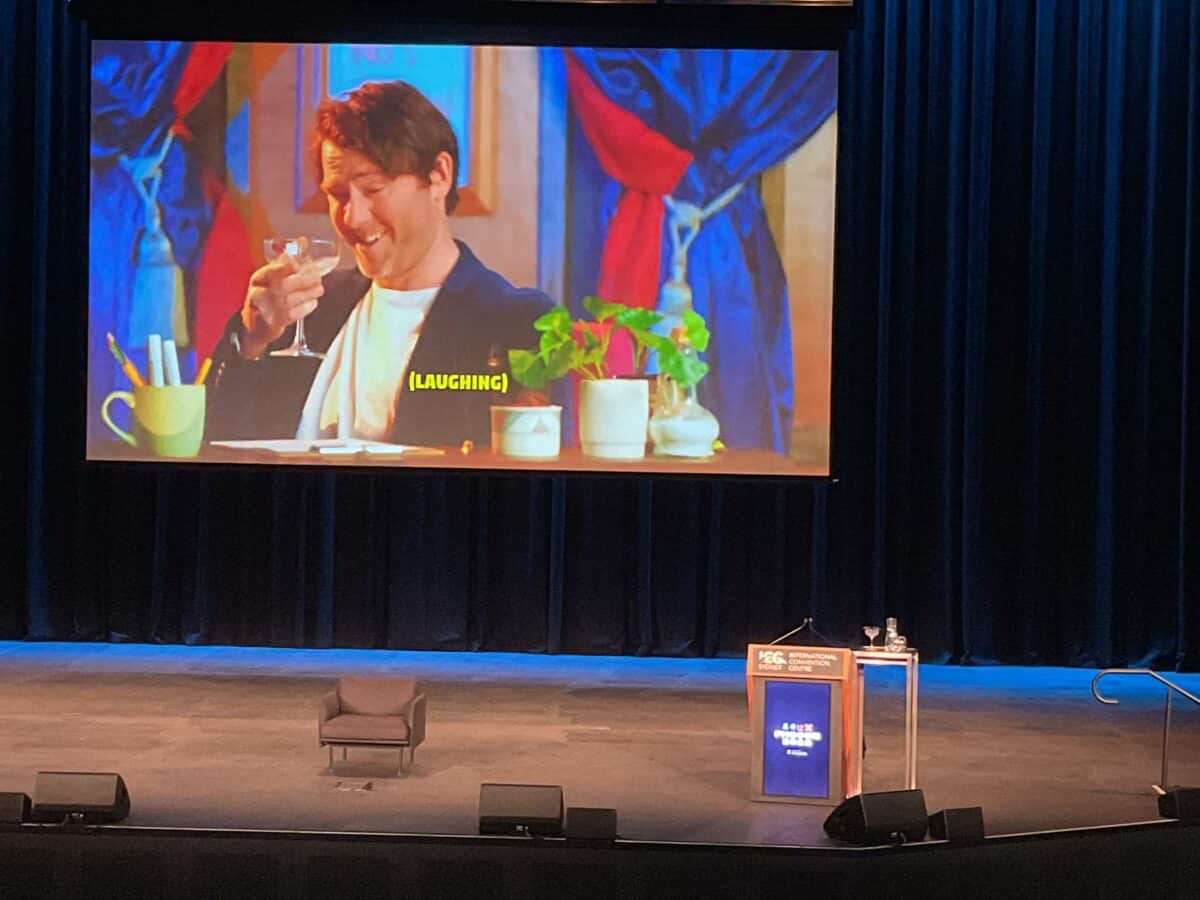
Psych Health and Safety Conference 2025: A Step Forward
The 2025 Psych Health and Safety (PHS) Conference, held in Sydney and hosted by FlourishDx, marked a significant evolution from its inaugural event. With over 200 delegates, a larger venue, enhanced facilities, and a more polished exhibition space, the conference built on its foundational success. Centred around four key themes—evidence-based practice, leading mentally healthy workplaces, inclusive work design, and international perspectives—the event delivered a robust platform for professionals from occupational health and safety (OHS) and human resources (HR) to converge on the critical topic of psychosocial health and safety.

Carlo Caponecchia on psychosocial hazards
Later this afternoon, Carlo Caponecchia will be on a conference panel about ISO45003, a document he assisted in creating, but he has been involved in psychosocial hazard research for much longer than just one international Standard. I value his perspectives which are reflected in his responses to my questions below.
Consensus is an essential element of mental health and safety
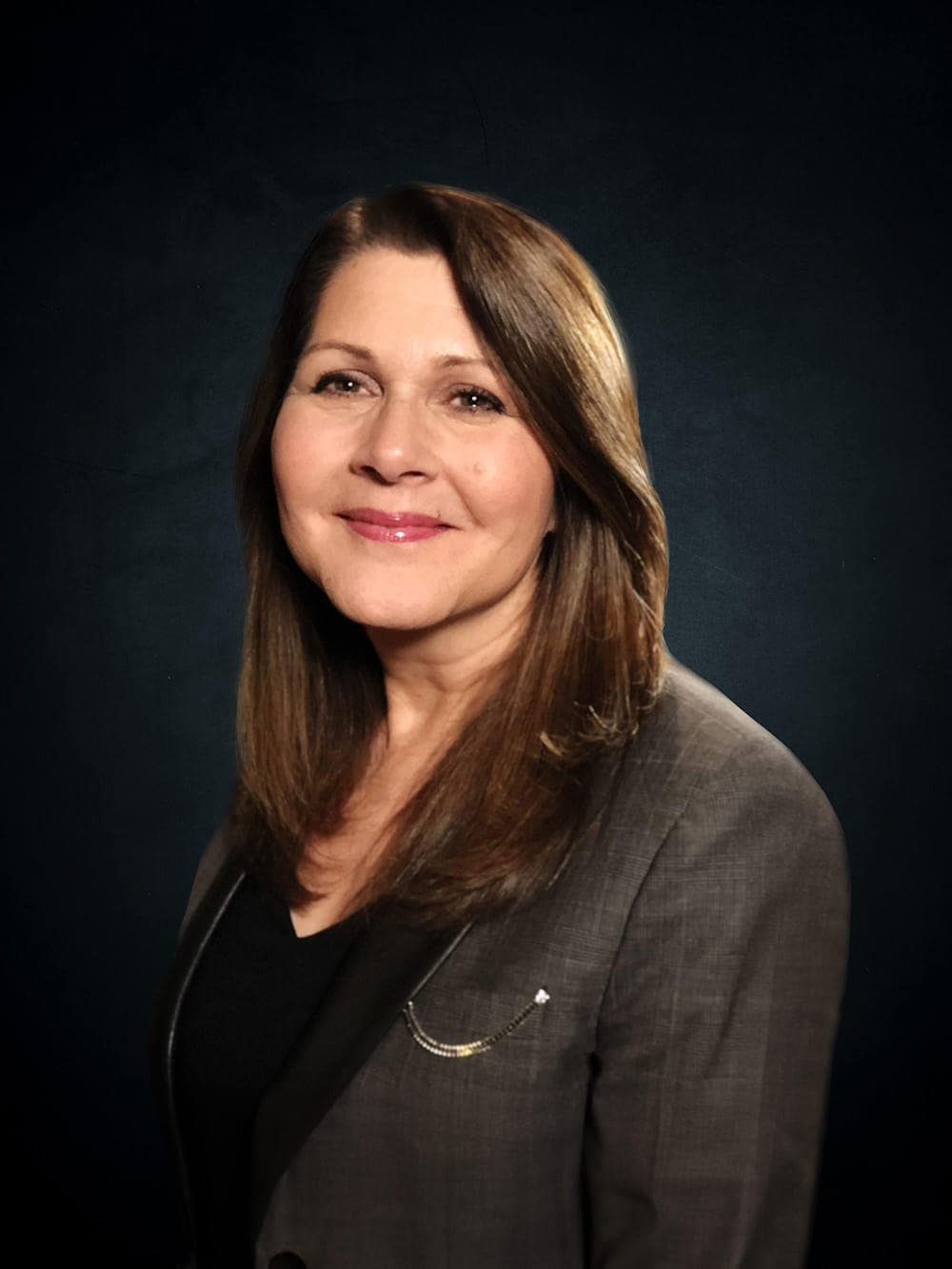
Canadian Mary Ann Baynton speaking about the Canadian Mental Health Standard at a recent conference in Sydney was the first speaker to mention the importance of consensus – an important element of workplace negotiation often missing from how consultation is applied.
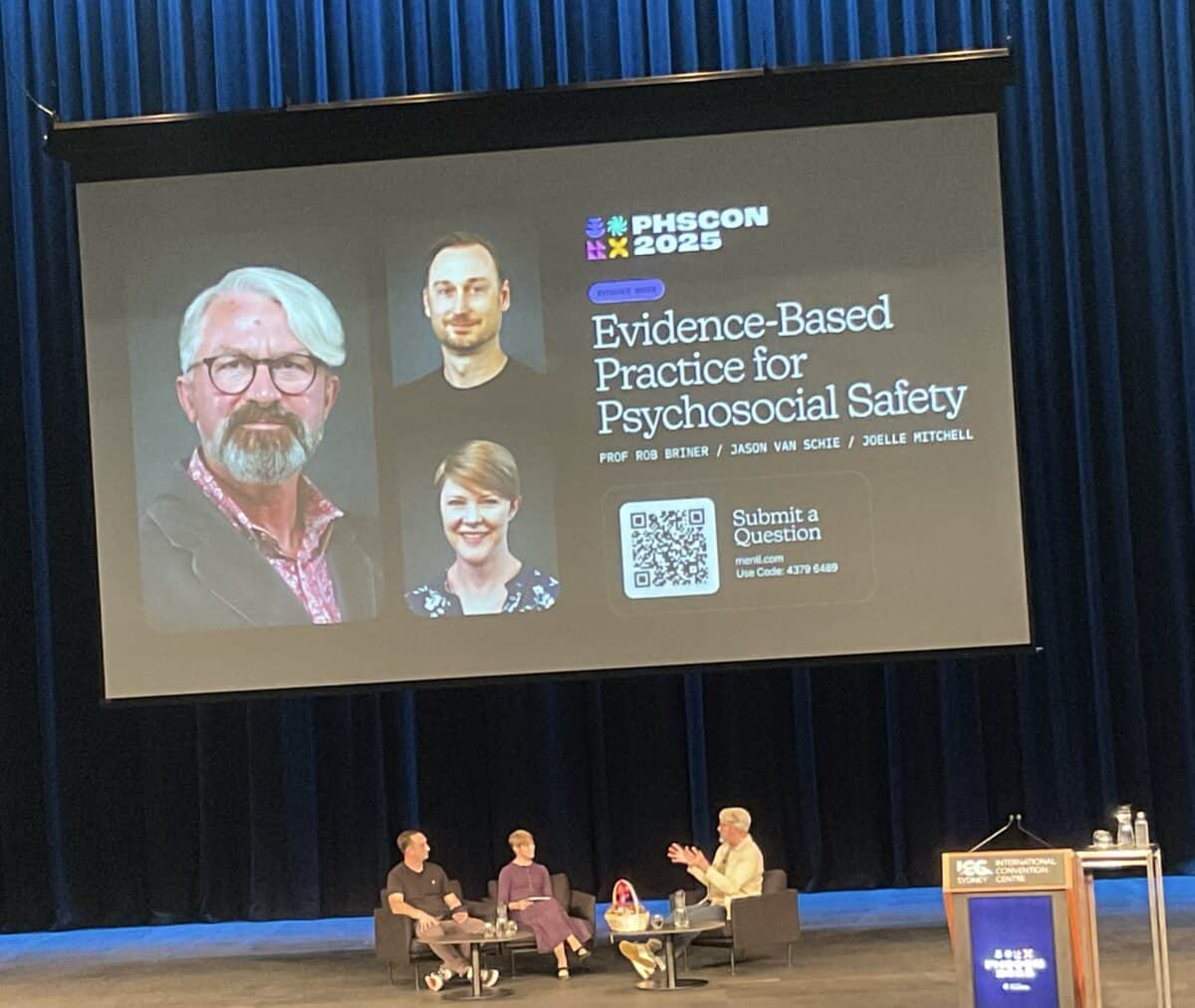
Rob Briner sets the agenda at a psych health and safety conference
The 2nd (annual) psych health and safety conference commenced with what was almost a summary of the current play in the workplace psychosocial/psychological sphere. This year, the venue is bigger, and the number of delegates in person and online appears much bigger. But the most significant feature is the blending of different disciplines under the psych tag.
Rob Briner kicked it off

How influential is ISO45003?
The second in our series of occupational health and safety questions to an artificial intelligence centres on the issue of ISO 45003’s influence on the management and prevention of psychosocial hazards. It was asked:
“How influential has ISO45003 been in achieving systemic and organisational change in Australia?”
Tough questions about psychosocial safety and health
Over the next week or so, SafetyAtWorkBlog will be focusing on the issue of psychosocial hazards and psychological risks at work, as we cover the Psych Health and Safety Conference in Sydney. These risks and hazards are the most pressing topic in occupational health and safety (OHS) at the moment, with an increased demand for solutions from workers and the community, as well as heightened expectations for regulatory compliance. I apologise for this intense focus, but I welcome your comments and participation.
I will start by posing this question:
“The Australian approaches to psychosocial hazards and psychological safety in Human Resources and Work Health and Safety have been siloed in the past. Are the approaches getting closer? Is there more cooperation between the two or are the two disciplines’ aims still too different?”