SPC shows leadership on mandatory vaccinations

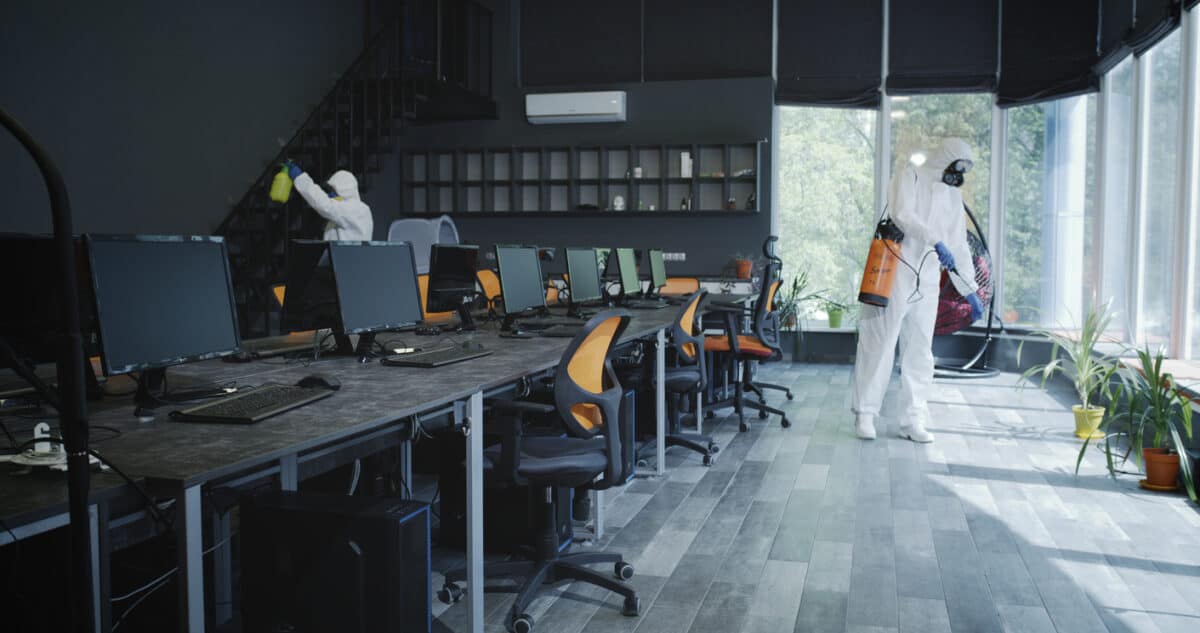
The first week of August 2021 has been a big week for the discussion of mandatory vaccinations for Australian workers. A major Australian fruit cannery in regional Victoria, SPC, has stated that all of its workers, visitors to the site and contractors will need to be fully vaccinated by November 2021. This is being done to protect workers, the community and to maintain the food supply.

There are many lessons from SPC’s decision and the subsequent discussion has been largely predictable. What has been missing from almost all of the discussion is the occupational health and safety (OHS) perspective. This article and others will look at the issue and how the health and safety benefits have been presented in the mainstream media.

Subscribe to SafetyAtWorkBlog to continue reading.
Subscribe Help
Already a member? Log in here

Best Practice? Gold Standard? let’s call the whole thing off

Australians are starting to understand that having something described as “gold standard” – most recently in relation to the contact tracing services of New South Wales – is as helpful as describing occupational health and safety (OHS) laws and systems as “best practice”. These phrases are optimistic bullshit and politically fraught. The fragility of these phrases has been revealed in events as far apart as the COVID-19 pandemic of 2020-21 and the Esso Longford Royal Commission of 1999. Consider this paragraph from the Esso Longford Royal Commission report and its pertinence to NSW’s contract tracing:

Subscribe to SafetyAtWorkBlog to continue reading.
Subscribe Help
Already a member? Log in here

OHS seen as not up to the task on sexual harassment

Then submissions to the Senate Committee inquiry into the Sex Discrimination and Fair Work (Respect at Work) Amendment Bill reveal some interesting perspectives on occupational health and safety (OHS) from Australian businesses and other organisations.

The Kingsford Legal Centre says this of the work health and safety approach to sexual harassment:

“WHS law is designed to manage work health and safety risks which are many and varied and are distinct from gendered violence and discrimination. Many cases of sexual harassment and sex discrimination are not an easy fit for the WHS framework. WHS legislation is state and territory based and relying on WHS legislation does not address the Commonwealth’s international human rights obligations under the Convention on the Elimination of All Forms of Discrimination against Women (CEDAW). In also not naming the gendered nature of the issue, WHS law risks overlooking keys to prevention and culture change which are central to the Respect@Work Report.
While WHS processes may in some cases run parallel to complaints of discrimination or sexual harassment, there are fundamental ways in which WHS law differs in the management of claims. Most obviously there is not a clear process for people who have experienced discrimination and harassment to be allowed to speak through a conciliation process about the impact of such behaviour on them and seek specific forms of redress. We know from our research in this regard that this process is important in resolving complaints impacting on human rights and reflects a complainant-centred process. WHS law does not approach injuries in such a way.”

Subscribe to SafetyAtWorkBlog to continue reading.
Subscribe Help
Already a member? Log in here

Forces amass against the prevention of workplace sexual harassment

Most of Australia’s media has cooled its reporting on the sexual harassment law reforms championed by the Sex Discrimination Commissioner, Kate Jenkins. Partly this relates to revised laws being proposed in Parliament later this year and that are currently subject to a Senate Committee Inquiry. The media coverage on the proposed laws and the senate inquiry has been thin with only the Australian Financial Review (AFR) giving it any serious attention.

However, research reports on sexual harassment in Australian workplaces continue to appear and the transcripts of the Senate Committee’s public hearings are publicly available, as are the submissions made by, primarily, business and law organisations. What is missing is the involvement of the occupational health and safety profession.

Subscribe to SafetyAtWorkBlog to continue reading.
Subscribe Help
Already a member? Log in here

OHS will ease the Work From Home transition

Australian Prime Minister Scott Morrison continues to promise a return to normal but it is impossible to return to a previous point in time without denying the changes that have occurred since then. Morrison speaks of this normality in relation to the COVID-19 pandemic and may offer some understanding of his reticence to act on global warming as climate change will never allow a return to normal.

One of the workplace changes exacerbated by the pandemic is the working from home (WFH) option. Recently businesses are starting to accept this new normal, sometimes backed by research. Many businesses are in a state of (I would argue, permanent) transition. On July 2, 2021, Benjamin Clark offered a useful summary of the WFH state of play for Crikey (possibly paywalled) with some overlap to a November 2020 Harvard Business Review (HBR) article on Working From Anywhere (WFA).

Subscribe to SafetyAtWorkBlog to continue reading.
Subscribe Help
Already a member? Log in here

COVID, Blame and Employers

Australia has not had a crisis in public health to the magnitude of COVID-19 for a very long time. It is understandable for people to look at a public health crisis through the reference point of their own experience and profession. There is an overlap between the management of the pandemic and occupational health and safety (OHS), but that overlap should not be inflated.

Jason Thompson wrote an excellent (and recommended) article on COVID-19 and blame for the University of Melbourne titled “Get Ready for a Shift in the COVID Blame Game”. I had the chance to put a few questions to him about the article.

Subscribe to SafetyAtWorkBlog to continue reading.
Subscribe Help
Already a member? Log in here

Office Noise and Mental Health

Too much weight is given to occupational health and safety (OHS) surveys and research that rely on self-reported data. Such data is subject to social and personal biases. It has its role in the state of knowledge, but its authority and worth is frequently overstated.

A recent research project into the OHS effects of working in open-plan offices removed this level of subjectivity by using a simulated office environment. The researchers’ findings provide a useful context to office design (not a new issue) and work-related mental health, especially when workers are being encouraged to return to the office.

Subscribe to SafetyAtWorkBlog to continue reading.
Subscribe Help
Already a member? Log in here
Concatenate Web Development
© Designed and developed by Concatenate Aust Pty Ltd