Already a member? Log in here
Category: evidence
The next step in incident investigations – Learning Teams
The SafeGuard conference in Auckland this week has provided some excellent occupational health and safety (OHS) insights but the standout, on Day 1, was the end of the day panel. Often these are dull and given to less than half the audience who have either had children to collect or choose to go to the casino next door.
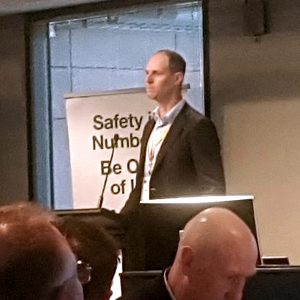
This panel comprised two representatives of Contact Energy,
Safety in licencing is not limited to fishing
On 26 May 2017, NT WorkSafe announced that Austral Fisheries Pty Ltd was charged over health and safety breaches that resulted in the electrocution of Ryan Donoghue. Enforcement of occupational health and safety breaches should be welcomed but Donoghue died in 2013! Why so long?
NT WorkSafe regret the delay:
“The location of the vessel meant the Australian Maritime Safety Authority, Workplace Health and Safety Queensland and NT WorkSafe potentially had jurisdiction to investigate.”
“The preliminary findings from our investigation were handed to Workplace Health and Safety Queensland after we received legal advice that they had jurisdiction,” Mr Gelding [Executive Director of NT WorkSafe] said.
Workplace Health and Safety Queensland completed their investigation on 3 March 2015 and decided not to prosecute. The Northern Territory Coroner held an inquest into the accident in April 2016 and referred the matter to NT WorkSafe for consideration.
Why so long? Jurisdictional arguments and enforcement variation. But didn’t Australia establish a National Compliance and Enforcement Policy in 2011? Yep,
Both parties claim a win in a stoush that changed a couple of words
The court case between the Federal Chamber of Automotive Industries (FCAI) and WorkSafe Victoria has been resolved and, according to both parties, they both won. According to WorkSafe Victoria:
“The Supreme Court proceeding issued by Honda, Yamaha, Suzuki and other quad bike manufacturers against WorkSafe Victoria was dismissed just prior to a trial that was listed to commence yesterday.
The manufacturers had wanted the Supreme Court to rule that WorkSafe’s public announcements about quad bike safety were unlawful. The challenge has been dismissed and will not proceed to trial.”
According to FCAI’s media statement:
“In the Supreme Court proceedings, WorkSafe Victoria specifically declined to pursue a claim that the fitment of an OPD is an appropriate way of reducing the risks to operators of an ATV overturning. It has produced no data or other evidence to support its claim that OPDs will “save lives”.
The revisions now made by WorkSafe Victoria are welcomed by the ATV industry as an important clarification to correct previous reporting that, as a result of its March 2016 announcement, OPDs had become mandatory on Victorian farms. That was not the case, as WorkSafe Victoria has now acknowledged, as a result of the legal proceedings taken against it.”
OHS and Tim White
The latest in our series of profiles on researchers who are involved with occupational health and safety research is Dr Tim White. He holds the degrees of Bachelor of Engineering (Mechanical) and Doctor of Philosophy from the University of New South Wales (UNSW). His most recent appointment was as Lecturer and Researcher in Mechanical Design at UNSW.
After 10 years of working casually as a consultant while also holding salaried positions, Dr White founded Forensic Mechanical Engineers in 2013 and now works full time as a forensic engineer and expert witness. He is based in Bathurst, NSW but travels extensively for work, often flying himself to regional locations.
What attracted you to looking at workplace health and safety? Did you fall into it or always have an interest?
I feel like I just fell into it, although now that I look back, I suppose that my career progression was reasonably intuitive. A farming background prior to my first engineering degree (and subsequent time in industry) meant that I was never going to be content doing the same thing as most of my peers. Although it was not a main consideration at the time, the PhD and progression into academia was what ultimately equipped me with the ability to now work flexibly in a role where I feel as though I am – clichés aside – doing something interesting as well as making a difference.
“Shooting the shit out of them”
On May 18 2017, Australia’s Senate Education and Employment Committee held a public hearing for its inquiry into Corporate Avoidance of the Fair Work Act in Melbourne Australia. Executives of Carlton United Breweries (CUB) were the first to appear, ostensibly, to reiterate and answer questions about its submission. The Chair of the Committee, Senator Gavin Marshall, had different expectations and stated he would be asking about a passionate, long and contentious dispute at CUB’s Abbotsford brewery in 2016. Quotes from a CUB diary of events, mentioned by Senator Marshall, seemed to catch the CUB executives unaware.
Senator Marshall quoted from a CUB Manager’s diary asking what was meant by “Shooting the shit out of them”. The atmosphere in the hotel function room changed. Continue reading ““Shooting the shit out of them””
Workplace mindfulness? The jury is still out
At a well-attended La Trobe University alumni seminar in May 2017, researchers discussed the reality and the hype surrounding mindfulness. They explained the varieties of mindfulness, the clinic research history over the last four decades and the personal advantages of living mindfully. However in the workplace and organisational context, they said that there was insufficient evidence to show benefits from workplace mindfulness in this “emerging area of research”.
The seminar was hosted by Latrobe University with three speakers
- Dr Jennifer Arnold-Levy, Director of Making Emotions Work
- Josh Marsden, Manager, Health and Wellbeing La Trobe University and
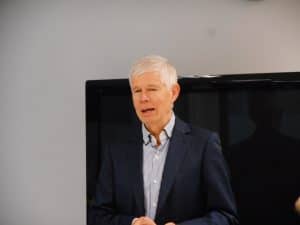
- Dr Eric Morris, Director of Psychology Clinic, La Trobe University (pictured above.
Many mindfulness advocates have developed programs that they claim can offer substantial benefits to workplaces by increasing productivity and reducing injury and illness, primarily, by changing the behaviours and attitudes of employees. This individual approach is often dropped into a workplace and promoted as an organisational opportunity. But the La Trobe researchers mentioned that this is a very recent perspective.