Queensland’s report may not be “best practice” but demands attention

The Queensland Government has released the final report of its “Best Practice Review of Workplace Health and Safety Queensland“. Most of the media attention is given to the introduction of Industrial Manslaughter laws but there are some interesting recommendations and discussion on Enforceable Undertakings, insurance products and other matters of interest to business and safety professionals.

The Queensland Government announced the review earlier this year, particularly, in response to fatalities at Dreamworld and Eagle Farm. A Discussion Paper was released in April.

Industrial Manslaughter

Industrial Manslaughter laws have been floating around Australia’s occupational health and safety (OHS), legal union and political sectors for many years.  Only the Australian Capital Territory (ACT) introduced such a law and the Crimes (Industrial Manslaughter) Amendment Act 2003 remains in effect.

The significance in this Queensland report is that the document is entitled “Best Practice” so the panel, based on its own experience and the many submissions it received, adds considerable weight to these controversial laws.

Subscribe to SafetyAtWorkBlog to continue reading.
Subscribe Help
Already a member? Log in here

Personalised training, ladder standards and a non-gamechanger

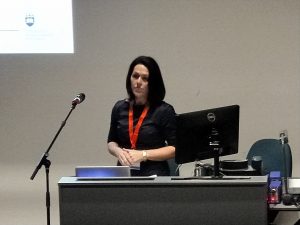
L to R: Brad Parker, Liz Tosti, Chris McKie

Day 2 of the SAFETYconnect conference commenced with a disrupted panel discussion comprising four representatives of Australia workplace safety regulators.  Each representative provided a 10 minute presentation about their agency and their plans.  Curiously almost all of them discussed their strategic plans which varied between three and ten years but almost all contained the same aims, targets and challenges.

Some of the most interesting content was in the more practical stream of the conference.

Subscribe to SafetyAtWorkBlog to continue reading.
Subscribe Help
Already a member? Log in here

SafetyConnect conference connects

This week’s SAFETYconnect conference hosted by the NSCA Foundation in Sydney had a very good strike rate of interesting speakers on its first day.  Only one speaker missed the safety mark – it was as if they had been handed a marketing presentation instead of safety and, regardless of the safety audience, give it anyway.

This conference was notable for the way that the ‘safety differently’/Safety II movement has moved into mainstream safety management.  The most obvious example of this was a presentation by QantasLink.

Subscribe to SafetyAtWorkBlog to continue reading.
Subscribe Help
Already a member? Log in here

SWMS deficiencies are symptoms of bigger OHS challenges

The use and abuse of Safe Work Method Statements (SWMS) has been researched in Australia for several years. SafetyAtWorkBlog has seen a copy of an unreleased report prepared for Safe Work Australia that identifies major problems with the use of SWMS but that makes recommendations which seem unlikely to achieve the level of change required.

The  February 2017 report “The Efficacy of Safe Work Method Statement and WHS Management Plans in Construction” (written by

Subscribe to SafetyAtWorkBlog to continue reading.
Subscribe Help
Already a member? Log in here

You can learn so much more from a Near Miss – Interview with James Wood

James Wood was injured during work on an Australian mine site in 1985 resulting in spinal cord damage and other complications. For a long time, James has been telling his story to Australian workers for them to understand the risks they face, primarily, at work. I caught up with James on a very cold morning at a lovely café in Victoria’s Yarra Valley earlier this month.

SAWB: James, I heard you talk about your workplace injury and the disruption and the consequences of that at least 15 years ago at a breakfast meeting. It was extremely effective, and a powerful message. Fifteen years later you’re still doing that. Why tell your story? Why would anybody want to hear it?

JW: Well, there’s probably a couple of answers, Kevin. I share my story and my experiences because I know how my workplace accident changed my life and I know how it affected a lot of the people around me at the time. My family, workmates, friends. I believe that by sharing my story, I can give people a little bit of information about what it’s like to get hurt at work or even away from work.

I honestly hope that by telling people how I got hurt and how it changed my life, it can give people the reason to maybe use some of the training that we’re all given. To use the systems and the procedures that most workplaces have and try and stop somebody else from getting hurt.

Subscribe to SafetyAtWorkBlog to continue reading.
Subscribe Help
Already a member? Log in here

University sexual assault – an OHS perspective

The community and media responses to the Australian Human Rights Commission report into sexual assault and harassment in Australian universities continue but until the Australian Government responds, it is unclear how the risks will be reduced, particularly as many members of the current Federal Government have been openly hostile to the AHRC and its previous Commissioner, Gillian Triggs.  After having rubbished the Commissioner and the institution, how will the government respond?

Following on from the very popular SafetyAtWorkBlog article about the report yesterday, it is worth looking at the AHRC recommendations in the occupational health and safety (OHS) context.

It should be noted that OHS places the principal responsibility on the employer, in this instance, the universities and the Vice-Chancellors.  Some have already started to call on the government to play a role, with implications that it should be leading the change: Continue reading “University sexual assault – an OHS perspective”

OHS is PHS (public health and safety) but government needs to catch up

The Australian Human Rights Commission has released a report into the prevalence of sexual harassment and sexual assault in Australia’s university campuses. It has revealed some shocking statistics and brings Australian universities into the global phenomenon of reassessing university obligations for the modern world.

Australia’s occupational health and safety laws and obligations could be used as a structure for preventing assaults and harassment if the government and universities would be brave enough to use them.

Subscribe to SafetyAtWorkBlog to continue reading.
Subscribe Help
Already a member? Log in here
Concatenate Web Development
© Designed and developed by Concatenate Aust Pty Ltd