Heat

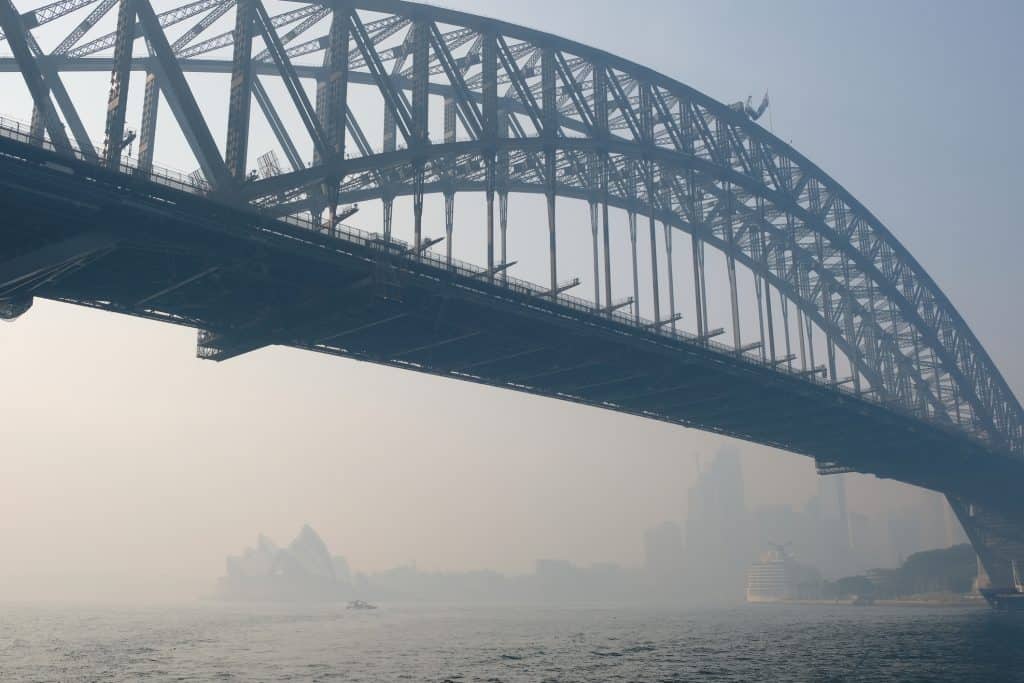
The occupational risks of exposure to excessive heat have usually been assessed in remote locations in Australia, and almost exclusively for outdoor workers. The changing environmental conditions, regardless of the global cause, are changing the risk assessment of heat for outdoor workers and, increasingly, indoor workers such as those in food production or kitchens.

Recently Safe Work Australia released a seminar online which discussed the issue of heat in the occupational health and safety (OHS) context.

The panel discussion operates from the perspective of what can be done rather than what could be done and remains within the occupational context. Professor Dino Pisaniello mentioned his recent research into the issue, which looks like it was meant to be the focus of this seminar and which found:

Subscribe to SafetyAtWorkBlog to continue reading.
Subscribe Help
Already a member? Log in here

Is workplace health and safety still relevant?

A quiet revolution is happening in workplace health and safety in Australia.  I don’t mean the laws – that boat sailed with the failure of the attempt to harmonise laws and tweak them for the new Century.  The change is coming from a realisation that what is still mostly called Occupational Health and Safety (OHS) has been misunderstood and misapplied, especially in the context of work-related psychological hazards.

OHS emerged in its most contemporary form in the 1970s in the UK and manifested in new laws in Australian States in the 1980s.  These laws stipulated that the primary duty of care for the health and safety of workers AND those affected by the work processes suits with the employers (ignore the absurd modern variation of employer in the Work Health and Safety laws – the PCBU – Persons Conducting Business or Undertaking as only lawyers really use the term.  Some prominent lawyers pronounced the acronym as “Peek-A-Boo” (you know who you are) as if OHS was a barely-held-together nightie! It was juvenile and didn’t help).  Workers have a duty to not harm themselves or others and to support the employer’s OHS processes.

Continue reading “Is workplace health and safety still relevant?”

Royal Commission into Mental Health

The Victorian Government has instigated a Royal Commission into Mental Health. At the moment it is receiving submissions to assist it in developing the Terms of Reference. This is an odd process that delays the Commission’s start and is giving the impression that the Commission has already commenced.

However, it is important that occupational health and safety (OHS) advocates become deeply involved in this Royal Commission as psychological harm in the workplace, and caused by the workplace, is a hazard that employers are obliged to try to eliminate. If the workplace context of mental health is not overtly included in the Commission’s Terms of Reference, we will miss a major opportunity for the changes required to prevent psychological incidents and will likely remain with only the symptomatic relief offered by most workplace wellbeing strategies and products.

On the Submissions website, I prioritised “Prevention and Early Intervention” and the “Prevent of Suicide” as my top priorities and make these concise suggestions.

Are there any additional themes that should be included in the terms of reference for the Royal Commission into Mental Health?

It is vital that the issue of Prevention is included in the terms of reference as investment in and attention to prevention has been shown to be the best way to achieve the most return on investment.

The workplace health and safety context should also be mentioned as work can create psychological harm but can also have benefits by providing people with a purpose as well as an independent income.

I encourage all SafetyAtWorkBlog readers who are concerned about workplace psychosocial hazards to visit the submission web page so that the Commission understands the importance that occupational health and safety has in preventing harm.

Kevin Jones

New thesis on transport safety looks at the bigger OHS picture

A recently completed thesis into occupational health and safety (OHS) and New Zealand’s trucking industry is gaining some media attention.  It deserves more, as it identifies many of the structural and cultural barriers to improving health and safety in this important and global industry.   Continue reading “New thesis on transport safety looks at the bigger OHS picture”

Advertorial over-simplifies workplace health and safety

On Sunday November 4 2018, The Herald-Sun newspaper’s regular Body & Soul supplement devoted several pages to an exclusive article about workplace wellbeing ($). It is clearly an advertorial as the supplement has several full page advertisement from Medibank Private and the article includes a text box labelling it as the

“b+s 2018 Worklife Survey in partnership with Medibank”.

The article and survey is less than helpful from an occupational health and safety (OHS) perspective as there is no mention of organisational control measures or even the recent campaign in National Safe Work Month by WorkSafe Victoria on wellness!

Subscribe to SafetyAtWorkBlog to continue reading.
Subscribe Help
Already a member? Log in here

Bad bosses

Benjamin ArtzAmanda H. Goodall  and Andrew J. Oswald determined that

“There are no published papers — to our knowledge — that assess in an internationally consistent way the rarity or commonness of ‘bad bosses’.”

So they undertook there own research, published under the title “

Subscribe to SafetyAtWorkBlog to continue reading.
Subscribe Help
Already a member? Log in here
Concatenate Web Development
© Designed and developed by Concatenate Aust Pty Ltd