Trade unions offer alternative, more accurate(?) workplace death statistics

The Victorian Trades Hall Council (VTHC) indirectly acknowledged the ILO theme for World Day for Safety and Health at Work in its media release for International Workers Memorial Day 2017.  The ILO was calling for more, and better, data on workplace injuries and illnesses.  VTHC questioned the official workplace fatality numbers issued by the government.  It stated:

“A VTHC analysis shows that in 2016-17 over 200 Victorians died as a direct result of Workplace injury or illness, although the government’s official tally for the year is just 26.”

This disparity needs to be discussed across jurisdictions because occupational health and safety (OHS) data has always been incomplete, a fact acknowledged by many government inquiries in Australia for many years.  

Subscribe to SafetyAtWorkBlog to continue reading.
Subscribe Help
Already a member? Log in here

Free online safety conference – RTW Summit

Recently I recorded my contribution  to an online conference called the RTW Summit.  This conference is first to Australia although other organisations have proposed such a format previously but never eventuated.

The conference has been devised and organised by Mark Stipic, a young Return To Work professional who started a podcast recently.  He is intelligent and one of those people who is not afraid to take risks in the emerging world of social media.

Continue reading “Free online safety conference – RTW Summit”

Big business seminar adds to OHS knowledge library

The latest broadcast in Safe Work Australia’s Virtual Safety Seminar (VSS) series is aimed at the executive level of management and entitled “Why big business needs to lead work health and safety“. One of the attractions of the VSS is that Safe Work Australia is able to draw upon senior and prominent business leaders who do not often talk occupational health and safety.

This seminar included contributions from Diane Smith-Gander, Dean PritchardMarcus Hooke and was hosted by Jennifer Hewett.

Several important perspectives were discussed that would be helpful to the intended audience but there were also some comments that deserve contemplation.

Subscribe to SafetyAtWorkBlog to continue reading.
Subscribe Help
Already a member? Log in here

What do we want from a workers’ memorial?

When anyone dies, it is important to remember them and their relatives as well as those we did not know personally but who also grieve.  Public recognition of deceased workers is a recent phenomenon, even though we have commemorated and noted industrial disasters for over a century.  Memorials have always provided a symbolic focus for our attention and grief with the hope that these memorials motivate people to reduce the chances of a workplace death occurring to others.

But worker memorials need to be carefully considered and designed to be inclusive as Death visits all workplaces regardless of the religion of the workers, their ethnicity, the location of the fatality or the workplace conditions.  On the eve of International Workers’ Memorial Day for 2017, it may be time to rethink the memorial to deceased workers in Melbourne, Victoria.

Subscribe to SafetyAtWorkBlog to continue reading.
Subscribe Help
Already a member? Log in here

OHS changes to come in wake of the Western Australia election result

It is rare to find an occupational health and safety (OHS) seminar that is captivating but there is almost always some useful bits of safety information, hopefully enough to make attendance worthwhile.

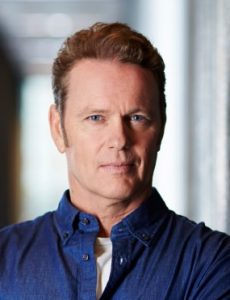
On March 24, 2017 the Safety Institute of Australia and Herbert Smith Freehills (HSF) held the annual breakfast seminar in Melbourne.  Speakers included representatives from the HSF law firm, the SIA, WorkSafe Victoria and SafeSearch.  Perhaps of most interest was HSF’s senior associate from Perth, Sam Witton (pictured), who outlined the OHS changes likely in Western Australia now the Australian Labor Party (ALP) is in power.

Subscribe to SafetyAtWorkBlog to continue reading.
Subscribe Help
Already a member? Log in here

When Work Kills – new research on workplace suicides

There are many advocates of the importance of a mental health and wellbeing in workplaces.  But few of them address the worst-case scenario for workplace mental health of work-related suicides.  In some cases, the mental health advocates are overly cautious about even speaking the reality, which does not help reduce mental health stigma.

In 2016 Professor Stewart Clegg, of UTS Business School said that

“That work can kill the will to live is a fundamental ethical problem that we must attend to…”

New research from the UK provides a useful summary of the work-related and workplace suicides in Europe with important lessons of where precarious employment and the “gig economy” could lead.

Subscribe to SafetyAtWorkBlog to continue reading.
Subscribe Help
Already a member? Log in here
Concatenate Web Development
© Designed and developed by Concatenate Aust Pty Ltd