Industrial Manslaughter laws in Australia are about politics, not safety

The latest push for Industrial Manslaughter laws in Australia has appeared as part of the Tasmanian state election.

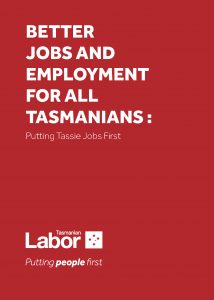
The Tasmanian branch of the Australian Labor Party released its policy platform for jobs in February 2018 which makes specific and vague commitments on workplace safety which require scrutiny.

Precarious Work

The Tasmanian Labor Leader, Rebecca White, states that

“Labor is committed to addressing casualisation and the outsourcing of work…”
Subscribe to SafetyAtWorkBlog to continue reading.
Subscribe Help
Already a member? Log in here

Victoria is ripe for Industrial Manslaughter laws

The Victorian trade union movement is preparing for the November 2018 State Election with one element of that campaign being the advocacy of Industrial Manslaughter laws.
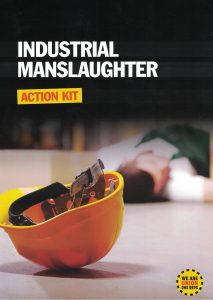
At the end of January 2018, the unions “kicked off” their campaign with a meeting which reviewed the challenges and wins for injured workers in 2017 and outlined their intentions for 2018. The Industrial Manslaughter Action Kit included a petition which says: Continue reading “Victoria is ripe for Industrial Manslaughter laws”

Review into WorkSafe Victoria released at Christmas

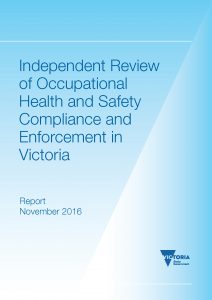
In the middle of 2017 SafetyAtWorkBlog asked why the Victorian Government was slow in releasing the report of an independent review into its occupational health and safety (OHS) regulator, WorkSafe.  Victorians have received a Christmas present with the release of the report of the  Independent Review of Occupational Health and Safety Compliance and Enforcement in Victoria and the Government response.

In Principle

According to the Minister for Finance Robin Scott’s media release, dated 18 December 2017,

“The review was a Labor Government election commitment and made 22 recommendations – all of which the Government supports in principle.” (emphasis added)

Subscribe to SafetyAtWorkBlog to continue reading.
Subscribe Help
Already a member? Log in here

Action demanded on sexual harassment in the entertainment industry

On 12 December 2017, part of Australia’s screen and television industry held a forum in Sydney about sexual harassment in the sector and what could be done to reduce this workplace hazard. This initiative occurred a day before an open letter was published about sexual harassment in the music industry.  There is a momentum for change on sexual harassment in the workplace, but it is at risk of resulting in a fragmented approach which will generate turf wars, confusion and, ultimately, ineffectiveness.

The

Subscribe to SafetyAtWorkBlog to continue reading.
Subscribe Help
Already a member? Log in here

What do Weinstein, Spacey and others have to do with OHS?

“Then I went, ‘Oh hang on, I’ve normalised so much of this as part of my industry…. This last three months has really made us all take a long hard look at what we have even let ourselves think is acceptable.” – Sacha Horler

Such a statement is familiar to those working in the field of occupational health and safety (OHS).  This normalisation, or habituation, has underpinned much of the discussion of what builds a safety culture – “the way things are done round here”.  As a result of revelations and accusations pertaining to Gary Glitter, Rolf Harris, Jimmy Saville, Robert Hughes, Harvey Weinstein, and Kevin Spacey, the entertainment industry around the world has been forced to assess the fundamental ethics on which sections of its industry are based.  Continue reading “What do Weinstein, Spacey and others have to do with OHS?”

Can flexible work arrangements apply in the construction sector?

On 30 October 2017, the Safety Institute of Australia and RMIT University held their annual OHS Construction Forum.  This year’s theme was flexible working arrangements – a brave choice that did not really work but was indicative of safety in the construction industry generally.

Several speakers discussed well-being generally and how flexible working arrangements were critical to fostering an appropriate level of  wellness.  One, a labour lawyer, outlined the legislative obligations that companies have to those types of arrangements with reference to equal opportunity laws, industrial relations and anti-discrimination obligations – sadly the workplace safety laws and obligations were not mentioned.  In all of the wellbeing-themed discussions, the application to the on site construction workers was rarely, if ever, mentioned.

Subscribe to SafetyAtWorkBlog to continue reading.
Subscribe Help
Already a member? Log in here

The future of OHS under the Australian Labor Party

At Australia’s National Press Club on October 18 2017, the Australian Labor Party’s Shadow Minister for Employment and Workplace Relations Brendan O’Connor spoke, ostensibly on industrial relations but occupational health and safety (OHS) was mentioned.  O’Connor provided several examples of worker exploitation and casual work and then stated

“There is something really wrong when those big, household-name companies apparently feel absolutely no responsibility, or consider themselves immune from reputational risk, for exploitation of the workers on whose labour they make a vast profit. This is why at the last election, Labor promised a National Labour Hire licencing scheme. We said we would issue a licence to only those who have a clean record of complying with employment, tax and OH&S laws, and that licences would be revoked for serious misconduct.”

In the discussions about the regulation of the labour hire industry OHS has been given, comparatively, little attention so it is useful to note even the small amount of prominence granted it by O’Connor.

Subscribe to SafetyAtWorkBlog to continue reading.
Subscribe Help
Already a member? Log in here
Concatenate Web Development
© Designed and developed by Concatenate Aust Pty Ltd