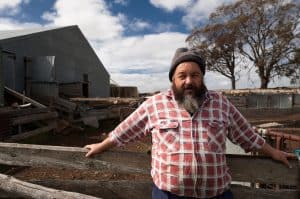
Interview with Dr Gerry Ayers

This weekend is the International Workers Memorial Day.  In Victoria, in particular and in Australia more generally, it is highly likely that the issue of Industrial Manslaughter laws will be raised as part of a trade union campaign.

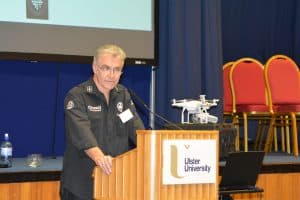
Dr Gerry Ayers, the OHS&E Manager of one of the branches of the CFMEU, features in an online petition about these laws and it seemed the right time to interview Dr Ayers about these laws but also about workplace health and safety enforcement and practices more generally.

Subscribe to SafetyAtWorkBlog to continue reading.
Subscribe Help
Already a member? Log in here

We need to ask tougher questions about FIFO

On the recommendation of one of my subscribers I am currently listening to a podcast called Food For Thought which includes a discussion on the mental health issues associated with the Fly-In -Fly-Out (FIFO) work structure.  This article is being written as I listen to the podcast so follows the threads as spoken.

Various major Australian inquiries have been held into the occupational health and safety of FIFO workers for the mining sector. The potential psychological harm of FIFO is indisputable so why aren’t we asking the tough questions and thinking about the harm that we are allowing to occur?

Source: istockphoto

Continue reading “We need to ask tougher questions about FIFO”

WorkSafe Victoria’s optimism is for the whole community

Marnie Williams, Executive Director of WorkSafe Victoria launched 2018 with a presentation at a breakfast seminar organised by the Safety Institute of Australia and hosted by Herbert Smith Freehills in Melbourne.  Williams illustrated that WorkSafe is very aware of community and business expectations on her authority’s performance and showed WorkSafe is very busy as it restructures around its relocation to Geelong and elsewhere  However it could change even more or in different, more sustainable, ways.

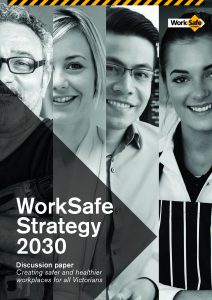
Williams’ presentation proposed a positive future where the actions and issues associated with occupational health and safety (OHS) broaden to involve the Victorian community and address safety and health concerns that may no longer fit within the established OHS definitions, approaches and strategies.

Subscribe to SafetyAtWorkBlog to continue reading.
Subscribe Help
Already a member? Log in here

SIA receives $50K through Enforceable Undertaking

Enforceable Undertakings (EUs) are increasingly popping up in the prosecution lists of occupational health and safety (OHS) regulators.  A curious one appeared on WorkSafe Victoria’s website in January 2018.

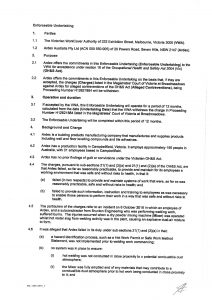
Ardex Australia P/L was prosecuted for breaching OHS laws after a subcontractor was burnt:

“…when a dry powder mixing machine was operated whilst hot metal slag from welding activity was in the plant, causing an explosive dust-air mixture.”

But what is most curious is the EU’s inclusion of a $A50,000 donation to the Safety Institute of Australia (SIA).

Subscribe to SafetyAtWorkBlog to continue reading.
Subscribe Help
Already a member? Log in here

Sexual harassment may be an OHS issue but what priority should it receive?

One online news site in Australia has suggested that sexual harassment is an occupational health and safety (OHS) issue.  At first blush, it should be.  Sexual harassment can create mental ill-health and can certainly be harmful. But from the early days of discussions about workplace bullying and occupational violence in Australia, sexual harassment has been consciously excluded from OHS.

Is It or Isn’t It?

Some of the best discussion on bullying, harassment and violence was written by Dr Clare Mayhew for the Australian Institute of Criminology in 2000.  These included a practical handbook on prevention. (It’s peculiar that some of the most perceptive works on OHS occur outside the OHS profession.  Well perhaps not so surprising.)  In the handbook, Mayhew points out that harassment has always been an element of workplace bullying but excludes sexual harassment from her discussion:

“The Australian Institution of Criminology believes that prevention, rather than post-incident reaction, is the key to improved outcomes. However, the handbook needs to be adapted specifically to each organisation for best results. The discussions exclude activity that could be described as sexual harassment, which is extensively dealt with elsewhere.” (page 1)

This position is reflective of the OHS literature yet, on reflection, this position may have been wrong for it contributed to a fractured approach to managing workplace psychosocial hazards. 

Subscribe to SafetyAtWorkBlog to continue reading.
Subscribe Help
Already a member? Log in here

Rail-related suicides discussed at ergonomics conference

Rail-related suicides are tragedies that ripple throughout society affecting families of the suicides as well as the train drivers, their families and their colleagues. Various strategies are being trialled but often the results of interventions are hard to quantify.  At the annual conference of the

Subscribe to SafetyAtWorkBlog to continue reading.
Subscribe Help
Already a member? Log in here

The Safety Anarchist

Professor Sidney Dekker has a new book out called “The Safety Anarchist – 
Relying on human expertise and innovation, reducing bureaucracy and compliance“.  Last month Sidney spoke exclusively with SafetyAtWorkBlog about the issues of governance, risk assessment, the safety profession, bureaucracy, centralisation and the cost of compliance.  The full conversation is available at the Safety At Work Talks podcasts and below.

Subscribe to SafetyAtWorkBlog to continue reading.
Subscribe Help
Already a member? Log in here
Concatenate Web Development
© Designed and developed by Concatenate Aust Pty Ltd