
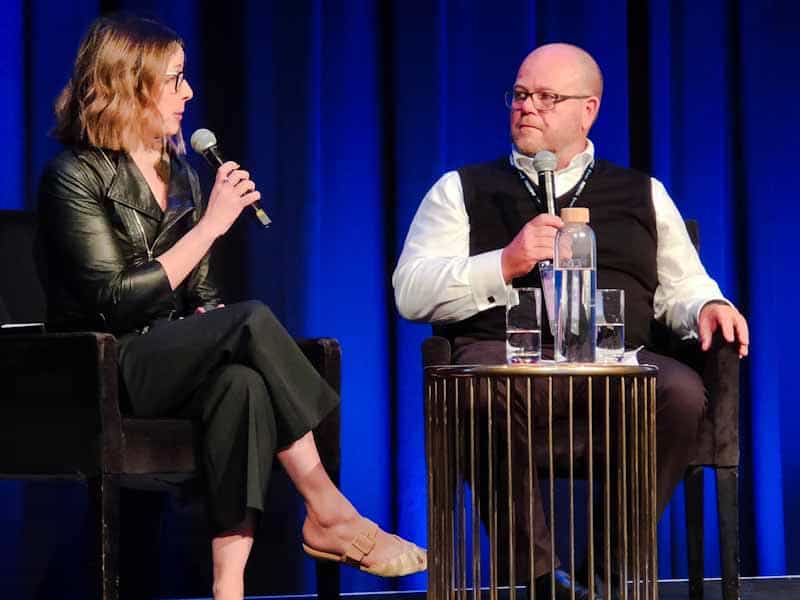
Delegates at the recent Psych Health and Safety Conference were desperate for case studies on how psychosocial hazards are being prevented in Australian workplaces. Instead, they were largely presented with examples of how to manage psychosocial hazards, and many of those strategies were unsurprising – policies, training, counselling, leadership buy-in – and were familiar to those who have been applying well-being programs in their workplaces for years. Several speakers called these strategies bullshit. The most vocal of these speakers was David Burroughs, who was at the conference in a personal capacity.
Burroughs’ accusation of bullshit gained considerable strength recently with the research of William Fleming that found that corporate wellbeing programs almost entirely resulted in no improvement in mental health or decrease in psychosocial hazards at work. This research was not mentioned at the conference, so it is unclear how many of the delegates were aware of this sound evidence, but it is a perspective that has been repeatedly discussed in the Psych Health and Safety podcasts.
Burroughs was asked about the pushbacks from executives to the structural and operational changes needed to prevent psychosocial hazards at work:
“… [they say] there’s not enough legal precedent to justify working inside health and safety. These narrow, limited views, you don’t hear too much of it anymore, but the really big obstacles, the really big barriers I see, particularly with the senior levels in organisations are ignorance around them thinking that what they are doing is effective or sufficient. “So, [we have mental health] first aiders and we’ve got this peer program, we’ve spent $1 million on this stuff, surely we’re doing enough?”….. Whoever’s selling you this stuff is making loads of money at your risk.”
The lack of legal precedents has been a major impediment to the progression of occupational health and safety (OHS) and illustrates the narrow executive perspective on compliance and only the lowest level of compliance that a company can get away with. That is not the application of the positive duty included in the OHS and sexual harassment legislation that has existed since 1985 in most jurisdictions. OHS law was written expressly so it could be understood and applied by non-legal readers, i.e. employers and workers, yet OHS management became dominated by lawyers. Lawyers are important resources, especially when a major workplace incident has occurred, or a company is being prosecuted, but lawyers do not prevent harm. Only employers can prevent work-related harm, as they are the controllers and major beneficiaries of the work, and the creators and owners of their OHS management systems.
Burroughs also points out that paying for services that do not provide what they promised is always a waste of money. Fruit boxes and yoga may be appreciated by workers, but this does not prevent the harm generated by poorly designed work and inadequate supervision. This prevention is the expectation of the government (and the community) as reflected in the OHS laws.
Burroughs said that he is seeing major problems with a lot of peer-based programs and that pop psychology, which I interpreted as leadership, teams, self-help books and media, remains (too) popular.
“The pop psych stuff is still really popular. The number of people at the moment reading bags of stuff into the psych health and safety context, and talking about what they’re doing in their eLearning module and how the integration with Microsoft is now going to help you meet your health and safety obligations which is absolutely not true. We’re seeing so much of that stuff sort of pop up at the moment.”
I think the Microsoft reference may hint at Burroughs’ perspective on artificial intelligence (AI) in this area. He discussed AI later, saying that one of the benefits of AI is the assessment of risk, but he was very concerned about its application for the monitoring of workers and the assessment of the suitability of job applicants for specific psychologically risky jobs. He posited:
“What right has an employer got to try to determine whether I’m clinically unwell or not, through the use of AI?”
David Burroughs had a lot of suggestions for what needs to be done to change work in order to prevent harm, and he mentioned some instances where incremental change has begun. Many of his suggestions are familiar to the OHS audience. The solutions are readily available but there is limited corporate interest in implementing these changes. The conference delegates wanted case studies of how businesses have changed processes to prevent psychosocial harm, but, at this conference, the case studies showed more of the same, even when some of that “same” has been discredited. One presenter had applied three psychosocial assessment tools over almost a decade. This seemed excessive at the time, and other conference speakers downplayed the significance of some tools as the psychosocial risks were easy to quantify if you looked or were allowed to look.