
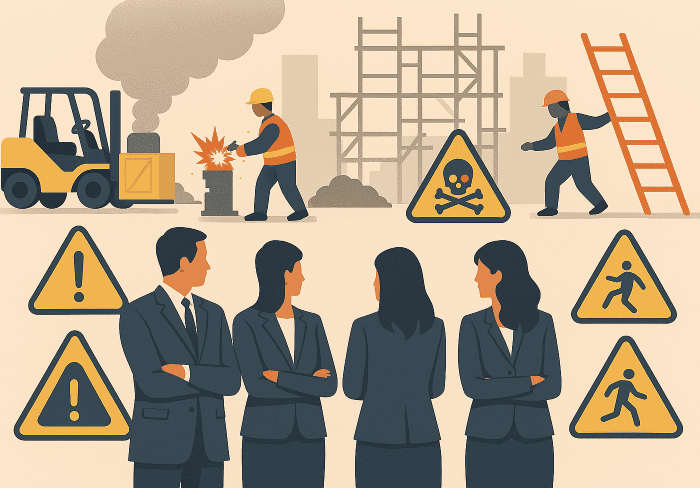
In the ongoing debates about workplace safety, a critical question is often left unasked: What are employers doing to ensure safe and healthy work environments, and why are their responsibilities so frequently underplayed in public discourse? Too often, when workplace safety issues arise, the conversation quickly shifts to affordability and government intervention.
Business groups routinely argue that necessary changes to prevent harm are unaffordable without government subsidies or rebates. The threat of job losses is wielded as a political tool, overshadowing the fundamental obligation of employers to protect their workers. For the past four decades, job creation has dominated discussions in industrial relations, but this focus has come at the expense of meaningful conversations about employer accountability.
Trade unions, for their part, tend to respond to workplace incidents by calling for increased government regulation. While regulations are essential, this approach assumes that existing scandals or hazards were only possible because of regulatory gaps. Rarely do unions or the public ask what employers did—or failed to do—before an incident occurred. Why weren’t existing laws and safety standards enforced at the workplace level? Why is the onus always on government intervention, rather than on employers to comply with their legal and moral duties?
Media coverage compounds the problem. When workplace scandals make headlines, journalists often turn to their usual contacts in business groups or unions, but seldom seek out the perspectives of occupational health and safety authorities or advocates. This omission means that the public rarely hears from those most qualified to assess workplace risks and propose effective solutions.
Also, journalists often downplay the OHS role of employers. In an article in the Australian Financial Review (29 July 2025) called “Art of zoning: How this KPMG partner ignores team calls“, is this paragraph:
Being able to switch off mentally at the end of a working day is a challenge for many working adults, exacerbated by the expectation from workplaces that employees are contactable at all times of the day.
The journalist writes that excessive working hours are “the expectation of the workplace”. Workplaces have no exceptions, but employers do. By omitting the employer from this paragraph, the writer is exempting the employer, in this case KPMG, from their OHS responsibility.
Sometimes, media narratives even imply that injured workers are solely responsible for their own safety, ignoring the employer’s duty to provide a safe environment. Recent scandals in the aged care and childcare sectors illustrate these failures. Not only do such incidents breach accreditation and legislative requirements, but they also put vulnerable people at risk. Yet, the voices of occupational health and safety professionals are conspicuously absent from the conversation.
If we are to create safer workplaces, it is time to shift the narrative. Employers must be held accountable, and the expertise of safety authorities and advocates must be brought to the forefront of public and media discussions. Only then can we move beyond reactive, short-term fixes and toward sustainable, effective solutions for workplace safety.